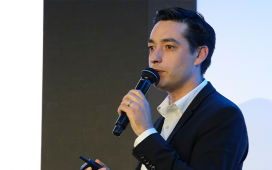
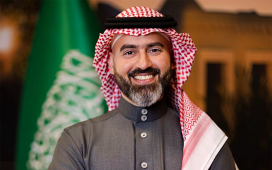
 Waqas Mohammed Amin, Creative and Production Services Director, The Royal Commission for Riyadh City
In an increasingly fast-paced world, the scale of development needs to keep pace with rapidly evolving technologies to realise the creative goals of the region.
The nurturing of internal studios will be key to the Middle East’s vision of expansion and creation, especially given that the primary impediment to the effective execution of an idea, often, is the time wasted in the movement of creative work from one organisation to another.
This creates logistical bottlenecks, and when multiple companies are used in the creation of a massive project, several issues such as translation, time taken to explain concepts, tools, and cultural parameters slow development. This is a serious issue in a multifaceted project involving many skills.
Until recently, major institutions in the Middle East overseeing mega or giga-projects primarily employed external partners as experts. This was prevalent, especially in the early years of development, because expertise was lacking, and our reliance on outside companies was the only way to conduct large-scale projects.
In recent years, many industries have developed a strategic reserve of talent. This innovation has come about because of the scale of infrastructure projects in the Middle East region. Institutions have on their payroll creative ecosystems and studios that are technically talented and have the cultural awareness to create projects sensitive to regional traditions.
This is a major change; we are no longer passive observers of technological change; we’re active participants in its development. In short, if you want your story to resonate with purpose, precision and pride, it needs to be crafted from within.
Rise of in-house studios
We already have the building blocks to develop in-house creative studios in support departments that complement external companies. This advanced cohort can easily be transformed into creative studios that handle brand development, strategic content, digital campaigns and indigenous production pipelines.
Already, internal creative studios within the IT industry and giga-project structures are getting noticed. They are no longer mere ‘marketing tools’; they’re creative command centres. This is not just a tactical change; it is deeply strategic.
Speed, relevance and ownership
In-house studios are accessible and sensitive. They sit among change-makers and leaders, understand shifting priorities, and make their projects culturally relevant. They turn concept into reality in real time.
This results in fewer bottlenecks, deeper alignment with leadership and more authentic story telling rooted in culture. The result is a better protection of brand integrity, because they’re responding in real time to the document, and, thus, living the story.
To be clear, this isn’t about eliminating agencies; it’s about making in-house teams the centre of gravity.
While globalisation is a popular talking point, the area of most relevance to giga-projects is the Middle East and Africa (MEA) region, where studios have quietly developed talents and abilities, providing critical context for development. Strong insider knowledge provides ease of completion in giga-projects, brand development and creation of campaigns.
Speed is maximised by cultural knowledge, lived experience and a sense of being invested in the project at a personal level.
Building in-house studios within the IT industry is smart. It consolidates creative costs, without the need for retainers or per-deliverable fees, increases institutional knowledge, scalable design systems and reusable assets with real-time campaign support across departments.
Crucially, internal creatives develop emotional investment. They don’t just deliver assets; they defend the vision.
External agencies still matter
External agencies are still needed in the creative process, but we need to rebalance roles.
External agencies provide a vital role in launching global brand identity systems, offering niche expertise such as computer-generated imagery (CGI), immersive technology, or augmented reality and virtual reality (AR and VR) capabilities, providing additional capacity for major events, and injecting fresh perspectives that challenge internal echo chambers of studios.
‘‘If you want your story to resonate with purpose, precision and pride, it needs to be crafted from within.”
However, the best creative outputs come when in-house studios lead, and external partners support the narrative.
To be clear, this isn’t about eliminating agencies; it’s about making in-house teams the centre of gravity.
Creative ecosystems, not silos, empower your story
The future of Middle east projects lies in nurturing ecosystems where internal and external talents work in harmony.
This requires the development of local talent, empowering internal teams to lead creative strategies and build studio-grade infrastructure within their institutions.
There needs to be open collaboration with trusted external partners. This approach eliminates duplication, sharpens alignment, and elevates storytelling at every touchpoint.
In-house is a demonstration of a creative maturity curve
The question isn’t if it’s right to create in-house studios, it’s can you afford not to do it?
As the Middle East builds toward the future, its creative engines must be as visionary, agile and homegrown as the projects they support.
In short, our most powerful cultural stories of transformation deserve to be told from the inside out.
By Waqas Mohammed Amin, Creative and Production Services Director, The Royal Commission for Riyadh City.