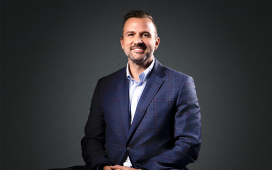
Sagar Rege, CEO & Partner, Liwa Content.Driven.
In this industry snapshot, Liwa Content.Driven’s Sagar Rege shares how strategising for OTT can extend the shelf-life of creative content, offering producers the opportunity to create ‘meaningful, long-format content’.
How have client expectations changed in the past year, particularly with tighter timelines and budgets?
Client expectations have never been more dynamic. The pace of digital change, the rise of AI, and shifting consumer behaviour mean brands need content at scale and at speed. Naturally, the per-asset cost is dropping while attention spans are shortening.
The only way forward is what we call creative production – looking at every brief through the client’s lens, asking why a piece of content needs to exist, and producing it in the smartest, most purposeful way possible. This has become our operating philosophy: balancing efficiency with impact. Being hyper-agile in the current era of hyper-personalisation.
What are the biggest challenges in the region today and how are you addressing them?
The biggest challenge today is reconciling ambitious scripts with shrinking budgets and accelerated timelines. Clients still expect big, cinematic ideas, but the economics don’t always align. Our approach is to protect the essence of shooting wherever possible. There’s a richness in being on set with a Director, DP and an entire film crew that grounds the work in authenticity.
At the same time, we’ve embraced hybrid production – blending traditional shoots with AI or digital-first techniques to stretch budgets further without sacrificing craft. This allows us to maintain high production values while giving clients smarter, more flexible ways to bring stories to life. It’s not about replacing shoots; it’s about evolving the production toolkit, so creativity thrives within today’s realities.
Again, in MENA specifically, navigating diverse markets and cultural nuances adds another layer of complexity, requiring productions to be both locally resonant and globally appealing. Additionally, clients increasingly expect sustainability and inclusivity to be integrated into every project, pushing production houses to innovate responsibly without compromising scale or impact.
What excites you most about the direction advertising production is taking in MENA?
The convergence of advertising and entertainment. Brands are no longer satisfied with one-off campaigns; they’re looking at stories that can live in OTT environments, with potential to be monetised and extended. This opens the door for producers to create meaningful, long-format content that goes beyond ‘the next brief’. For us, this is a transformational shift: investing in original brand storytelling that has longevity, value and commercial upside, not just campaign shelf-life.
As producers, we need to keep evolving new ways to tell stories that resonate across diverse audiences. At the same time, there’s a growing appetite for culturally authentic narratives, allowing brands to connect deeply with regional audiences while still appealing globally.
How is the regional production market different from global markets and where do you see growth?
The fundamentals aren’t radically different, but the expectations are. Regional clients demand speed, scale and cultural nuance in ways global markets don’t always anticipate. The OTT space again offers a huge opportunity here. If global markets have mastered format, the Middle East has the chance to bring fresh storytelling rooted in regional insights. The key will be educating clients about the long-term value of investing in original assets while delivering them with world-class production values.
This is the bridge we’re building at Liwa, where a hybrid of creative agency, production house and AI studio comes together to redefine what content from this region can look like. Looking ahead, the region has a unique chance to lead in data-informed storytelling, using audience insights to create content that feels hyper-relevant, yet authentically regional.
By Sagar Rege, CEO & Partner, Liwa Content.Driven