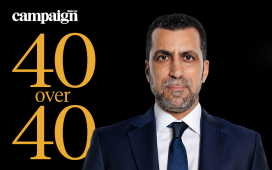
 Zeina Akkawi, Co-Founder of PRsonaME.
One of the most noticeable shifts in today’s business environment is the growing importance of leadership-led communication. This has never been a passing trend; it has always been essential and is now becoming even more critical as markets grow increasingly competitive and professionals seek new ways to remain visible and relevant.
We need to also know that leadership is no longer limited to boardrooms, strategy discussions or internal decision-making. While these traditional roles still hold value, especially in our region, the scope of leadership has clearly expanded into the public space. Today, how leaders communicate, share ideas and tell their stories plays a critical role in shaping their influence and positioning.
What makes this shift even more compelling is that it is not just subjective; it is backed by clear behavioral change. Content driven by leaders consistently outperforming traditional brand messaging, often generating 3 to 5 times higher engagement, particularly on platforms like LinkedIn. At the same time, trust is gradually moving away from institutions and towards individuals. People connect with people, not logos; so, the individuals behind a brand are what drive credibility and long-term loyalty. Whether it is investors, employees, clients or partners, stakeholders today want direct access to leadership voices. They are looking for insight, perspective and authenticity, rather than perfectly crafted corporate narratives.
There is no denying that AI, on the other hand, is reshaping the communications industry at a pace we have never seen before. In the UAE alone, AI is projected to contribute close to AED 100 billion to the economy by 2030, positioning the country as a global hub for innovation and digital transformation. At the same time, businesses across the GCC are rapidly shifting their marketing investments, with more than 70 per cent of budgets now allocated to digital platforms. This acceleration is transforming how brands communicate, how leaders show up, and how audiences engage with content.
Yet with this rapid shift, one critical question remains; are we becoming more efficient, but less human? Well, as someone who has spent over two decades in PR and communications, working closely with government entities, CEOs and high-profile leaders, I have seen that visibility alone is no longer enough. Today, audiences are not just looking for polished messaging; they are looking for authenticity and consistency. Leaders are expected to connect, not just communicate. They are expected to show perspective, not just presence.
This is where the concept of humanising PR becomes not just relevant, but necessary; and AI has undoubtedly unlocked a new level of efficiency. From drafting content and analysing sentiment to predicting trends and automating outreach, the tools available today can significantly reduce the time it takes to execute campaigns. What once required days of coordination can now be achieved in hours. For fast-paced markets like the UAE, this is a powerful advantage.
Additionally, we are already seeing a surge of generic thought-leadership content flooding digital platforms. It is well written, structured and technically correct, but often lacks depth, perspective or personality. The result is a growing sameness in how leaders communicate. When everyone sounds the same, differentiation disappears, and with it, influence.
In a region like the Middle East, where relationships, trust and cultural nuance are central to business, this can be a critical step. Communication here has always been deeply personal. It is built on connection, credibility and long-term engagement. Removing the human element from that equation does not enhance communication; it weakens it.
At the same time, the role of leadership has fundamentally evolved. Executives are no longer operating behind closed doors. They are expected to be visible, vocal and value driven. In the UAE specifically, where over 90 per cent of the population is digitally connected, leaders have a unique opportunity to engage directly with their audiences across platforms such as LinkedIn, media outlets and public forums.
But maintaining this level of visibility consistently is not easy. It requires time, clarity of thought and a structured approach to communication, all while managing the demands of running a business. This is where AI can play a powerful supporting role, not as a replacement for human voice, but as an enabler of it.
The most effective use of AI in PR is not about creating content for the sake of it. It is about creating space for leaders to focus on what truly matters: their perspective. AI can help organize ideas, suggest frameworks, identify relevant topics and optimize distribution. It can streamline the process and remove inefficiencies. But the core message, the opinion and the tone must remain human.
One of the Middle East’s greatest advantages in this evolving landscape is its cultural foundation. Storytelling in this region has always been rooted in authenticity and human connection. Whether in government, corporate or entrepreneurial spaces, the ability to build relationships and communicate with sincerity remains a defining strength. Rather than competing with technology, leaders in the region can integrate it in a way that enhances this strength. By combining data-driven insights with culturally aware storytelling, they can create narratives that are both impactful and human. Trust remains a key currency, and audiences are increasingly drawn to leaders who demonstrate transparency, purpose and consistency in how they communicate.
This shift also requires a redefinition of the role of PR. It is no longer just about media coverage or visibility metrics. It is about shaping perception, building influence and creating meaningful connections over time. In a digital-first world, this means moving beyond outputs and focusing on voice. Who is speaking, what they stand for and why their perspective matters.
Humanising PR is about bringing that clarity back into the process. It is about helping leaders articulate their thoughts in a way that resonates, while using technology to scale and sustain that communication without losing its essence. So, AI will continue to evolve, and its role in communications will only grow stronger. But the future of PR will not be defined by those who adopt AI the fastest. It will be defined by those who use it the smartest, as a tool to enhance human connection, not replace it.
I personally say that influence is not built through automation. It is built through authenticity.
By Zeina Akkawi, Co-Founder of PRsonaME.