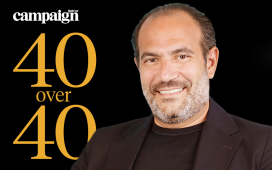
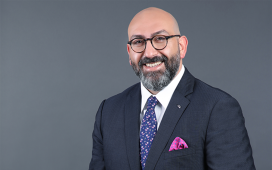
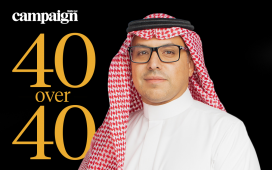
Carlo Nakhle, Business Director, Havas Life Middle East
The MENA region’s healthcare ecosystem is entering a digital inflection point, one worth $69bn by 2033. With 81 per cent smartphone penetration and one of the world’s youngest, most connected populations, the way patients learn, trust, and engage with healthcare is being rewritten in real time.
Yet while healthcare delivery is transforming at speed, communication strategies too often remain rooted in the past, overly institutional, overly technical, and, most critically, under-human.
Strategic health communications today is no longer about awareness campaigns; they are about shaping behavioural trust, helping patients and professionals alike make informed, confident health decisions in a digital world that is as abundant in misinformation as it is in innovation.
Trust as the new currency
In an era of algorithmic advice and AI-generated answers, trust has become healthcare’s most valuable currency. Data from multiple MENA and global studies confirm that doctors remain the most trusted voices in healthcare, commanding 95 per cent trust levels worldwide, yet pharmacists and other allied health professionals hold vast, underdeveloped potential.
Across the GCC, pharmacists are emerging as the new front line of digital care. In the UAE, nearly seven in ten pharmacists already use WhatsApp to advise patients, turning what was once a private messaging app into a modern consultation room.
The strategic implication is undeniable: brands and institutions that equip healthcare professionals with credible, accessible, and empathetic digital narratives will bridge the trust gap far faster than those relying solely on institutional communication. Trust today is not built in clinics or conferences, it is built in feeds, screens, and fleeting micro-moments that accumulate into reputation.
From platforms to purpose
Healthcare professionals across the region are not just digital participants, they are becoming digital curators. Our proprietary research shows that 70.9 per cent of HCPs prefer short, evidence-based articles, 63.4 percent engage most with video content, and 57.9 per cent favour slide-based summaries for ongoing learning. These preferences reveal that HCPs are hungry for credible, concise, and visually digestible content.
Platform behaviour tells a parallel story. Instagram, with its 3.7 per cent engagement rate, has become a powerful space for visual health education, while LinkedIn, at 3.3 per cent, serves as the hub for professional peer-to-peer learning and thought leadership. And then there is WhatsApp, the quiet giant, where conversational credibility meets accessibility, already transforming how healthcare advice is delivered across the UAE and beyond.
The insight is clear: channel choice is strategic, but message design is behavioural. Successful healthcare communication in the GCC requires more than understanding where audiences spend their time; it demands an understanding of why they listen, what earns their attention, and how to turn engagement into advocacy. The most impactful communicators are those who can read the emotional cadence of an audience as fluently as the analytics dashboard, those who turn insights into influence.
The GCC as a living lab for healthcare innovation
The Gulf is not just following global trends, it is shaping them. Both Saudi Arabia’s Health Sector Transformation Program and the UAE’s National Health Strategy 2031 have placed digital empowerment and preventive care at the heart of their national priorities. The region’s policy environment is primed for collaboration between public-sector reformers, pharmaceutical innovators, and communication strategists who can translate science into societal relevance.
The GCC is fast becoming a living laboratory for human-centred health innovation, where communication is not a support function but a strategic enabler. The challenge now is not about producing more content, it is about producing content that humanises data, localises evidence, and embeds trust in every message. From encouraging early screening to demystifying breakthrough therapies, the narrative must evolve from transactional awareness to transformational understanding.
The human factor in the age of AI
The emergence of AI in healthcare has added urgency to this transformation. In the span of a year, we have witnessed the shift from “Dr. Google” to “Dr. ChatGPT”, with patients increasingly turning to generative AI for medical advice, sometimes with devastating consequences
While AI presents extraordinary opportunities for diagnostics and predictive care, it cannot replicate the emotional intelligence that underpins human trust. The role of communicators is to bridge the space between scientific accuracy and human comprehension, ensuring that technology informs rather than overwhelms.
At Havas Health & You, this belief inspired the creation of ShapeShifting, an unbranded, expert-led initiative that demystifies GLP-1 therapies. By bringing together medical, nutritional, and behavioural experts on a neutral platform, we give people access to reliable, contextual information. We do not sell, sponsor, or sensationalise. We inform, so that patients can make decisions grounded in knowledge, not noise.
New healthcare communications imperative
The digital transformation of healthcare in the GCC is not merely technological; it is cultural and behavioural. Communicators, policymakers, and pharmaceutical leaders share an ethical obligation to ensure that digital progress is matched by informational responsibility.
To succeed in this new era, we must focus on patients, empowering them with clarity rather than complexity; focus on humanity, simplifying without diluting; and focus on trust, measuring engagement not by clicks but by comprehension.
Closing thoughts
The GCC stands on the threshold of a communications revolution that could redefine how health is understood, accessed, and trusted. Those who can combine data with empathy, science with storytelling, and precision with purpose will shape the next decade of healthcare influence in the region.
The trust economy of healthcare is already being rewritten. Not in policy papers or product brochures, but in the words, visuals, and choices that fill our screens every day.
But this shift demands more than observation; it calls for action. It requires communicators who design truth with intention, brands that elevate education above exposure, and healthcare leaders who treat every message as a moment of care.
Because in this new era, trust is not a by-product of communication. It is its purpose. And those who act on that truth will not only inform or inspire. They will transform how the region experiences healthcare itself.
By Carlo Nakhle, Business Director, Havas Life Middle East