One of the UAE’s most recognisable cultural exports began in a university classroom in Boston. A professor asked Mohammed Saeed Harib to create characters drawn from his own culture. His grandfather’s generation had been pearl divers, and those adventures were already widely discussed. The grandmothers, however, had received far less attention. They were the ones who had held families together while the men were away at sea for months, so he decided to tell their story. The result was Freej, a series built around four Emirati women in burqas navigating everyday neighbourhood dramas, speaking in a dialect so specific that children in Saudi Arabia would ask their parents to translate. It went on to become one of the region’s most successful animated productions.
When Freej premiered in 2006, it demonstrated that the closer a narrative stays to its origins, the wider it can reach. For years, organisations across the region have taken the opposite approach, starting with something global and retrofitting it for local audiences, adding an Arabic voiceover or a desert visual and calling it localisation. That approach has run its course. Audiences today expect authenticity from the brands they engage with, and part of that means understanding the context in which they’re operating.
IFPI’s 2025 Global Music Report shows MENA as the fastest-growing recorded music market, with revenues up close to 23 per cent in 2024. Streaming makes up almost all of that. People across the region are actively shaping their own cultural mainstream, with demographics being a big part of it. Nearly half the region’s population is under 25, and this generation is quite clear about what matters to them. The ASDA’A BCW Arab Youth Survey has consistently shown that cultural and religious identity ranks above the pull of globalisation. When your audience feels that strongly about who they are, a surface-level nod to their market is easy to see through.
This is why the brands that get this right don’t overcomplicate things. Coca-Cola did it when it printed Arabic names on bottles across the Gulf, turning a familiar product into something intimate, something that said we learned your alphabet before we asked for your attention. Maggi followed a similar instinct during Ramadan in 2024, building personalised content around how people cook and gather during the Holy Month.
What is interesting is the fact that audiences here already live between languages and cultures. A family in Dubai might watch a Korean drama after Iftar, order from a Japanese restaurant on an app designed in San Francisco and still expect the Ramadan greeting from their grocery brand to sound like it was written by someone who knows what Suhoor feels like at 3am. That is the reality every campaign is speaking into. Brands need a degree of emotional fluency in recognising that the same person holds multiple identities simultaneously and that speaking to one of those identities with precision builds more trust than trying to address all of them at once.
But this is also where the conversation moves beyond commercial value. Cultural institutions operate in a different space, sitting on something brands rarely have access to, which is a living archive shaped by memory, heritage and shared experience. What matters is how that archive is opened and shared with the next generation. Dubai Culture’s Ramadan series Badr Al Musahar was launched with these considerations in mind. The animated series reimagined the traditional musahar (the figure who once walked through neighbourhoods before dawn, waking residents for Suhoor) and brought together Emirati animators, voice actors and storytellers.
The narrative follows a boy returning from a settlement on the moon to his grandmother’s home in Dubai, determined to revive a role his grandfather once carried out with a drum, a lantern and a bamboo cane.
Heritage and nostalgia, when handled with care, create continuity. In a place where several generations share the same spaces, inherited memories around rituals and daily life give younger audiences something to build from. A grandmother’s story translated through 3D animation. A Ramadan tradition reimagined for children who have never heard a musahar’s drum in their neighbourhood. The format shifts, but the emotional frequency holds.
This is where the opportunity sits for the region to become a source of stories that originate here and travel outward. Harib’s journey offers a clear example. He created something deeply Emirati, and it reached audiences in Japan. The specificity was the appeal, and it travelled precisely because it refused to dilute.
The institutions, brands and platforms that will matter most over the next decade are the ones building for exactly that: storytelling rooted in culture as a starting point.
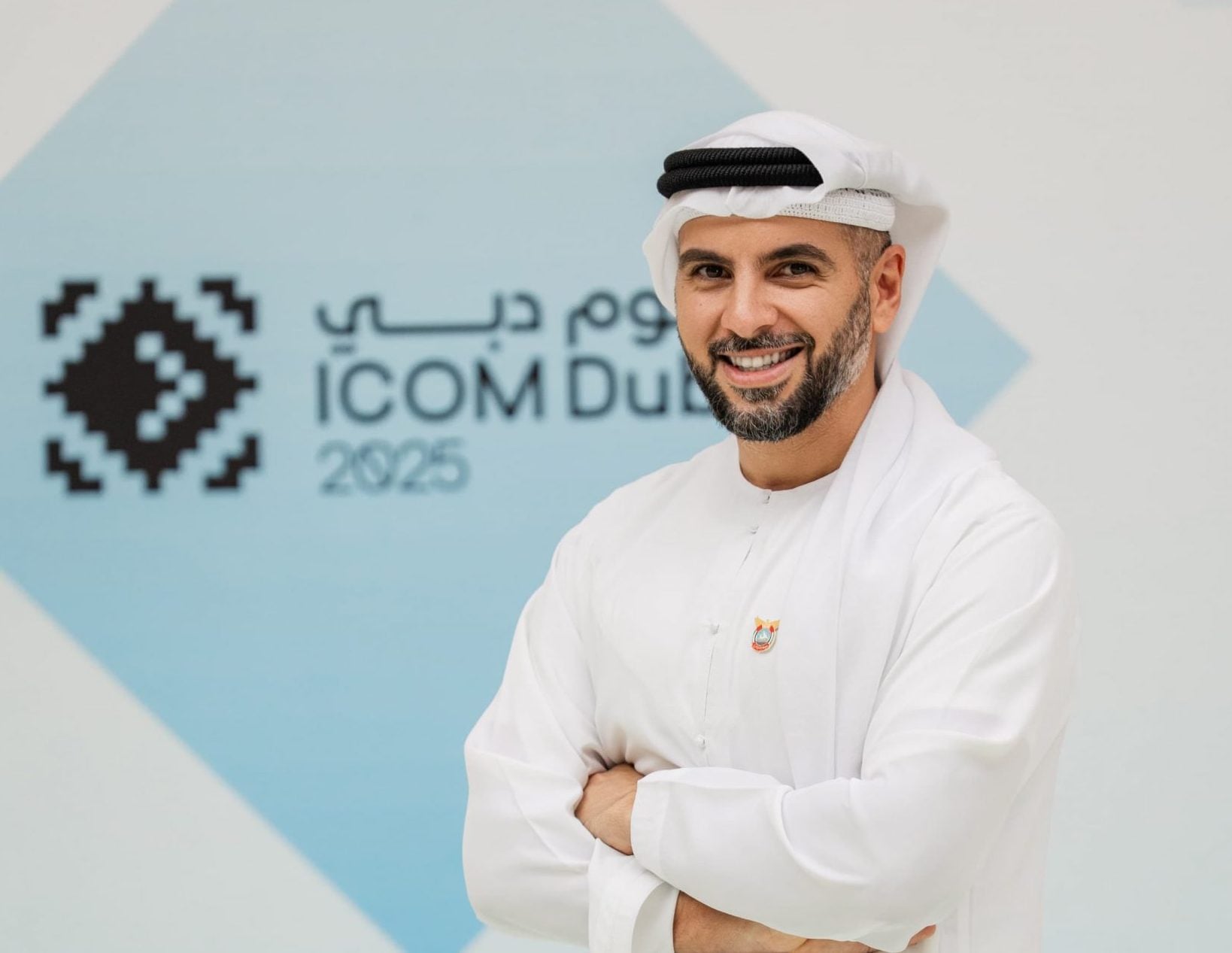
By Saleh Al Breiki, Director of Corporate Communication and Marketing Department,
Dubai Culture and Arts Authority