 Hicham Dergham, Regional Sales Director, DXTA Technology
What once lived on screens and servers now lives in streets, malls and metros. The algorithms that power online ads are no longer trapped behind glass; they’ve stepped into the real world, illuminating the city itself.
Every screen around us, from the phone in your hand to the billboard above your head, is now part of one connected intelligent network. It sees, learns and reacts in real time.
This is not the future of advertising. It’s the present, where the physical world has become the newest platform, and data has found its most human form: movement.
The new architecture of advertising
The virtual universe of programmatic media has expanded beyond browsers and feeds to include every illuminated surface that surrounds us. The result is a living network that tracks movement over clicks, context over cookies, and presence over prediction.
A few years ago, a billboard was still a billboard: a static image counting eyeballs instead of engagement. Today, it’s a live data point in a connected ecosystem where every impression can be verified, re-engaged and measured.
The end of online
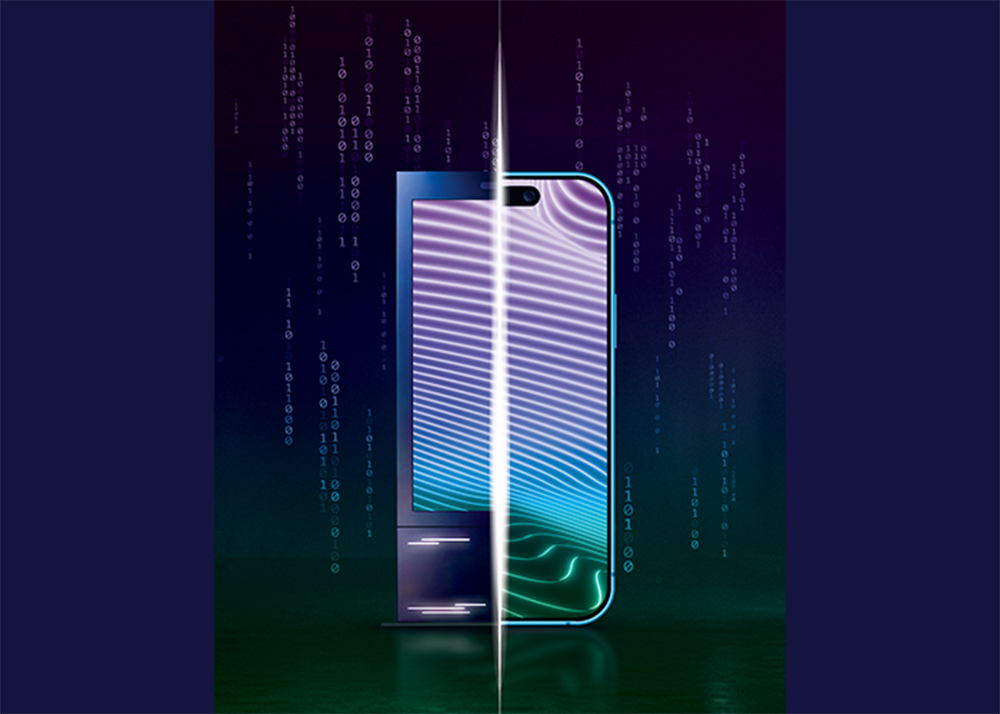
It’s no longer online versus offline. This is the age of real-time programmatic out-of-home (prDOOH), where physical media behaves like digital and the algorithms that once optimised banner ads now optimise cityscapes.
Online advertising is built on history: what we’ve searched, liked or clicked. prDOOH operates in the present. It reads cities as data. Mobility patterns, audience density and dwell times form a live feedback loop that tells brands where attention exists and when.
Behind each digital screen lies a layer of intelligence: sensors, data feeds and decision engines that choose what to display based on who’s nearby. Cities are turning into operating systems, and media is becoming their interface.
This transformation is already under way. Hypermedia’s prDOOH infrastructure, powered by DXTA’s data and audience intelligence solutions, shows how urban media can now operate as part of a live digital ecosystem. Each impression is verified, each exposure measurable and each campaign adaptable in real time.
This shift rewrites the balance of credibility. Where online metrics depend on probabilistic tracking, prDOOH deals in verified presence: real people in real places in real time. The result is cleaner data, higher intent and a truer measure of attention.
Real-time reality
A campaign that begins on a city screen can now continue on a phone, a laptop, or inside a retail app. The moment someone is exposed to an outdoor impression, that signal – anonymised and geo-fenced – can trigger a follow-up message in a digital environment.
This transformation is powered by data that reflects real movement. By mapping anonymised device signals and mobility patterns, advertisers understand how audiences behave in daily life: where they go, how long they stay, and what their routines reveal about intent.
When that intelligence is layered across a network of digital screens, the result is a medium that thinks. It knows when business districts are busiest, when residential areas quiet down, when malls hit their evening peak. It understands the rhythm of a city and aligns messaging to its pulse.
The promise of out-of-home (OOH) has always been visibility; its challenge was accountability. For years, marketers could only estimate exposure. Today, they can prove it. Brand-lift studies and real-time analytics let campaigns optimise mid-flight, shifting budgets toward the locations and hours that drive measurable outcomes.
OOH is evolving from a medium of influence to a medium of intelligence. And it isn’t replacing digital channels; it’s connecting them. The same audience exposed on the street can be re-engaged online, building one continuous data-driven journey.
Dubai and the data economy
The GCC’s programmatic ad-spend is growing faster than any global average, projected to surpass $1.3bn by 2026, with prDOOH capturing a rising share as brands demand measurable impact. Dubai, home to one of the world’s most advanced smart-city infrastructures, is leading that transformation.
Here, media doesn’t just display content; it interacts with its environment. Every metro screen and retail display can feed and respond to real-time data, transforming public space into a living digital marketplace.
This is where out-of-home becomes the backbone of connected commerce: accountable, adaptive, and powered by intelligence.
By Hicham Dergham, Regional Sales Director, DXTA Technology