Impact BBDO was awarded the Creative Agency of the Year 2025 trophy at Campaign Agency of the Year Middle East Awards.
According to the jurors, “The agency excels across every metric of the judging defined criteria of creative impact, financial growth, culture, innovation, and contribution to the industry. They continue to set the global benchmark for what a MENA agency can achieve, not only through awards and campaigns but through societal impact and human development.”
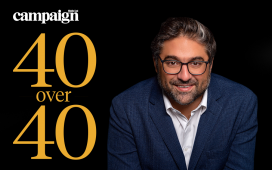
Dani Richa, Chairman and CEO, Impact BBDO Group of Companies shared his reflections after the agency picked up the 2025 trophy for a third time in the four-year history of the awards.
How does this award reflect the culmination of your efforts in 2025?
For us, this is not about a single year of success; it is about being consistent over time and across markets. In 2025, we focused on doing work that truly matters, driven by our teams across the region, spanning the UAE, Saudi Arabia, Lebanon, Egypt, Qatar and Pakistan.
Winning this title three times in four years, alongside our seventh Regional Network of the Year win at Cannes, proves that creativity travels. It confirms that even in a noisy landscape, big, human ideas still win. This award belongs to our teams who refused to settle for good enough and pushed every brief further.
Which industry pressure or shift most influenced how you operated in 2025?
The pressures in 2025 were twofold. Geopolitical instability and fluctuating oil prices created a climate of economic caution, which naturally drove a demand for efficiency. Our response was to sharpen our focus on driving real value for our clients, delivering work with clear, measurable return on investment (ROI) that helped move business in the short term while continuing to build strong, resilient brands for the long term. This meant being more disciplined in how we applied our resources, more rigorous in how we measured impact, and more intentional in ensuring that every idea worked as hard commercially as it did creatively.
How have expectations within the digital space shifted over the past 12 months?
We have moved past the era of digital first into an era of authenticity first. Audiences in 2025 became highly sophisticated at spotting anything artificial, whether it was a generic influencer script or an artificial intelligence(AI)-generated caption. Expectations shifted from hyper targeting to hyper relevance. Consumers no longer just want content that finds them; they want content that feels like them. They stopped rewarding brands that simply filled their feeds and started engaging with brands that genuinely contribute value to their culture and communities.
What do you think the industry needs to change or fix as a priority in the months ahead?
First, we must stop selling time and start selling value. The billable hour penalises efficiency in an AI driven world; pricing should be based on business impact, not minutes. Second, we need to fix the pitch process. It is time for remunerated pitches with a limited number of participants. The lack of pitch etiquette in our region is becoming a serious issue. The number of requests for proposal (RFPs) that go silent after agencies invest significant resources is unacceptable. We need a standard of professional respect that honours the work agencies deliver.
In your opinion, what do consumers really want, and how can agencies help brands meet this need?
People are tired of feeling like data points in an algorithm, and they are bored of the predictable. What they really want is to be surprised, to smile, or to feel understood by another human being. We need to help brands move from a top of mind obsession to a top of heart connection. Agencies can do this by bringing real emotion back into the conversation and encouraging clients to approve work that feels a little braver, because that is usually the work meaningful enough to make someone stop and pay attention.
What will matter most as the industry moves into 2026?
Moving forward, AI will be the baseline; it will be available to everyone. The real advantage will be human intelligence. We must ensure we do not become artificially intelligent ourselves. Instead, we need to use AI and data to unlock deep human insights and create work that moves people and drives business. The goal is for technology to free us from process so we have the space to think even bigger.