The tools have never been smarter. The customer has never felt less seen. Eighty-two per cent of UAE marketers say artificial intelligence (AI) now powers their personalisation strategies, yet only 31 per cent of their customers feel that personalised touch.
This gap is not a technology problem; it is a strategic one – and closing it is the most urgent challenge in marketing today.
The model worked. The market moved.
For the past decade, the industry poured investment into personalisation engines, customer data platforms (CDPs), first-party data stacks and segmentation models. The promise was relevance at scale. What we delivered, in most cases, was relevance in the rear-view mirror.
Personalisation, as we have practised it, is reactive and rule-based. It responds to what the customer did yesterday, last week or last month. It describes the past and calls it the present. The customer has moved on. We are still catching up.
The evidence is unforgiving. Ninety-one per cent of UAE consumers will abandon a brand after a single poor experience, and in a market where 92 per cent expect brands to understand their individual needs, reactive marketing is actively damaging brands. The urgent shift that marketing needs is a move from personalisation to prediction.
From rules to intent
Predictive marketing marks a fundamentally different operating model. Where personalisation asks, “What did this customer do?” prediction asks, “What will this customer need next – and when?”
The shift is from rule-based responses to intent orchestration. Across large regional groups, the real work is moving from building dashboards that report the past to building systems that anticipate intent.
In the real estate market, the high-consideration buyer arrives already informed and half-decided. The brand that wins is the one that was useful before the conversation started.
The commercial case is already clear. Marketers who scale predictive and personalised offers generate three times the returns of mass offers.
The first AI wave helped marketers create faster. The next will help brands act faster. Chatbots talk. Agents act. The future of marketing is fewer campaigns and more intelligent systems.
The UAE will decide this first
No market is better positioned to lead this transition. The Microsoft AI Economy Institute ranks the UAE the world’s number one adopter of AI: 70.1 per cent of the working-age population now use AI tools, the first economy on earth to cross the 70 per cent threshold. The UAE National AI Strategy 2031 cites estimates that AI could contribute up to AED335bn (approximately $91bn) to the UAE’s GDP by 2030, roughly 14 per cent of its GDP.
Dubai’s D33 agenda adds a further signal of intent, targeting AED100bn ($27.22bn) in annual economic value from digital transformation. This is not a market experimenting at the margins. It is a market building the infrastructure, policy ambition and adoption curve for AI-native commerce.
Consumer expectations have moved to match. Fifty-four per cent of UAE shoppers are now willing to let AI agents shop on their behalf. That is a structural shift in who the marketer is communicating with.
Buyers are increasingly asking AI agents which brand to start with and which to trust. If your brand is not structured to be selected inside those answers, you are absent from the moment of intent.
For the first time in modern marketing, brands need to persuade machines before they persuade people. When AI agents sit between the customer and commerce, discoverability, trust and utility matter more than interruption alone. Search engine optimisation (SEO) was about ranking in search results. Generative engine optimisation (GEO) is about being chosen by an AI agent, and it requires content that is evidence-rich, machine-readable and useful.
The brands that win the next decade will treat that with the same seriousness they once gave search and the same conviction they once gave brand-building.
The part that still requires a human
This is where the conversation usually goes wrong.
AI can predict the next click. Only a human decides what your brand stands for, which signals matter, what story to tell and when silence is more powerful than a message.
Organisations that integrate AI with human marketers are three times more likely to achieve measurable return on investment (ROI) than those that deploy AI without strategic human direction.
Kantar’s analysis of AI-generated advertising concluded that what mattered most was not the production method but the fundamentals: insight, bold creative and brand-centricity.
Here is the counterintuitive truth most AI commentary misses: as machines curate more of the choice, brand becomes more important, not less. When a customer tells an AI agent to start with a name they trust, then that brand has already won.
Brand memory is the shortcut through AI complexity, the most efficient route through an algorithmic world.
Seventy-one per cent of customers say it is important for a human to validate what AI produces. The prediction model that wins here will be built on transparency, with a human deciding what the intelligence means for the brand.
Three moves matter most
First, audit what your brand is teaching machines. Search is no longer the only discovery layer. If customers are asking AI agents who to trust, your content needs to be structured, current, evidence-rich and useful enough to be selected.
Second, move from reporting to forecasting. About 60 per cent of brands still hold ‘dark data’ they cannot activate in real time, so stop asking only what customers did last month and start identifying the signals that show what they will need next.
Third, redesign decision-making, not just workflows. AI is not a productivity layer. It changes how fast a business can sense, decide and act without losing human judgement. A subscription is not a strategy. A chatbot licence is not transformation.
The brands that win this decade will not be the ones with the biggest AI budgets. They will be the ones with the clearest brand, the cleanest signals and the courage to move before the market tells them it is safe.
The choice before every marketer is straightforward: manage the AI, work alongside it or be replaced by it. AI is the engine. The marketer who knows what the brand stands for is the driver.
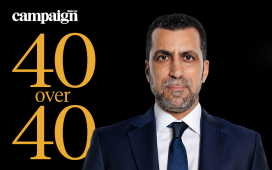
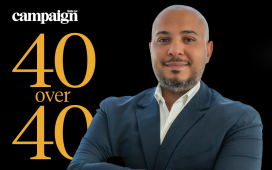
By Brett Stephenson, Executive Director Marketing, Dubai Holding Real Estate.