Luxury has always carried a certain theatre. The lighting, the silence, the materials, the service and the story all work together to tell people that they have entered a world with its own rules. For decades, a logo, a founder’s name or a familiar design code could do much of the heavy lifting. Today, that shorthand still matters, but it no longer does the whole job.
The question now is whether personality has become part of the commercial engine of luxury. Not personality as a clever caption, a campaign mood or a seasonal tone, but personality as the way a brand behaves, reacts, serves and shows up across culture. In a market where consumers are better informed, more vocal and less easily impressed, a luxury brand cannot simply look elevated. It must feel distinct.
This does not mean luxury should become casual, over-familiar or desperate to please. The strongest brands are not becoming less disciplined; they are becoming more legible. They know what they believe, how they should sound, where they should flex and where they must hold their line. In that sense, personality is not decoration. It is becoming operating logic.
Personality begins before the campaign
Industry leaders contributing to this conversation agree that a brand’s character cannot be invented at the last mile. It must come from what the company believes, what it makes and what customers experience. If those parts do not match, the audience notices.

Yashaswini Chhaparwal, Creative Strategy Lead, Sweetwater MEA, says, “Luxury doesn’t just compete on aspiration any more. It competes on emotional relevance. For me, brand personality starts from values, product truth, and a genuine point of view, not performance. Heritage can strengthen that, but heritage alone is no longer enough.”
Nicola Lavelle, Director of Digital Marketing, Communications and E-Commerce MEISA, GUERLAIN, takes a similar view.
She says, “In today’s context, I believe brand personality originates from a brand’s core beliefs, the founder’s vision, the purpose behind the company, and the values it genuinely stands for. To me, a brand personality is not something created purely through marketing; it reflects what the brand truly believes in and how those beliefs are translated into the product, the messaging, and ultimately the feeling it leaves with consumers.”
That distinction is important. A luxury brand can borrow a cultural mood, but it cannot borrow a soul. A brand with depth tends to have a clear point of view before the media plan arrives.
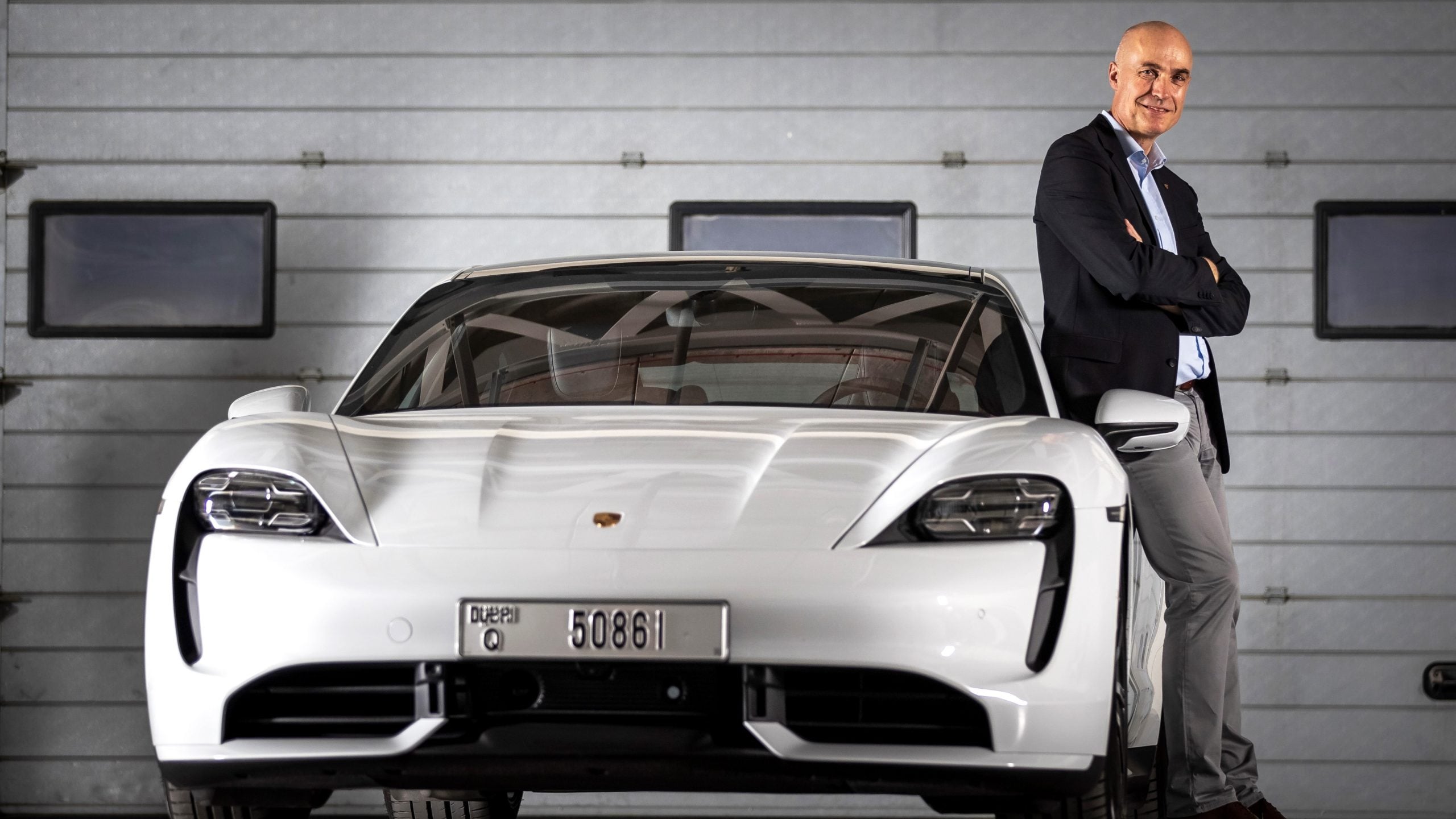
For Porsche, the link between origin story and product expression remains central. Manfred Bräunl, CEO and Managing Director, Porsche Middle East and Africa, says, “For Porsche, brand personality originates from both, heritage and product. Heritage is what defines our principles and the product is what proves them.”
He adds, “As a company, our purpose has been super clear right from our very first car, when in 1948 our founder Ferry Porsche said, ‘I could not find the sports car of my dreams, so I decided to build it myself.’ Having such a clear mission means it is relatively simple for everyone in our company to understand and appreciate our company values, our priorities – and this is true of our external communications as well.”
The point is not that old brands always have the advantage. Newer luxury brands can also build emotional weight if their values are sharp and consistently expressed. The weakness begins when a brand performs relevance without having anything precise to say.
Chhaparwal says, “We’re entering an era when new luxury brands may not have decades of history but can still build strong emotional connection through clarity of values and worldview. Touchpoints simply make those values visible. The issue starts when brands mistake trend participation for personality. Audiences today can instantly sense the gap between strategic humanisation and genuine character, and that’s when luxury starts feeling manufactured instead of meaningful.”
Lavelle also cautions that customers experience brands through many small encounters, not only through large public statements.
She says, “Consumers experience a brand through interactions, not just through campaigns or statements. A brand can communicate certain values, but if the product, customer experience, or messaging does not align with those values, people notice the disconnect immediately. When heritage, product truth, and touchpoint expression fall out of alignment, the brand begins to feel inauthentic, and trust can quickly erode.”
Consistency does not mean copy and paste
One of the more mature challenges for luxury marketers is knowing how to remain recognisable without becoming stiff. The brand cannot behave in the same way across every setting, because audiences do not arrive with the same expectations everywhere. Yet, if it changes too much, it risks becoming shapeless.
Chhaparwal says, “The biggest mistake brands make today is confusing consistency with sameness. Being true to yourself doesn’t mean behaving identically everywhere. A person in a boardroom, at the gym, and at dinner with friends is still the same person, just expressed differently depending on the context. Brands should work the same way.”
She adds, “LinkedIn, Instagram, TikTok, retail, and culture all demand different behaviours, rhythms, and tones. The consistency should come from values, not rigid execution. Luxury today is no longer the distant brand observing culture from above. It’s one participating in it, sometimes imperfectly, unexpectedly and with enough cultural fluency to evolve without losing its identity.”
For regional and global teams, this is where discipline becomes practical. A brand may carry one central belief, but that belief needs different clothing depending on the channel, city, community or customer moment. The test is whether the audience still knows who is speaking.
Bräunl says, “I think the messages and storytelling remain true to our brand’s personality, heritage, values, etc. But the execution must always be tailored to the audience, and therefore channel. So even within a single campaign, your messages are consistent, but the execution is always adjusted.”
Through initiatives such as House of Porsche, the brand extends its identity beyond its product into cultural and experiential territory – to fashion, sport and community programming. This execution is not a departure from heritage; it is an expression of it; and is a prime example of how a brand does not dilute its personality but, instead, finds a way to translate it meaningfully for each touchpoint.
Another example is Marc Jacobs’ The Scene Bag global campaign, which follows an episodic storytelling format. In this campaign, personality is no longer expressed in moments but is embedded within culture and audiences.
Bräunl adds, “So what we say and what we stand for is consistent, even for us in a regional office where we work with so many different cultures and languages across Middle East, Levant, Africa and India.”
Lavelle sees the same challenge through platform behaviour. What works in one digital environment can feel completely wrong in another. Luxury brands therefore need range, not contradiction.

“To me, it is about maintaining a common thread while tailoring the expression of the brand in the most relevant and impactful way,” she says. “Every platform has a different consumer mindset, behaviour, and expectation. For example, expressing a brand personality on TikTok is completely different from how you would communicate on LinkedIn.”
She adds, “TikTok audiences often respond to authenticity, humour, fast-paced storytelling, and culturally relevant content, whereas LinkedIn requires a more professional, thoughtful, and insight-driven approach.”
This is where many brands stumble. They either protect codes so tightly that the work feels distant, or they chase platform habits so hard that the brand loses its centre. The better route is to adapt the surface while protecting the spine.
Lavelle says, “I think successful brands understand how to adapt their communication style without diluting what makes them distinctive. They remain mindful of the viewer demographic on each platform and shape their messaging accordingly, so it resonates clearly with that specific audience.”
She adds, “However, even though the execution changes, the underlying identity of the brand still feels recognisable and consistent across every touchpoint. For me, the key is balance. A brand should evolve its language, visuals, and storytelling to meet people where they are, while remaining rooted in the same values and personality traits that define it.”
AI: widen the canvas, but don’t replace intent or inspiration
The arrival of artificial intelligence (AI) adds another layer to this discussion. The technology can help luxury brands create richer experiences, understand customers better and experiment faster. But it also brings the risk of making brands sound and look smoother than they feel.
Chhaparwal says, “AI can massively expand imagination, world-building, personalisation at scale, and creative experimentation. Brands that ignore it will inevitably fall behind. But brands that adopt it carelessly risk looking even worse.”
She adds, “The tension is that luxury has historically relied on feeling crafted, slow, effortful, and intentional, while AI naturally signals speed, shortcuts, and instant generation. The danger is when everything starts feeling strategically manufactured or aesthetically identical.”
That tension is not a rejection of technology. It is a reminder that luxury needs texture. If everything becomes perfectly produced, instantly generated and endlessly optimised, the brand can begin to feel hollow.
Lavelle says, “AI is a powerful tool for enhancing luxury storytelling when it is used to deepen personalisation and customer experience. Luxury has always been about emotion, aspiration, craftsmanship, and creating a sense of connection, and I think AI can support this by helping brands create more elevated digital experiences and curated recommendations, or by allowing brands to better understand their audiences and anticipate their needs.”
She adds, “Used correctly, AI can strengthen the relationship between the brand and the consumer by making experiences feel more relevant.”
Leaders share the view that technology should support the brand’s character, not author it from scratch. A system may help with scale, but it cannot substitute for conviction.
Bräunl says, “AI is a very powerful tool. It will increase the accessibility to content creation. But it does not replace decades of heritage, and it will not provide you a company purpose or brand personality. People need to both build that, and live that every day.”
He adds, “If everyone can create great content very easily, authentic and compelling storytelling is what will set brands and campaigns apart.”
For Chhaparwal, the future lies in using AI without stripping the work of human intent. “For me, the future isn’t about rejecting AI, but using it without losing texture, imperfection, emotional depth, and human perspective. AI should enhance storytelling, not erase the feeling that a real human intention exists behind the brand.”
Lavelle also warns that over-reliance can flatten what makes luxury desirable. “Luxury consumers equally value craftsmanship, human touch, heritage, and originality. If brands rely too heavily on AI-generated communication or visuals without maintaining a clear creative and emotional point of view, the brand can begin to feel impersonal and mass-produced rather than distinctive and aspirational.”
The real measure of effectiveness takes time
If personality matters commercially, the next question is how to measure it. The leaders are clear that short-term digital signals tell only part of the story. A burst of attention may show that people noticed the brand, but it does not prove that they believe in it.
Chhaparwal says, “Visibility doesn’t automatically equal meaning. Reach doesn’t equal relevance. And engagement doesn’t equal cultural impact.”
She adds, “A lot of luxury today risks becoming optimised for performative metrics: aesthetic coffee and flower shop pop-ups, oversized PR boxes, influencer visibility, or ‘Instagrammable’ moments designed to please the masses quickly. But real brand personality is reflected in something deeper: how consistently the brand’s worldview shows up across retail, service, product design, client interactions, and even internal culture.”
For luxury, the stronger indicators often take longer to appear. They sit in repeat visits, client loyalty, referrals, advocacy, community strength and the quality of the conversation around the brand. These are less theatrical than a spike in engagement, but they are more revealing.
Lavelle says, “For me, one of the strongest indicators is community and loyalty. Are consumers engaging with the brand because they genuinely align with its values and identity, or simply because of momentary hype? The most successful luxury brands create a sense of belonging and aspiration that extends far beyond a transaction.”
She adds, “Their audiences feel emotionally invested in the brand and want to be part of its world.”
Bräunl agrees that single-point measurement is not enough. “In luxury, the honest measures are slower ones. Client retention, repeat ownership, how customers move through the product lineup over years, the quality of the conversation at retail, and how the brand holds its value.”
He adds, “We measure all levels of the sales funnel in detail. Brand measurement and surveys also help if you repeat them year after year and can identify trends. One single metric is unlikely to tell us much on its own.”
The point is not to dismiss performance data. It is to place it in context. Luxury brands need to know whether personality is creating preference, habit and belief, not just temporary reaction.
Lavelle says, “I also think curiosity is an important measure. Does the brand consistently create intrigue, conversation and cultural relevance? Are people drawn in not only by the product itself, but by the feeling, story and experience surrounding it?”
She adds, “Luxury consumers are looking for emotional value as much as physical value, so understanding what attracts them and what keeps them returning is essential. Ask yourself: are consumers advocating for the brand organically, and are they engaging consistently across retail experiences, digital touchpoints and product launches?”
For Porsche, the proof is visible in the relationship between the owner, the product and the wider community. “What tells us more is whether owners stay with Porsche, whether new clients arrive through existing ones, and whether the product itself continues to carry the brand without needing marketing to explain it. That is the real test,” says Bräunl.
He adds, “We always say that it is not what you buy, it is what you buy into. If you buy a Porsche, you become part of a community. And we are very aware of the fact that our brand doesn’t really have customers – our owners are our ambassadors, and we also have fans.”
From display to belonging
The conversation around personality is not about making luxury chattier. It is about making it more coherent. A brand’s character should be felt in the product, the store, the service, the platform behaviour, the community and the way employees carry the story.
Chhaparwal says, “Luxury should shape culture, not chase approval from it. The strongest luxury brands become alternatively influential, pushing narratives forward first while audiences gradually catch up over time.”
That is a useful warning. If personality becomes only a response to what audiences already like, luxury loses its authority. The best brands do not simply mirror culture; they add something to it.
The conclusion, then, is simple: Heritage still matters, but it must be made active. Product truth still matters, but it must be translated into experience. Technology will matter more, but it must remain in service of human intention.
Metrics will matter, but the most important ones may take years to mature. In the next phase of luxury marketing, personality will not replace the brand codes. It will reveal whether the brand has anything real beneath the logo.