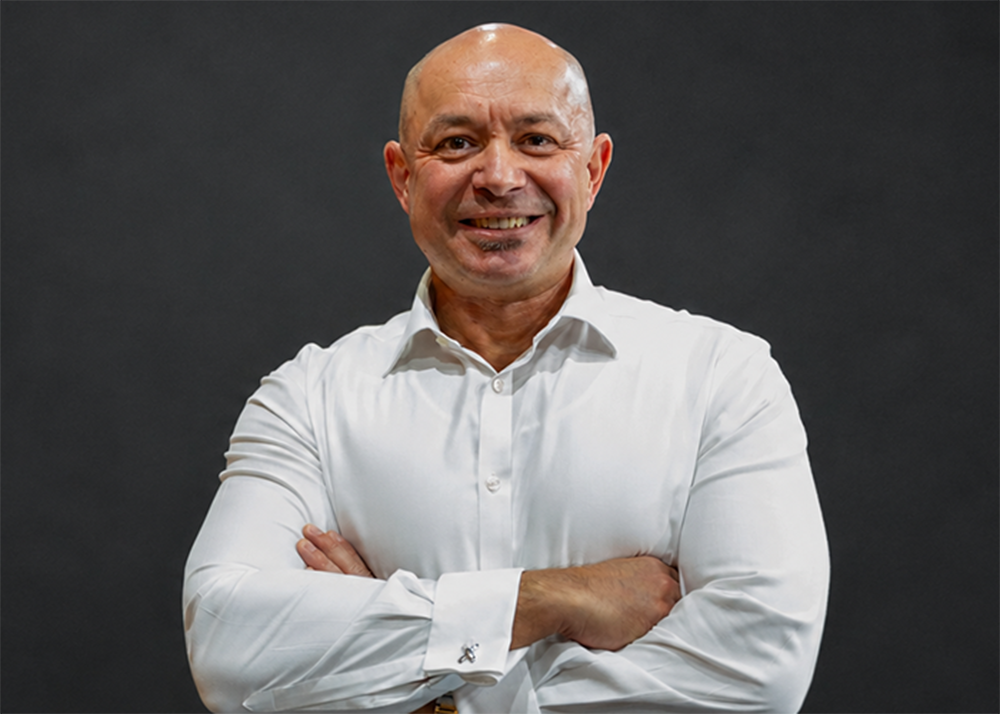
 Peter Mrkic, Managing Director at TOD
Excitement around the FIFA World Cup 2026 has been building across the Middle East and North Africa as fans debate their teams’ chances, discuss star players, and prepare to follow the matches. Although the tournament will take place in North America, Mexico and Canada, it feels closer than ever for audiences across the region.
This year’s FIFA World Cup carries particular significance for the Arab world. With a record eight Arab nations competing, it marks a moment shaped by progress, investment, and growing confidence. Established global stars will share the stage with emerging talent, while a new generation of fans engages with the game in ways that extend far beyond the pitch. The results will bring excitement and disappointment in equal measure, but the broader importance lies in representation and visibility.
The growth of Arab football has been gradual and sustained. Where participation once involved one or two teams, the number rose to four in both 2018 and 2022, before doubling again in 2026. Jordan, Morocco, Tunisia, Algeria, Egypt, Qatar, Saudi Arabia, and Iraq will all take part, reflecting the increasing depth and diversity of football across the region. No single team now carries the burden of representing an entire region. Different playing styles, ambitions, and narratives coexist.
While the tournament’s expansion created more opportunities, qualification remained highly demanding. Iraq, the final team to qualify, played 21 matches over 28 months. Each nation progressed through competitive qualification systems and domestic development structures, reflecting both effort and merit.
This progress has been driven by long-term investment across the region. Morocco’s run to the semi-finals in 2022 demonstrated the value of sustained youth development and diaspora integration. Qatar’s hosting of the 2022 tournament set new benchmarks in infrastructure and organisation, while Abu Dhabi’s involvement in global club football has contributed to raising standards and visibility. Saudi Arabia has accelerated its trajectory through league investment and structural reform, while Egypt, Algeria, and Tunisia have maintained consistent competitiveness. Jordan’s qualification signals that emerging programs are beginning to break through.
The players themselves reflect this evolution. Mohamed Salah’s achievements extend far beyond Egypt, while Achraf Hakimi has established himself among Europe’s elite. Players such as Musa Al-Taamari and Akram Afif are increasingly familiar to international audiences. When these players take the field, they are met with expectations shaped by performances at the highest levels of the game. Their presence highlights how the region is contributing to global football in a sustained and visible way.
Shifts in viewing behaviour – MENA
As the game has evolved on the pitch, the way it is experienced has changed even more significantly. The traditional model of watching a match from start to finish with limited interaction no longer defines how fans engage with football. Audiences today expect greater control, flexibility, immediacy, and increasingly, participation.
The Middle East and North Africa is one of the youngest and most digitally connected regions in the world. Social media usage is among the highest globally, and mobile-first behaviour has reshaped how content isst consumed. Fans engage across multiple screens, share reactions in real time, and access content on demand. These habits are reshaping expectations around sports viewing and influencing how platforms continue to evolve.
The rise of streaming
Streaming platforms sit at the centre of this shift. Over the past decade, the media landscape has steadily moved from traditional broadcasting models toward digital-first delivery.
While linear television continues to play an important role for major live events, it now operates alongside platforms offering more personalised and interactive experiences. Viewers increasingly want to choose how they watch, when they watch, and what additional information they access during a match.
At TOD by beIN, we see this shift every day in how audiences engage with live sport. Fans are no longer satisfied with a single fixed feed. They expect control, context and the ability to shape their own viewing experience. That expectation is redefining the role of the platform, from a distributor of content to an enabler of experience.
This is especially visible during major tournaments. Fans may follow one match in high definition while tracking another through a multi-screen feature. Key moments can be replayed instantly, with options to switch between camera angles, access live statistics, player data, and contextual insights, while also engaging in social conversations as matches unfold.
Watching football has become an active experience rather than a passive one. Fans participate in the narrative of the match through data, replays, and shared commentary, deepening engagement and strengthening the connection between audiences and the game. For platforms, this represents a shift in responsibility — from simply delivering coverage to creating environments where fans can connect more meaningfully with the sport.
For Arab fans, this evolution aligns naturally with broader cultural dynamics. Football has always been rooted in community and conversation across the region, and technology now extends that shared experience across borders and time zones. Matches played in North America can be followed seamlessly whether fans are at home, in cafés, in fan zones, or on mobile devices while commuting and traveling.
2026 ushering in the era of immersive football
The 2026 tournament will highlight how these behaviours have matured. Fans will move seamlessly between live viewing, social interaction, and personalised content, engaging with matches in ways that reflect their preferences and routines. The experience will be shaped as much by how the game is accessed as by what happens on the pitch itself.
This World Cup will be watched, discussed, and remembered differently from previous tournaments. The combination of increased Arab representation and evolving viewing habits creates a moment that feels both historic and contemporary — an opportunity for the Arab world to engage with the global game on its own terms, and for platforms like TOD by beIN to help define how that experience is delivered.
By Peter Mrkic, Managing Director at TOD