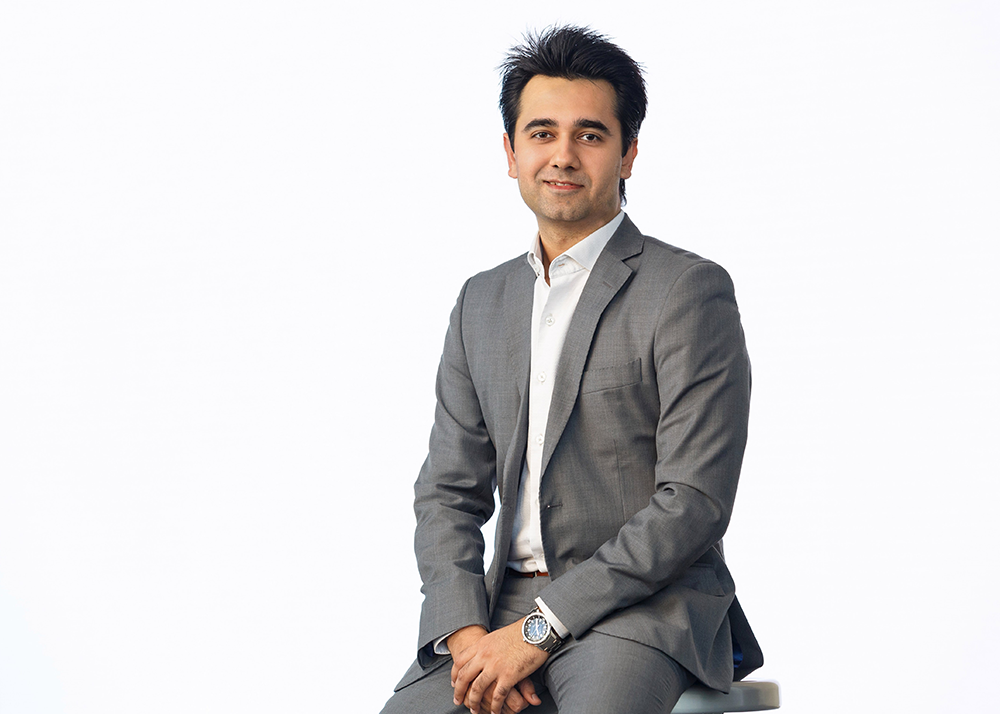
 Haris Munif, Head of Marketing – Asia, Middle East and Africa, HMD Global.
Let this sink in: More than 74 per cent of consumers across the Middle East and Africa say they feel positive about advertising created using generative AI, according to Kantar’s latest research. That’s the highest acceptance rate anywhere on the planet. To most regional marketing leaders, this is a victory lap. To me, it’s a flashing warning.
We have the world’s highest appetite for artificial intelligence (AI) content – and we’re about to starve it with generic output.
Let’s be honest, most brands have fallen into the trap of using Gen AI to ramp up their content volume on the cheap. More social posts. More variations. More formats, more frequently, at lower cost. The tools absolutely enable this – and yes, it’s a genuine advantage. But it’s also the floor, not the ceiling.
Gen AI tools are now very close to producing Hollywood-style brand films at a fraction of the cost – global brands such as Coca-Cola, Toys ‘R’ Us, Popeyes and HMD Global are already delivering cinematic campaigns at budgets that would have been unthinkable two years ago. When I look at what’s possible today versus 12 months ago, the quality gap is staggering. The economics have shifted. The thinking, for most brands, hasn’t.
Here’s what nobody wants to admit: the same prompts produce the same creativity. Feed a generic brief into a generic platform and you get generic, mediocre output – at scale. The Middle East advertising landscape is at real risk of becoming one giant mood board that every brand shares and nobody owns.
What AI should be used for is vulnerability – not as a brand value, but the kind of creative customisation that has always been too expensive to implement at scale. In a market as culturally diverse as ours, where consumer behaviour in Riyadh, Cairo and Dubai can vary dramatically even within the same campaign, the real power of GenAI is its ability to simulate thousands of local micro-nuances that no human team could afford to produce manually.
A Ramadan campaign that genuinely speaks to a Saudi Gen Z in Jeddah, not a pan-Arab generalisation of one. That’s not an efficiency play. It’s the end of the one-size-fits-all era for the Middle East. And that kind of precision requires better human thinking at the wheel, not less.
“The value is in brand stewardship: knowing which outputs align with a brand’s specific tone of voice and which visuals respect cultural sensitivities.”
This brings me to something I want to say directly to my peers: the cost savings from AI should be reinvested in better human talent. We have all felt the pressure to cut creative production budgets significantly because the tools now make it possible. But the brands that will win the next decade are those that use AI to lower the cost of experimentation. Then take those savings to double down on the human judgement that makes the output
worth seeing.
And that honest conversation must extend to our agency partners too. The traditional production house model – the big-campaign film, that exotic location shoot, costly hourly billing – is under real structural pressure. That’s not a criticism; it’s a reality the industry needs to confront together. But the new value agencies should be bringing isn’t access to the software. Any brand can buy a Google Veo subscription.
The value is in brand stewardship: knowing which outputs align with a brand’s specific tone of voice, which visuals respect cultural sensitivities, and which creative directions will build long-term brand equity rather than just fill a content calendar. If an agency isn’t building custom-trained models around your brand’s specific creative identity, it is operating at a level of generality that AI itself can replicate.
And let’s retire one more myth while we’re here – that human-created automatically means authentic. It doesn’t. I’ve sat through enough Ramadan campaign reviews to know that the most inauthentic content in this region isn’t AI-generated. It’s human-developed creative that hasn’t updated its cultural reference points since 2005. That Saudi Gen Z consumer isn’t moved by lantern imagery and orchestral swells. They’re moved by work that speaks to them. Whether a human or a machine helped get there is irrelevant.
So, the question for marketing leaders in this region isn’t whether to use Gen AI. That decision has been made. The real question is what we do with it – because this region has the cultural complexity, the audience sophistication and, frankly, the appetite to produce some of the most distinctive brand work in the world right now. No other market has that combination. Multiply your thinking or multiply your output. One of those compounds. The other just makes noise.
By Haris Munif, Head of Marketing – Asia, Middle East and Africa, HMD Global.