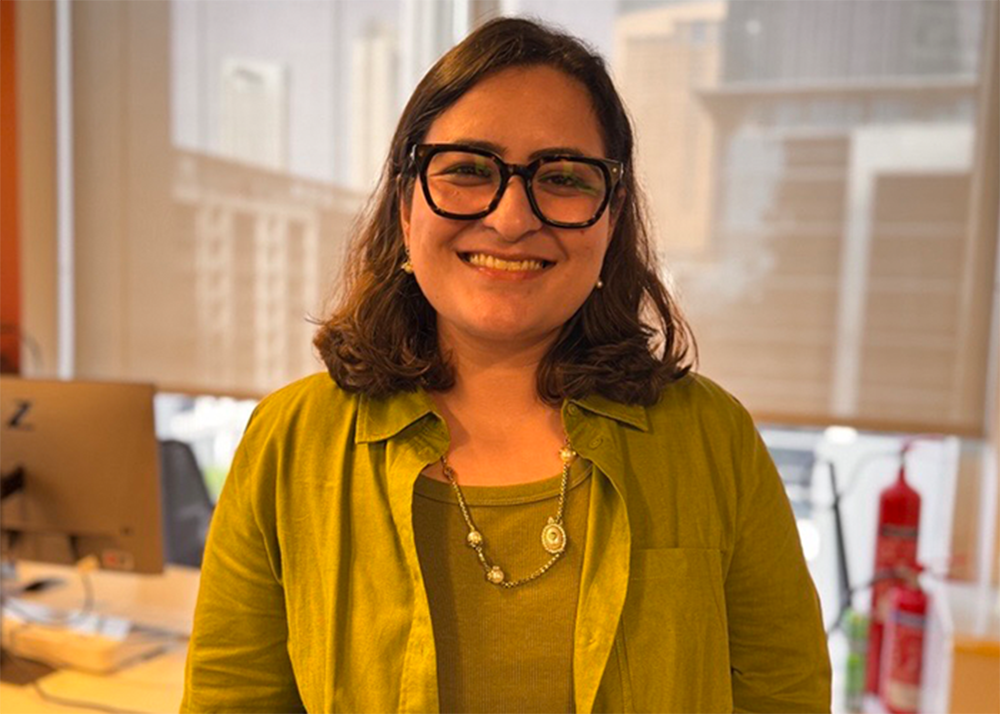
 Astha Sirpaul, Head of Strategy, TBWARAAD
Every International Women’s Day, we hear familiar language around women in leadership: resilience, empathy, multitasking, emotional intelligence.
The words are well-meaning. But they often land in a way that diminishes rather than defines power. They are used as compliments, but heard as caveats. As if women lead well, just differently. As if their strengths sit adjacent to real leadership, rather than at its core.
I have been thinking about that a lot lately, because the world around us feels like it is in a constant state of pressure. Economies are shifting. AI is accelerating change faster than most organisations are ready for. And closer to home, the geopolitical temperature seems to change almost by the week – alliances shifting, tensions rising, industries recalibrating in real time.
The distance between decision and consequence feels shorter than ever. In moments like these, leadership stops being theoretical. It gets tested immediately.
Which is why I keep coming back to a myth that surfaces every time things get difficult: the idea that crisis demands leaders to “man up”.
The phrase itself is revealing. It assumes that strength must look tough, decisive and immovable – qualities historically coded as masculine in leadership. When uncertainty rises, organisations instinctively reach for that archetype: the leader who commands the room and appears unshakeable.
But crisis has a way of exposing performance.
Because when systems are under strain, what people actually need from leadership is something quite different. Not dominance, but composure. Not someone who performs strength, but someone who can hold complexity without collapsing under it.
Which is why I sometimes think that in moments of real crisis, the call should not be to man up at all.
It should be to recognise the strength we have spent far too long mistaking for softness.
The qualities most often associated with women in leadership – listening deeply, building consensus, reading the emotional temperature of a room, navigating competing perspectives without forcing false certainty.
Yet, these are still too easily filed under the category of “soft skills”. As though soft means secondary. As though these abilities belong in culture decks and panel discussions, but not in the engine room when the pressure is real.
But anyone who has lived through a genuine crisis knows that these are not soft traits. They are stabilising ones.
When teams are anxious, people do not just need instructions. They need trust. When the path ahead is unclear, they do not need certainty performed at them; they need someone who can make sense of competing realities and move people forward without losing them along the way.
And when institutions themselves feel fragile, the leaders who hold the line are rarely the ones trying hardest to look invincible. They are the ones calm enough to listen, perceptive enough to read what is not being said, and secure enough to lead without turning every challenge into a show of force.
Perhaps women are often stronger in moments like these because many are naturally attuned to complexity in a different way. They are often more comfortable holding multiple perspectives at once, sensing shifts before they fully surface and responding without rushing to oversimplify the situation. What we often reduce to women’s intuition is precisely what becomes critical when the pressure is on.
Which is why International Women’s Day should not simply be about celebrating women who have made it into leadership. The more important question is what kind of leadership we continue to reward once they get there.
Empathy, collaboration and emotional intelligence are often grouped under “soft skills.” But when the pressure rises, these are not secondary capabilities. They are the ones that hold organisations together.
The real test is whether organisations recognise that and trust more women with the kind of decision-making power that matters most in moments of uncertainty.
Because if recent years have revealed anything, it is that strength rarely arrives in the form leadership archetypes imagine.
It often looks quieter. More perceptive. More attuned to people.
And perhaps it is time we stop calling those qualities “soft” and start recognising them for what they are: leadership.
By Astha Sirpaul, Head of Strategy, TBWA\RAAD