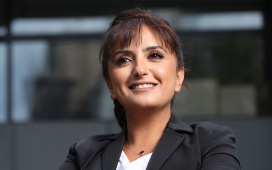
 Camilla d’Abo, Managing Director UAE, Action Global Communications
Last year will be remembered as a year when the marketing landscape shifted. Omnicom’s $13.3bn acquisition of Interpublic changed agency brands that had shaped our industry for decades DDB, FCB, and MullenLowe. Reportedly, 4,000 jobs gone immediately. Dentsu slashed 3,400 positions, an 8 per cent cut revealing how drastically it had overvalued its global ambitions. And the fallout from WPP’s merger in 2024 of BCW and Hill & Knowlton into Burson saw staff exits continue into 2025. Can the changes of 2025 potentially promise to be an invitation for independent agencies in 2026?
Sir Martin Sorrell offered his starkest assessment yet: “We’ll go from six to five, then five to four and maybe even four to three.” Apparently, the consolidation is expected to ultimately eliminate 27,000 roles.
Three truths for 2026
It is understandable that the rationale for consolidation is seductive. Omnicom speaks of “advanced intelligence platforms” and “AI-first innovation”. The merged entity announces its “2.6 billion verified global IDs” as competitive advantage.
I believe in AI. I experiment with it daily. I view AI literacy as essential for communications professionals. The power of these tools is undeniable.
But the platforms have become, as some have said, “nation states in their own right,” with market caps exceeding many countries’ GDPs. Meta’s Advantage+ runs at $20bn annually, small and mid-sized businesses going direct to automated systems. No agencies. No planners.
So, what happens if consolidation brings industry recalibrations and 2026 must demand change? I believe that there are three fundamental shifts that will define which agencies and which professionals will thrive in the year ahead.
The industry needs more connection
As we enter 2026, the opportunity is not to become more machine-like. There is a need to become more human, while leveraging machines for what they do best. This industry doesn’t need more content. It needs more connection. More courage. Greater integration. More humanity.
Independent agencies understand what matters most. We know that brands don’t win by producing infinite variations of mediocre work, but rather by creating original thinking that ideally makes people feel something, that makes an impact and changes behaviour.
In the Middle East, where connections and relationship depth are considered to be critical, this cultural context matters. Clients value personal involvement of senior leaders, not just AI machine-led content generators or account directors who change with each restructuring.
Why smaller is the new bigger in 2026
Potentially the split between large and small will grow. There is a role for giant global platforms that handle giant enterprises, but there is also a growing need for more elite-driven boutiques; founder-led, talent-first. This creates an opportunity for independent agencies, particularly in markets such as the Middle East, where client relationships and cultural intelligence still matter enormously.
Independent agencies offer qualities that consolidated giants cannot:
Agility: Independents move quickly while holding companies navigate matrix structures seeking approvals across layers. The ability to pivot in 48 hours rather than 48 days is a competitive weapon.
Alignment: Independent agencies aren’t optimising for quarterly earnings or shareholder returns. They’re optimising for client success and long-term relationship value. This changes everything.
Talent: The best talent doesn’t want to be employee #73,429 in a headcount reduction exercise. They want ownership. They want to build. They want their work to matter beyond a line item in a restructuring memo.
True integration is built on partnership
True integration isn’t always about housing every capability under one roof. It’s about solving for client outcomes rather than just internal efficiency.
The independent agency of 2026 needs to become exceptional at its core capability, then build an ecosystem of equally exceptional partners who share values and commitment to client success. Independent agencies have to focus on partnership rather than ownership. It’s messier on the org chart, sure, but it proves more valuable in execution.
This requires the type of integration that goes beyond competing for internal budget or proving your division’s worth in quarterly reviews. When your incentive is genuinely client success, then real integration can become possible.
This is even more important in the Middle East where the region’s client base emphasise relationship continuity and have a cultural preference for personal accountability. These create conditions in which partnership-based integration can flourish.
The way ahead in 2026
We have seen disruption at scale, but disruption is neither inherently good nor bad, it’s simply an opening. The holding companies are betting on scale, automation, and efficiency. They’re building for a world where AI communicates to AI, where integration means consolidation.
I believe 2026 belongs to the agencies, independent, boutique, or otherwise, that choose a different path. Agencies that recognise the irreplaceable value of human connection, cultural intelligence and trust. Agencies that prioritise relationships over systems and on the courage to be excellent at their core skills rather than adequate at everything.
What clients increasingly need are agencies who can move quickly because they are lighter, integrate properly because they are collaborative, and lead confidently because accountability sits at the top, not buried in an org chart.
For me, what will matter most in 2026 is not how efficiently agencies produce work, but how deeply they understand the people and products they’re collaborating with. It is also, I believe, the reason this year will belong to agencies that remember why they exist in the first place, to focus on work that connects people, and to have the courage to deliver on that rather than scale away from it.
By Camilla d’Abo, Managing Director UAE, Action Global Communications