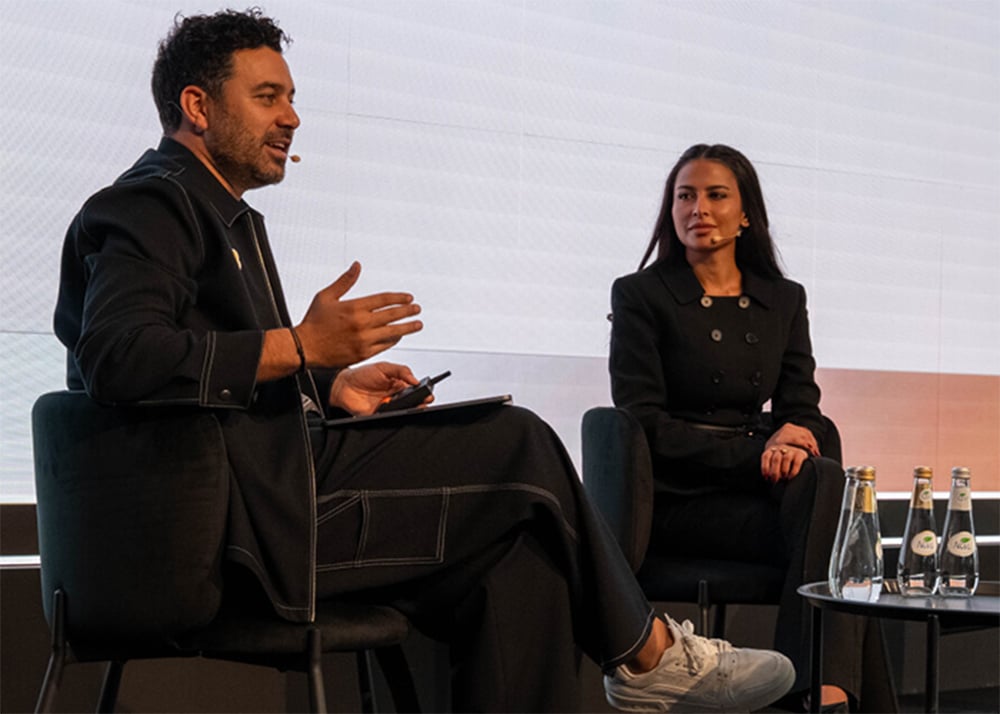
 From left, Najib Sabbagh, Founder and CEO of SSUP World, and influencer Lama Akeel share the stage on a panel titled 'Social Media Trends: Inspiring Creativity or Encouraging Imitation?' at Athar Festival 2025.
Amid conversations about ‘moving at the speed of technology advancements’ and ‘moving at the speed of culture’ brands are attempting to navigate the dizzying pace of social and cultural change without losing their core brand identity.
However, finding the balance between brand-safe trends, creative originality in the age of AI, authentic collaboration and co-creation with communities, and platform grammar requires a nuanced discussion, a methodical approach and strategic decision frameworks.
Campaign Middle East speaks to Najib Sabbagh, Founder and CEO, SSUP World, at the Athar Festival held in the heart of Riyadh at JAX District about recognising when a trend genuinely strengthens a brand’s story, keeping an eye on long-term impact, and treating participation as a deliberate strategic choice rather than a reflex.
Across a series of tenets — from how to translate brand codes into platform-native language, to the importance of scalable but safe operating models, to creating enduring IP — Sabbagh explains that lasting equity comes from consistency, craft, and authentic collaboration with the creator economy.
The key facet tying these ideas together is that culture is not merely about riding waves; it’s about building repeatable, brand-aligned paths that others choose to imitate.
Sabbah on ‘building creative equity without diluting the brand’
To set the stage, Sabbagh explains that brands should weigh opportunities through a four-faceted lens before participating in a trend. This is about balancing what the trend offers with what the brand stands for, and ensuring there’s a genuine path to lasting value rather than a momentary spike in attention.
“In today’s fast-moving social landscape, brands face constant pressure to jump on trends. At SSUP, we guide our clients and partners to evaluate opportunities through the lens of brand fit, freshness, feasibility, and fallout to determine whether participation will build lasting creative equity or simply add to the noise.” says Najib Sabbagh, Founder and CEO of SSUP World
The conversation then turns to how to keep that balance steady. A deliberate stance — engaging only when a trend aligns with the brand’s identity and offers a fresh angle the brand can own — keeps content authentic and reinforces what makes the brand distinctive.
It also foregrounds a longer-term perspective, ensuring each trend-driven moment strengthens memory, deepens engagement, and contributes to a coherent narrative rather than chasing short-term virality.
Sabbagh adds, “Strategic balance is key. We encourage brands to engage only when a trend aligns naturally with their identity and presents a fresh angle they can own. This ensures that every piece of content feels authentic and reinforces what makes the brand distinctive. At the same time, we consider the long-term impact to ensure that each trend-driven moment strengthens brand memory, deepens engagement, and contributes to a coherent narrative rather than chasing short-term attention or fleeting virality.”
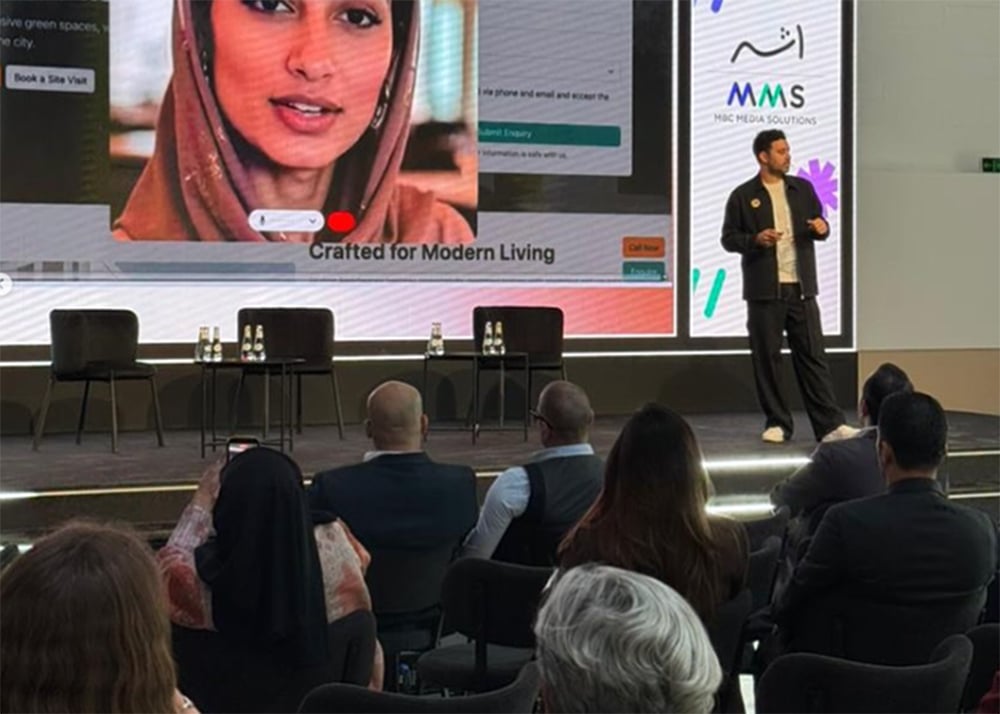
Sabbagh cautions that trends can accelerate cultural relevance only when approached with care. He describes identifying where participation adds value within a broader creative strategy, and ensuring that execution is crafted with credibility and quality so the moment becomes part of a timeless brand story rather than a one-off stunt.
“Trends can be powerful accelerators of cultural relevance, but only when approached thoughtfully. We work with brands to identify where participation adds value, how it fits into a broader creative strategy, and how it can be executed with the right level of craft, quality, and credibility. The goal is to turn trends into opportunities to tell the brand story in a way that is both timely and timeless,” Sabbagh explains.
A further point is that consistent principles safeguard the brand’s core identity. Participation should be a value-building decision, not a gamble, so that each move in the social landscape reinforces the brand’s cultural position.
He says, “By applying these principles consistently, our partners can maintain cultural relevance while safeguarding their core identity. Participation becomes a deliberate, value-building decision rather than a reactive gamble, ensuring that each move in the social landscape contributes to building lasting equity and reinforcing the brand’s position in culture.”
Finally, Sabbagh observes that platform-native expression is the baseline, but enduring equity stems from assets that are distinctive and repeatable.
“Platform-native expression is table stakes, but lasting equity comes from consistent, distinctive assets.”
– Najib Sabbagh, Founder & CEO, SSUP World
Brand codes inside platform grammar: making brands feel native on every channel
Sabbagh explains that translating a brand’s core identity into the “language” of each platform is the crux of creating content that feels native, without drifting from the brand’s essence.
The core is clarity about what defines the brand and what can evolve in formats, colours, tone, product moments and signature characters so that the same identity shines through across TikTok, Instagram and emerging channels.
Sabbagh says, “Operationalising brand codes within platform grammar begins with a clear understanding of the brand’s core identity, what makes it recognisable, distinct, and valued by its audience. The challenge is translating that identity into the unique language of each platform so content feels native without losing its essence.”
The aim is not to chase trends but to lead with a consistent voice that makes the brand unmistakable no matter the context.
This requires a practical playbook: rules for adaptation, boundaries and repeatable patterns for content creation that enable rapid response to trends and safe collaboration with creators, all while preserving identity.
“At a practical level, this requires creating a playbook that establishes rules for adaptation, sets boundaries, and defines repeatable patterns for content creation. It allows for scalability, enabling brands to respond quickly to trends, collaborate with creators, and leverage community participation without fragmenting identity,” Sabbagh says.
He adds, “This approach transforms platform-native content into a strategic asset. It allows the brand to remain culturally relevant, participate in social conversation, and engage audiences dynamically while simultaneously reinforcing distinctiveness and long-term equity. In essence, it turns social platforms from a space of reactive posting into an extension of the brand’s strategic storytelling.”

How brands can operate at speed while guarding craft: the right model for scale
The conversation then moves to how to run fast without compromising brand safety or craft. Sabbagh stresses that speed should not be a license to abandon strategy; instead, the best operating models unite strategy, creative, and production oversight in a single, aligned workflow with clear roles and guardrails.
“Trend-driven strategies often stress the content supply chain — speed, approvals, rights, and quality — more than strategy itself,” Sabbagh says.
He outlines a practical framework: a cohesive system where roles are defined, guidelines are in place, and templates help maintain consistency across fast-turnaround work. Trusted partners who share the brand’s identity and rules can scale production quickly, while still upholding quality and authenticity.
He adds, “In today’s social and cultural landscape, the pace of content creation is accelerating faster than ever. Brands that succeed are those that can respond in real time while maintaining the integrity of their identity and the quality of their output. The most effective way to achieve this is through an operating model that balances speed, control, and creative excellence.”
The right model, Sabbagh suggests, is not merely about quick outputs — it’s about originate formats that others imitate, not just ride waves. That approach yields durable wins rather than short-lived fads.
“The highest return often comes when brands originate formats that others imitate, not just ride waves.”
Incubating original, repeatable IP: co-creating culture with communities
Before the conversation concludes, Sabbagh turns to how brands can build recurring formats and rituals that invite communities to participate while staying true to the brand’s core.
He argues that the most lasting brands shape culture rather than merely react to it. The trick is to choose ideas that feel authentic to the brand and are rooted in human behaviour, then design repeatable formats that invite creator and audience participation without losing grounding in the brand.
“The most impactful brands are those that shape culture rather than simply react to it. Original formats, recurring series, and signature rituals allow a brand to establish its own voice in a way that audiences recognise and engage with over time. The key is to focus on ideas that are authentic to the brand and rooted in human behavior, rather than chasing what is trending,” Sabbagh explains.
Incubation then becomes a deliberate process: identify moments that naturally connect to the brand’s purpose, craft formats that are recognisable yet flexible, and invite collaboration with trusted creators or communities to widen reach without diluting identity.
He explains, “Incubating repeatable IP begins with identifying moments, actions, or narratives that naturally connect to the brand’s purpose. From there, brands can design formats that are structured enough to be recognisable but flexible enough to allow participation from creators and communities. Collaborative approaches, such as working with trusted creators or inviting audiences to co-create, amplify reach while keeping the content grounded in the brand’s identity.”
Illustrating the point, he pivots to a real-world example that embodies a repeatable storytelling framework anchored in the brand’s ethos. Nike’s Breaking 2 project is cited as evidence of how a bold, enduring concept can evolve into ongoing content and community participation—not a fleeting trend, but a sustained IP.
“For example, Nike’s ‘Breaking2’ project is a powerful illustration. What started as a one-off attempt to break the two-hour marathon barrier evolved into a repeatable storytelling framework, combining elite athlete performance, innovation, and human ambition. The format has since inspired follow-up content, community challenges, and creator collaborations under the same spirit of “pushing limits.” It wasn’t built on a fleeting trend, but on Nike’s enduring belief in human potential. Over time, Breaking2 became both a cultural moment and a long-term creative IP that others tried to emulate, and that is proof that when a brand builds from its core truth, originality becomes sustainable,” Sabbagh says.
The final word
Najib Sabbagh’s advice emerges as a map rather than a sprint: a route that combines selective trend participation with a disciplined discipline of brand codes, platform-native craft, scalable governance, and community-driven IP.
The core message is that brands do not win by surfacing the loudest moment; they win by crafting a persistent, recognisable cadence that audiences come to trust and creators want to join.
In a world where culture shifts at the speed of a scroll, his emphasis on clarity, continuity, and collaboration reads like a compass for long-term growth.
Trends should be curated rather than chased, and platform-native content should be viewed as a vehicle for storytelling rather than a substitute for brand substance.
When brands build repeatable formats and invite communities to co-create, they are not merely copying the rhythm of the moment—they are composing the lasting score of their cultural relevance.
The interview leaves us with a practical, human-centred vision: brands can participate in culture without losing themselves, provided they apply a thoughtful framework, translate identity with care across channels, and build enduring IP that communities want to engage with again and again.
It’s a reminder that the most enduring brands are not simply loud; they are resilient, adaptable, and recognisable in every frame. Like a well-turnished home, they are a place where people want to return, not just a stage where they momentarily pass through.