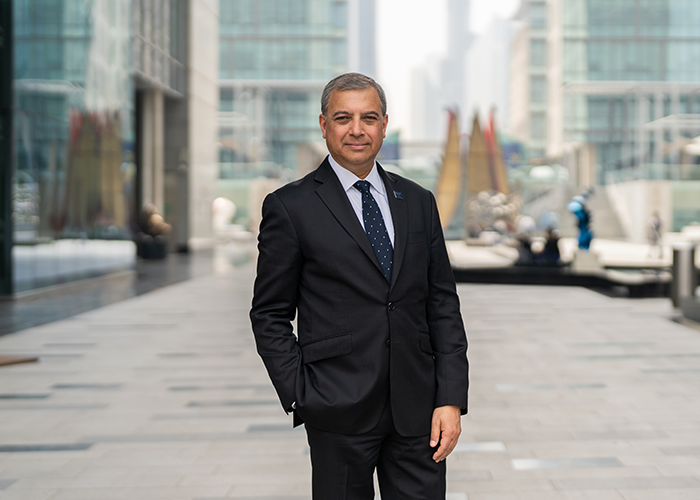
Prashant Malaviya, Vice Dean of Programs and Professor of Marketing, Georgetown University’s McDonough School of Business, Dubai and Washington.We are living in a time of heightened sensitivity. Conflicts, crises, and social divides have placed questions of identity and respect at the center of public life. In such a climate, the way brands communicate carries added responsibility. Audiences expect awareness, empathy and a realistic demonstration of the world people experience every day.
While creativity is highly valued in campaigns, cultural sensitivity is imperative and so is consistency between what brands say and what they do. If a company champions sustainability in its messaging, for example, but ignores environmental standards in its supply chain, consumers will quickly call out the disconnect. The same holds true for inclusivity, equity, and ethics.
Campaign Breakfast Briefing: The Future is Now is right around the corner. Be there on Friday, 12 September for a chance to meet 15+ marketers, witness the first-ever Campaign Debate and more. Click here to get your ticket now!
A single misstep, whether that be an ad that feels tone-deaf or a message that overlooks local nuance, can and does spark backlash immediately. Because we live in such a connected world, every issue or misstep can cause global implications. In today’s social-first era, when brands approach audiences with ‘a human touch’ through humility and respect, these same considerations can become sources of credibility, integrity, and long-term trust.
Brand integrity powered by cultural sensitivity
Global brands should approach the Middle East not as a market to ‘conquer’ but as a culture to learn from, where cultural sensitivity strengthens brand integrity, and integrity deepens sensitivity. More than half of the region’s population is under 30, making it one of the youngest regions in the world.
Social media use is exceptionally high, unlocking powerful avenues for creativity and self-expression, even as family, modesty, and faith remain central to social culture. In Saudi Arabia, for example, Snapchat is deeply woven into daily life, with over 25 million active users (nearly 70 percent of the Kingdom’s population).
The region is also incredibly diverse, with differences in language, religion, ethnicity, and social norms across countries. This diversity is highlighted by the large expatriate population, which is estimated at more than half of the GCC nations’ total population. This mix of youth, tradition and diverse perspectives means brands need to approach the region as a set of cultures to understand and engage with authentically, not make the mistake of assuming a monolithic culture.
Balancing global consistency with local sensitivity is a difficult tightrope, but a critical one. It requires cultural due diligence to anticipate sensitivities around imagery, language, and symbolism; building flexibility so campaigns can maintain a consistent global message while resonating locally; and working closely with local partners and talents who bring credibility, insight and a sense of nowness.
Where it was once about educating brands that a global campaign cannot be replicated in every market, the needle now moves quick. What works in the UAE today may not work tomorrow and that’s why on-ground intel and active dialogue between regional teams is important.
Diverse teams aid brand integrity
When it comes to teams, including younger voices, regional experts, and diverse perspectives ensures campaigns are not simply translated but resonate authentically. The Gen Z cohort of employees bring a unique lens, combining digital fluency, early adoption of trends, and a keen awareness of social nuances, cultural cues, pressing issues, and shifting attitudes.
Their perspective is critical for maintaining brand integrity in a diverse and fast-evolving cultural landscape, especially as this generation is increasingly influential in shaping trends and cultural conversations. In Saudi Arabia, around two-thirds of the population are part of this generation, and in the UAE, nearly half are aged 15 to 35, highlighting the prominence of Gen Z in the region. The environment in which they have consumed information has nurtured their ability to express complex emotions through memes, nostalgia, and romanticized micro-moments, combining creativity with social awareness to create storytelling that is less literal, more nuanced, and less likely to offend – vastly different to older generations.
The power of social listening
Campaigns succeed when brands listen, making social listening a must. But true listening now goes beyond tracking hashtags, it’s about sentiment. It requires observing how people communicate in real time, understanding the aspirations and issues they care about, and considering the concerns that influence how a campaign will be received.
Done right, embracing cultural sensitivity does not constrain branding, it becomes a strategic asset. Campaigns that demonstrate awareness, humility and authenticity strengthen trust and credibility across markets.
In our practice as an academic institution, we often turn to the principle of cura personalis – care for the whole person. A case can be made for ethical branding, with respect for human dignity, and the common good placed at the core.
Applied to campaign development, values such as heritage, community, and well-being resonates universally, and in the Middle East they are especially powerful touchpoints that help campaigns feel both authentic and culturally intelligent.
Branding is ultimately about humans connecting with humans. Brands are created by people and experienced by people, so every campaign reflects shared values, emotions, and choices.
Grounding campaigns in universal principles such as dignity, respect, and the common good, provides a reliable foundation, while also strengthening cultural intelligence. In the Middle East, a region that exemplifies the interplay of tradition, innovation, and global influence, these principles help brands engage authentically with diverse audiences while minimising bias and assumptions.
When humility, diverse teams, authentic local adaptation, and alignment between global and regional teams come together, campaigns resonate across generations and borders, proving that thoughtful, ethical engagement is both responsible and strategically valuable.
By Prashant Malaviya, Vice Dean of Programs and Professor of Marketing, Georgetown University’s McDonough School of Business, Dubai and Washington.