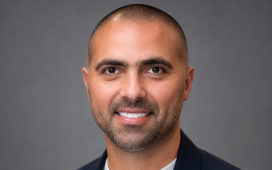
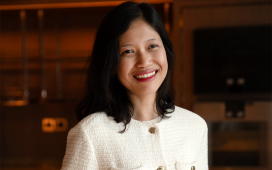
Steve Plimsoll, Chief Strategy Officer and Acting Chief Marketing Officer, HUMAIN
As artificial intelligence (AI) rapidly reshapes industries worldwide, Saudi Arabia has set its sights on becoming an AI powerhouse, positioning itself as a global leader at the heart of the transforming AI-driven economy.
At the heart of this movement stands HUMAIN – a PIF-backed AI company envisioned by Saudi Crown Prince Mohammed bin Salman Al Saud to place the Kingdom, and the greater Middle East region, front and centre in its development of AI infrastructure, Arabic large language models (LLMs) and cloud services.
At the Cannes Lions International Festival of Creativity in July 2025, Campaign Middle East spoke exclusively to Steve Plimsoll, Chief Strategy Officer and Acting Chief Marketing Officer, HUMAIN, about going beyond the headlines and billion-dollar deals to answer crucial questions: What makes AI truly transformative for businesses and brands? How do data quality, cultural context and clearly defined use cases determine the real impact of AI strategies on brand, marketing and the society at large?

At the core of AI lies data and used cases
At the outset, Plimsoll told Campaign Middle East, “In the same way that Aramco has led the region and the world in the oil sector, HUMAIN was established to lead the world in artificial intelligence. HUMAIN will be global first, but sovereign by design. We will power and enable AI from the ground up, creating capabilites in the region for the world, and this includes data centres, tokens, LLM models and applications built on top of it.”
Since its launch in May 2025, the company has already signed deals worth more than $23 billion with global AI leaders such as Nvidia, AMD, Amazon Web Services, and Qualcomm.
Plimsoll added, “HUMAIN will power global AI moves with data centres and large language models. We will enable AI infrastructure while delivering on global demand and the sovereign needs of Saudi Arabia and the region from a data protection, security and capabilities perspective. This includes storing data, processing data and managing it in our data centres in Saudi Arabia – for the region and for the rest of the world.”
However, brand and marketing leaders in the region leaning into artificial intelligence who are evaluating the effectiveness of AI strategies have stated that these strategies are only as good as the insights derived from AI analytics, which in turn are only as effective as the quality of first-party and third-party data that feeds AI.
When questioned about data integrity and clean data, Plimsoll responded, “Unfortunately, this is one of the less-asked questions and, yet, one of the most important ones. AI is trained on data. If you train AI on bad data, you get bad AI. If you then feed a bad AI model with bad data again, you get even worse answers. Sure, data remains one of the most important aspects in all of this.”
He added, “But more important than the data is the used case. Why are we using AI? What are we using it for? While it’s easy to say that AI is going to change the world, we need to understand how and why.”
Plimsoll uses the story of a drill as a metaphor to ‘drill the point home’. We buy a drill to drill a hole; we need the hole to put a nail in; we need the nail to put a painting up on the wall – so essentially we bought a drill to put a painting up on the wall. However, AI is like double-sided sticky tape that we buy to put up the painting instead, which metaphorically disrupts the ‘drill’ and ‘nail’ industry.
“This is why we’ve got to ask ourselves, what is the problem that I’m trying to solve?” Plimsoll explained. “We’ve got several tools at our disposal, and with the right data and approach, we can solve any problem. We can make any industry more efficient. We can make any human better. We can take the interdependency of human creativity and AI’s precision and power, and bring them together to create a unique force that is better than what it is today.”
View this post on Instagram
Arabic large language models: Built in Saudi Arabia, but for the world
Building on the conversation of making the brand and marketing industry better, Plimsoll also addressed the untapped potential of Arabic large language models (LLMs) targeting users in Saudi Arabia and across the Middle East – especially given growing conversations around the localisation of content and connecting brands with communities by leveraging the languages in which consumers think.
“In the Middle East, and specifically in Saudi Arabia, it’s important to understand that tradition, culture and heritage are embedded in everything we do, but most LLMs that we use are built of generic content available globally that are meant for everyone, everywhere. They don’t understand cultural nuance or the several sub-dialects of the Arabic language. It’s important to understand that the 400 million Arabic speakers in the world don’t all speak the same way,” Plimsoll said.
He added, “This is why we need to train AI and large language models based on how people speak and choose to ask questions in their language. Then we need to train LLMs to create generative content that is relevant, contextual and culturally nuanced enough to accurately and efficiently respond to a query set in a hyper-local context.”
Through the conversation, he went on to add that global campaigns ‘converted’, ‘translated’, ‘created’ or ‘generated’ to suit the Middle East region may look appropriate to a global audience, but completely inappropriate to audiences in the region due to its misrepresentation of national attire, colloquial language, cultural etiquette – all of which need to be addressed not only by creatives, but also by those developing LLMs for the region.
“We need to build the best Arabic large language models from the region that aren’t just about Arabic, but are about understanding the Middle East in all its facets, including religion, culture, tradition, heritage, customs, behaviours, preferences, intent and, most importantly, people – and that’s how we’re going to change LLMs and the future of marketing,” Plimsoll concluded.