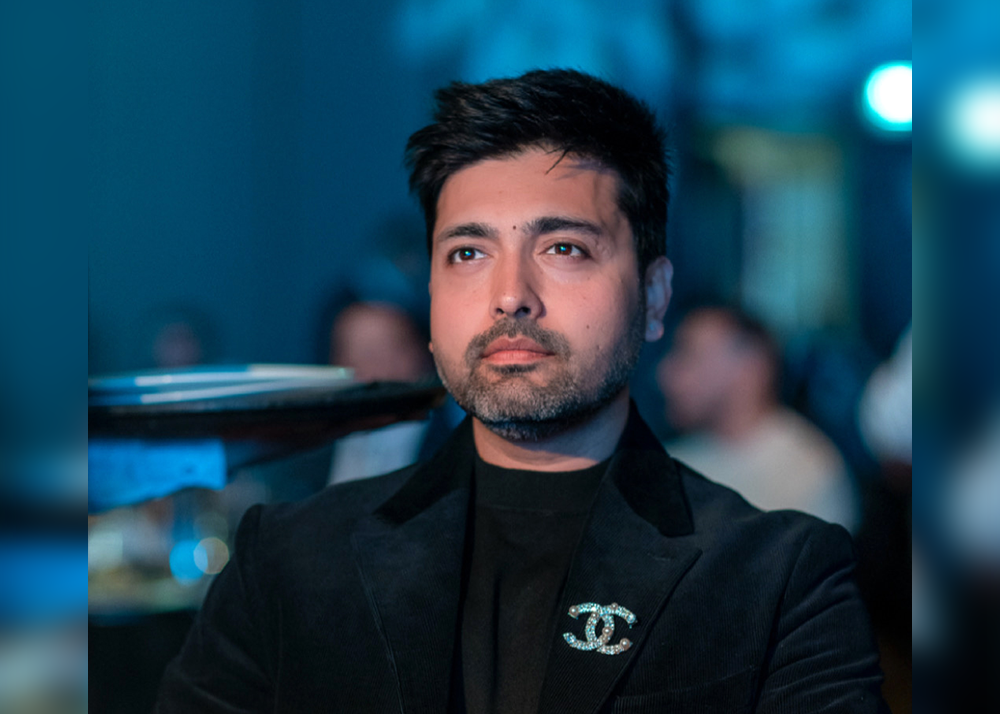
 Sagar Chotrani, Co-Founder and CEO, Publsh.
There is an insightful Arabic proverb: “Choose your neighbour before your house.”
The idea is simple but profound – the environment you inhabit, the people who surround you, the places you choose to be seen – none of these are incidental, they’re formative. Understand where your home sits and who it stands beside before you commit. The house itself is secondary; context is everything.
It’s a principle the luxury advertising industry is beginning to internalise, and nowhere is that shift more visible than in the out-of-home (OOH) space.
The conversations we have with brand directors and marketing leads today sound nothing like they did a few years ago. Back then, the pitch was straightforward – location, impressions, dimensions, rate card. Today, it starts somewhere else entirely. It starts with the audience.
Dubai is a city of extraordinary demographic complexity – high-net-worth individuals, ultra-high-net-worth residents, a globally mobile affluent professional class. This population is constantly in motion, but their movement is patterned and purposeful. They frequent specific districts, specific venues, specific experiences. They are not everywhere, they are somewhere – and knowing where that somewhere is has become the defining skill in media planning.
““Find the right audience; then assure time, attention and a place where the brand belongs.”
This is precisely why luxury brands have become so much more discerning about where their OOH appears. A billboard with a million impressions is worth considerably less to a Maison or a prestige automotive marque than a placement seen by ten thousand people actively living the lifestyle that brand represents. Audience relevance has moved from a nice-to-have to an absolute prerequisite. Both placements deliver impressions; only one delivers the right ones.
And the numbers prove it. A study conducted in collaboration with Nielsen and Publicis Media Luxe measured the emotional impact and brand lift of a luxury jewellery campaign on a premium digital landmark on Sheikh Zayed Road. The findings: 80 per cent campaign recall within seven days of exposure and a 68 per cent uplift in purchase intent among those exposed. Premium placement, in the right environment, produces measurable behavioural change.
If audience quality is the first pillar of effective luxury OOH, dwell time is the second – and arguably the most underappreciated factor in media planning. Luxury advertising isn’t a quick-convert proposition; it’s about sustained impression, emotional resonance and the slow building of desire. A consumer glancing at a billboard from a moving vehicle for 1.5 seconds is a fundamentally different opportunity from one who inhabits a space for several minutes.
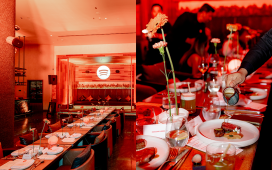
The latter is where luxury brands are investing – and increasingly, they know it. Locations where affluent consumers choose to spend extended leisure time offer something a roadside format simply cannot: repeated, unhurried exposure. When someone is dining at a beachfront restaurant or sharing a long lunch overlooking the sea, their guard is down, their receptivity is high and the brand associations formed in that moment run deep. That’s not a media impression, that’s a memory.
Which brings us to the third factor: look and feel. For a luxury brand, the environment in which it appears is inseparable from the perception it creates – and that includes the physical quality of the medium itself. The Nielsen and Publicis Media Luxe research reinforced this pointedly: qualitative respondents associated premium digital structures in uncluttered, design-led environments with authority and trust.
A luxury brand on a sun-bleached billboard or a borderless screen bolted to a wall doesn’t just underperform; it actively works against the brand. Luxury consumers are acutely attuned to quality, and they feel the dissonance instantly. The frame matters as much as the painting. Elegant proportions, considered placement, premium finishes – these aren’t nice extras. For a luxury advertiser, they are the baseline.
J1 Beach in La Mer understands this instinctively. As Dubai’s urban riviera – home to chic licensed beachfront restaurants and exclusive beach clubs, accessible by valet and dedicated jetty, drawing an international crowd in search of a sophisticated coastal experience – it sits at exactly the intersection of audience, dwell time and environment that luxury brands are seeking.
The spirit of the Riviera that J1 embodies isn’t incidental to its advertising value; it is the advertising value. A brand present here doesn’t merely borrow the space, it borrows the equity.
So yes, the brief for luxury OOH in Dubai has dramatically changed. It’s no longer “find us a prominent surface”; it’s “find us the right audience, give us their time and attention, and place us somewhere our brand genuinely belongs.”
By Sagar Chotrani, Co-Founder and CEO, Publsh.