fbpx
CreativeFeaturedMarketingOpinionPR

Why communications matters more in Saudi Arabia’s AI age

As Saudi Arabia accelerates its AI ambitions, communications professionals are being asked to do far more than shape messages; they are being asked to build trust, interpret risk and help institutions remain credible.

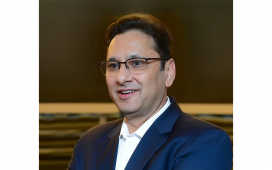
Mohammed Alhasan, Managing Director, ORA on communicationsMohammed Alhasan, Managing Director, ORA

There was a time when communications was treated as the function that came in near the end. Once the strategy had been decided, the transaction announced, or the crisis contained, communicators were asked to shape the message and carry it into the world.

That view now looks outdated.

Communications is no longer just the presentation layer of business. It is becoming one of the disciplines through which business is interpreted, tested, and trusted.

That shift is being accelerated by artificial intelligence, by a harsher information environment, and by a broader truth that many leadership teams are only beginning to absorb: reputation is no longer formed only by what an organisation says, but also by what the wider digital ecosystem says about it – and by what machines infer from that record.

In Saudi Arabia, that shift is especially visible. As Vision 2030 moves deeper into delivery and the Kingdom’s AI agenda advances from experimentation into governance, infrastructure, and institutional investment, communications is becoming more central to how organisations explain ambition, build trust, and sustain credibility under scrutiny.

This is not simply a story about new tools. It is a story about a new burden of judgment.

Increasingly, the first encounter people have with an organisation is not through a website, a spokesperson, or even a headline. It is through a prompt. People ask AI systems what a company does, whether it is reliable, how it is viewed, and what risks surround it. The answer that comes back is not a neutral directory of links. It is a compressed interpretation built from reporting, commentary, public information, and all the traces an organisation has left behind.

That is why AI matters so much to communicators: communications output is becoming part of the input layer for machine-shaped reputation.

That carries particular weight in Saudi Arabia. The Kingdom is not only adopting AI tools at speed; it is also building the ecosystem around them. In Saudi Arabia, AI is no longer a side story in technology. It is becoming part of the country’s economic and institutional architecture. For communications professionals, that raises the stakes. The more AI becomes embedded in public life, the more institutions will need to sound coherent, credible, and recognisably human.

For the industry, the more relevant question is no longer whether AI is entering communications. It already has. Early evidence from Saudi Arabia and the wider region suggests that AI is already being used meaningfully across PR and communications workflows. The more serious question now is whether the profession is developing quickly enough in judgment, ethics, and strategic fluency to use these tools well.

This is where the profession becomes more human, not less.

There is plenty of talk about AI making communications more efficient. Some of that is true. Drafting is faster. Monitoring is broader. Pattern recognition is improving. But efficiency is the least interesting part of the story. The real pressure falls on judgment: when to speak, when to stay silent, when to show humility, when to push back, and when the greater risk lies not in external criticism but in an internal failure of coherence that has finally become visible.

That work cannot be automated in any meaningful sense. A machine can generate language in seconds. It cannot decide, with real accountability, how an institution should sound when trust is strained, jobs are at stake, or public confidence is slipping.

And that matters because trust itself is under pressure. Across markets, misinformation and disinformation are now treated as major short-term risks, while confidence in institutions remains fragile. Audiences are not just overloaded; they are suspicious. They are quicker to assume manipulation, quicker to mistrust intent, and less willing to separate a company’s message from their broader doubts about institutions.

In Saudi Arabia, that question has particular intensity. Government entities, giga-projects, sovereign-backed institutions, and major private-sector groups are all communicating transformation at speed, often to domestic and international audiences at the same time. Communications, in that setting, is not simply about visibility. It is about making change intelligible and credible.

In my view, the future of the PR and communications industry in Saudi Arabia will not be defined by content volume, but by its ability to help institutions remain credible, legible, and human in an AI-shaped environment. In the years ahead, the industry will be judged less by what it publishes and more by whether it can guide institutions through complexity with clarity, discipline, and trust.

By Mohammed Alhasan, Managing Director, ORA