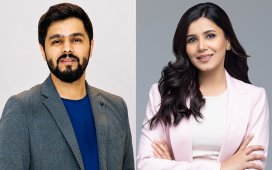
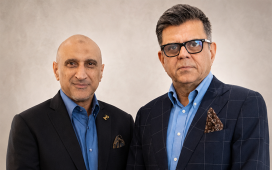
Boudy Nasrala, Co-founder and Chief Innovation and Growth Officer, WonderEight
For years, global brands approached Saudi as a localisation exercise: adapt the message, translate the campaign and adjust the visuals. Today, that approach is no longer enough. What we’re seeing across industries, from real estate to food and beverage (F&B), is a fundamental shift away from traditional marketing toward full go-to-market (GTM) thinking.
The brands that succeed are not the ones adapting global campaigns, but the ones designing integrated systems that connect brand, product and experience from day one. This shift is not cosmetic; it’s structural. It’s about rethinking how brands are built, how they operate and how they grow within the market.
This is your last chance to book tickets to the first-ever Campaign Breakfast Briefing: Retail & Commerce Media on Friday, 22 May. Get yours now for actionable strategy on enhancing ROI for retail and commerce media in the region.
At the centre of this transformation is the Saudi consumer. Young, digitally native and culturally confident, this audience is not looking for approximation; it’s looking for relevance. They are highly aware of global standards yet deeply connected to local identity and ambition. As a result, brands need to move beyond surface-level localisation and build strategies rooted in real cultural understanding.
This requires a different approach – one that combines deep local insight with global standards of execution. GTM strategies are no longer linear; they are ecosystems. From brand positioning to digital platforms, content and physical environments, every touchpoint plays a role in shaping perception and influencing behaviour.
What’s changing most is how decisions are made. Consumers are no longer moving through predictable funnels; they are navigating fluid journeys shaped by content, peer influence, digital platforms and real-world experiences. This means brands need to design for non-linear engagement where discovery, consideration and conversion happen simultaneously across multiple channels.
“We’re seeing brands move toward continuous engagement through content, platforms and connected environments.”
In sectors such as real estate, this shift is even more pronounced. Purchase decisions are high-value, long-term and complex. Marketing is no longer about showcasing properties; it’s about building full sales ecosystems. From immersive 3D experiences and virtual walkthroughs to data-driven digital platforms, brands are now influencing decisions across extended journeys, not just isolated moments.
This also introduces a new level of responsibility – how brands structure their presence. Every interaction, whether digital or physical, needs to feel intentional, connected and aligned with the overall strategy.
Disconnected touchpoints no longer just weaken perception; they directly impact performance.
This is where technology becomes a key enabler. AI, data and immersive tools are accelerating the transformation of marketing into a performance-driven discipline. Brands now can create personalised content journeys, optimise experiences in real time and engage audiences at scale without losing relevance.
However, technology alone is not the differentiator. The real advantage lies in how well strategy, creativity and technology are integrated. The challenge for brands today is not access to tools; it’s the ability to connect them into a cohesive system that drives both engagement and measurable business outcomes.
This shift is also changing client expectations. The conversation has moved from execution to impact. Brands are no longer looking for agencies that deliver campaigns, they’re looking for partners who can think strategically, move fast and directly connect branding to commercial performance. Integration is no longer a value-add; it’s the baseline.
What’s emerging is a new model of GTM, one that blends brand building, digital experience and performance into a single, unified system. In this model, marketing is not a function operating in silos, but an infrastructure that supports the entire business.
It also requires a different way of operating internally. Teams need to be structured around collaboration rather than specialisation – where strategy informs execution in real time and insights continuously refine direction. The speed of the Saudi market leaves little room for fragmentation.
Success, therefore, is no longer defined by the strength of a campaign, but by the strength of the ecosystem behind it. It’s about how consistently a brand shows up across touchpoints, how intelligently it adapts to data and how effectively it translates strategy into experience.
Across industries, we’re seeing brands move toward continuous engagement through content, platforms and connected environments. Marketing is becoming less about moments and more about journeys, where every interaction plays a role in influence, conversion and long-term brand value.
The brands that will lead in Saudi Arabia are not those that communicate the loudest, but those that build the most connected, intelligent and culturally relevant GTM strategies. Brands that understand that relevance is not a message; it’s a system.
And in a market evolving at this pace, the real competitive advantage is not in what you say, but in how everything works together.
By Boudy Nasrala, Co-founder and Chief Innovation and Growth Officer, WonderEight.