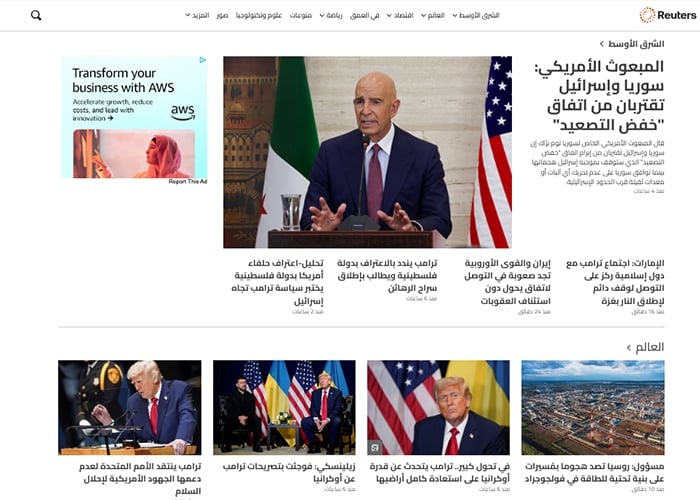
Reuters has launched a new Arabic website, marking the company’s third dedicated language platform in addition to English and Japanese, as an important part of its expansion in the Middle East region.
The new website will provide Arabic speakers with comprehensive, trusted and non-national coverage of breaking news, politics, business and finance, sports, climate, human interest, technology, entertainment and more, with more than 100 Arabic-language stories daily.
The global news agency has more than 2,600 journalists in more than 200 locations around the world, delivering fast, accurate and fact-based news, insight and analysis.
Early bird tickets to the Campaign Saudi Briefing: Media and Marketing are now on sale. Get yours now for access to conversations with key stakeholders across governmental entities, brands and agencies in Saudi Arabia.
Accessible from any location, the new website addresses the information needs of the fourth most spoken native language globally.
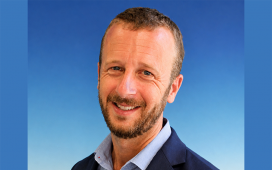
“Reuters first established its editorial presence in the Middle East in 1866,” said Josh London, Head of Reuters Professional. Almost 160 years later, our commitment to providing professionals with the trusted reporting needed to make informed decisions continues to strengthen.”
London added, “The introduction of our new Arabic website marks the latest investment in the region, alongside the launch of Reuters NEXT Gulf and digital subscriptions, reflecting the strategic importance of the Gulf in Reuters consumer strategy.”
The launch is the latest in the news agency’s broader Middle East expansion strategy. Earlier this year, digital subscriptions for Reuters.com were introduced in the UAE, Qatar and Kuwait – with more in the region to come – as part of a phased global rollout.
In October 2025, the global news agency will bring its definitive live journalism summit, Reuters NEXT, to the Gulf region for the first time.
Hosted in Abu Dhabi, the Reuters NEXT Gulf agenda is set to deliver insights from global and local leaders from business, government, NGOs, civil society, media, culture and academia across six core themes:
- Geopolitics,
- Economy & markets,
- Banking & finance,
- Technology & AI,
- Climate & sustainability, and
- Leadership through change.