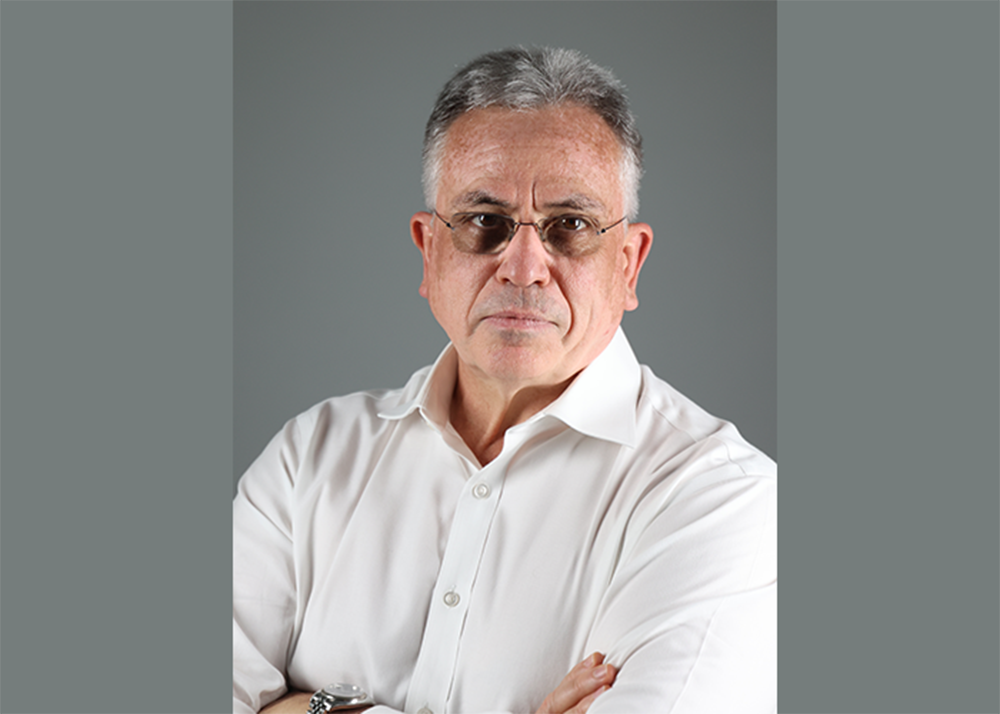
 Nicholas Labuschagne, Head of Strategy and Crisis Management, MENA at APCO
Business leaders across the Middle East are navigating a crisis environment that defies traditional playbooks. Even the most comprehensive crisis manuals struggle to cope with overlapping risks, rapid escalation and incomplete information. The challenge is no longer preparedness for a single event, but operating effectively inside sustained complexity.
Managing complex crises now requires adaptability, flexibility, and an open mindset — not rigid adherence to pre‑approved procedures. At the same time, dis‑ and misinformation dominate newsfeeds, making it difficult to understand what is really happening or how it will affect businesses. Uncertainty is everywhere — from how people work to how supply chains and connectivity can be secured.
Businesses rely on predictability and certainty to operate efficiently. In an era of polycrises, day-to-day prediction is no longer realistic. The challenge is not only complexity itself, but how organisations attempt to navigate it. This requires a shift from a certainty mindset to one grounded in strategic foresight.
Strategic foresight offers a robust, data‑driven approach to engaging with uncertainty. Rather than locking plans into a single path, it develops a set of plausible future scenarios and tracks the signals that indicate which one is emerging, allowing leaders to adjust plans, mitigate risk and seize opportunity as conditions change.
In complex operating environments, leadership effectiveness depends less on detailed instruction and more on clarity of intent. Avoiding micromanagement, setting clear objectives, and trusting people to adapt are critical when conditions change faster than plans can keep up.
This approach enables organisations to operate with speed and judgment under pressure—qualities that matter most in sustained uncertainty.
APCO’s senior management team began scenario planning well before hostilities escalated in the region. We recognised early that rigid guidelines would not withstand the complexity and pace of events
Instead, we established a decision‑making framework focused on three priorities: safeguarding staff well‑being, ensuring operational continuity and providing clients with clear guidance. Its effectiveness depended on a small, empowered leadership team able to act quickly, an approach made possible by extensive preparatory work done in advance.
We quickly saw that many organisations were struggling to integrate business continuity planning with crisis management. We now work with clients using an approach that reflects the operating realities of sustained disruption, and that has proven effective in our own operations.
Four elements consistently distinguish this approach.
1. Governance
The first differentiator is governance: clear leadership roles, escalation pathways and decision-making structures that hold under pressure.
In a multi-issue environment, delay is rarely neutral. Decisions not taken early are often taken later, under worse conditions and with fewer options. Effective organisations establish decision rights in advance, clarify who convenes whom, and define the thresholds that trigger a change in posture. They also use scenario planning that reflects today’s realities, rather than relying on playbooks designed for single-event crises.
When disruption moves rapidly across markets, sectors and stakeholder groups, governance becomes more than an internal control mechanism. It becomes a core resilience function.
2. Communications
The second differentiator is communications, designed to engage employees, partners, suppliers and other stakeholders with clarity and authority when it matters most.
Internal communication is especially important. Employees are often the most credible carriers of an organisation’s story, whether intentionally or not. When employees feel informed, protected and respected, organisations are better positioned to protect trust externally.
3. Technology resilience
The third differentiator is early visibility into system dependencies and cybersecurity vulnerabilities, before they escalate into operational risks.
Technology resilience is no longer a purely technical matter. It is a board-level continuity issue. Organisations that respond best understand their single points of failure, assess vulnerabilities early and treat cyber and infrastructure resilience as part of core operational preparedness.
4. Workforce continuity
The fourth differentiator is workforce continuity: safety protocols and contingency plans that keep critical operations running, wherever people are.
Workforce continuity planning must go beyond location strategy. It should include clear escalation pathways, check-in procedures, manager guidance and role-based planning that defines who must remain on site, who can operate remotely, and what minimum staffing looks like under pressure.
It also requires direct acknowledgement of the human dimension. During periods of uncertainty, concerns about safety, stability and job security rise quickly. If left unaddressed, these can become operational risks in their own right. Organisations that communicate early and plan clearly are better positioned to maintain stability and continuity.
What integrated preparedness looks like in practice
The consistent lesson is that resilience does not come from a single plan. It comes from integrated preparedness, where governance, communications, technology resilience and workforce continuity operate as one system.
In complex environments, performance is defined by how quickly leaders adapt when plans no longer fit reality.
By Nicholas Labuschagne, Head of Strategy and Crisis Management, MENA at APCO