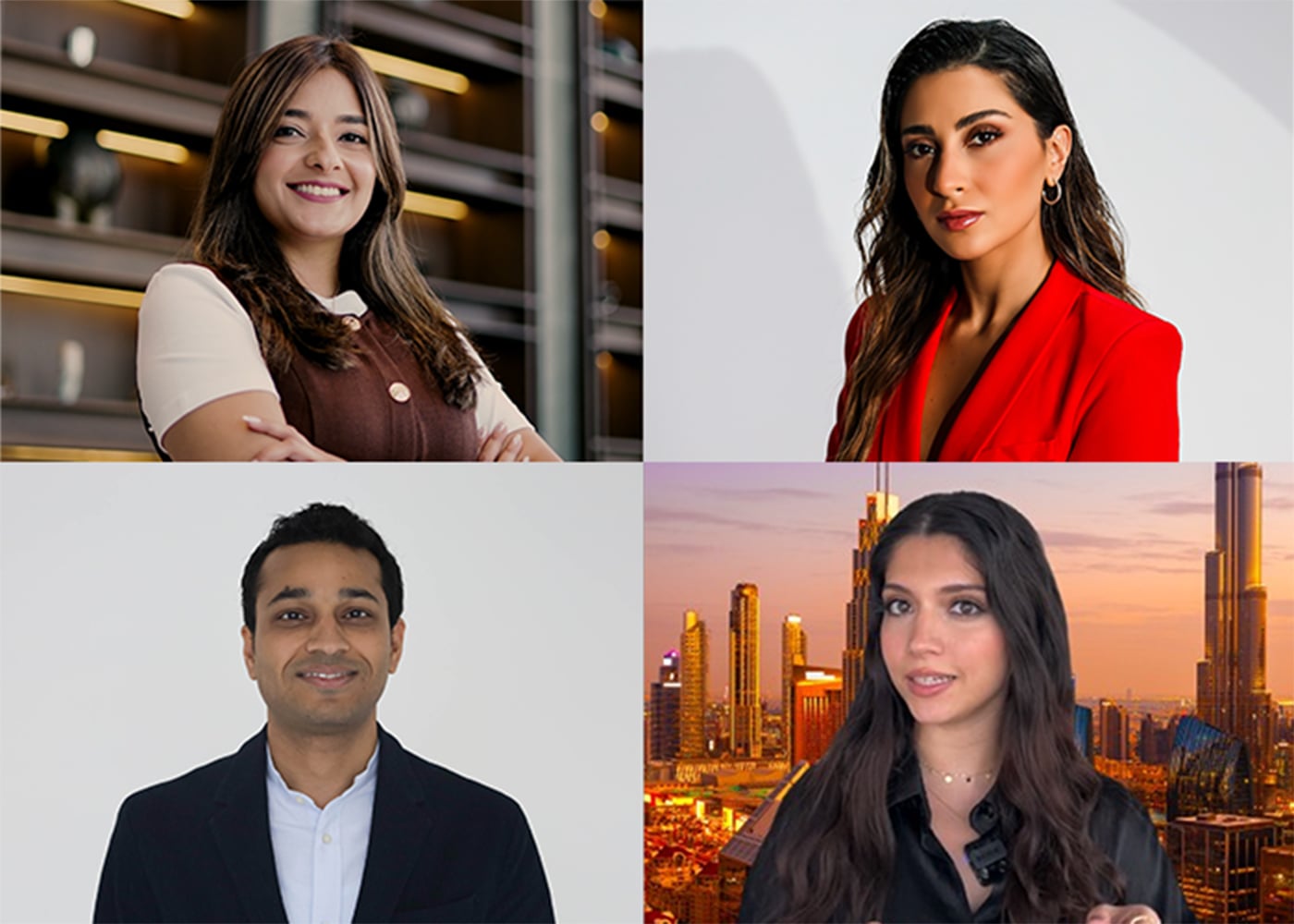
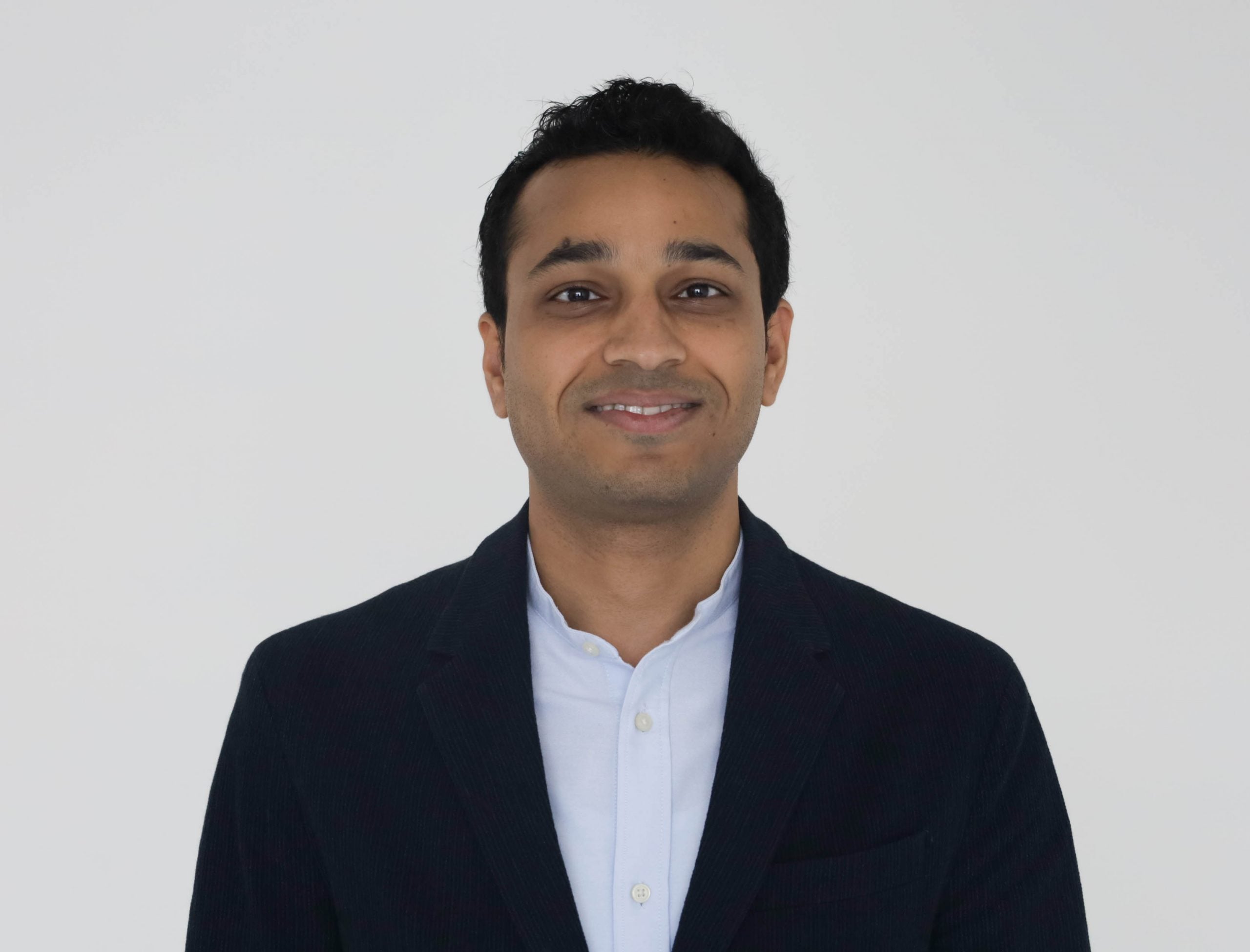
 From top left, clockwise, Sasha Bulchandani, Chief Marketing Officer, Sunrise Capital; Sarah Bou Hassan, Marketing Manager at DURAR Group; Lara Elcheik, Marketing & Communications Manager at SmartCrowd; and Govind Chaturvedi, Founder & CEO at Aimed Advisor.
In the Middle East real estate landscape, marketing is no longer a loudspeaker shouting for attention. Instead, it has become an architect quietly sketching a city’s new horizon and a storyteller narrating an emotional tale to deeply invested audiences.
Today’s real estate marketers view themselves as curators of trust, sculptors of brand credibility, and strategists building communities for families and human beings, not just tall towers for ‘investors’ or ‘owner-occupiers’.
This evolution did not happen overnight. It is the product of a digital hurricane, a deep comprehension of shifting consumer psychology coupled with heightened competition that have pushed marketers to become data scientists, experience designers and, above all, custodians of the customer journey.
As a result, some of the most competitive and compelling real estate brands are those who have moved beyond unit counts and floorplans to create and communicate ecosystems of belief, aspiration and connection.
Like a skilled conductor balancing strings and percussion, today’s real estate marketers are attempting to orchestrate symphonies across digital channels, immersive experiences and word-of-mouth advocacy. Each initiative, every brand touchpoint, forms part of a much larger narrative – one that promises not just homes, but new ways of living, investing and belonging.
Against this backdrop, Campaign Middle East speaks to four leaders at the forefront of this transformation. Their insights reveal a nuanced blend of intelligence, intuition and innovation steering the sector’s marketing strategies.
Storytelling beyond the sale: From luxury to lifestyle real estate
Lara Elcheik, Marketing and Communications Manager at SmartCrowd, begins the conversation, making the case for storytelling with purpose.
“More than anything, our marketing is rooted in education and transparency, not just promoting real estate opportunities. We aim to humanise real estate investing to make it less intimidating and more empowering,” Elcheik says.
She adds, “Storytelling plays a key role when it comes to educating our audience, with varied content formats like videos, blogs and simple posts that make real estate investing that much more approachable.”
Sasha Bulchandani, Chief Marketing Officer, Sunrise Capital, also paints a compelling picture of marketing’s evolution in real estate, likening it to moving “from showcasing properties to crafting compelling lifestyle transformation narratives.”
For Bulchandani, marketing isn’t merely about features or luxury – it’s about building legacies “one brick at a time,” nurturing long-term value and accessible luxury for Dubai’s ever more sophisticated buyers.
“We’re marketing the promise of accessible luxury and personalised living experiences for Dubai’s increasingly sophisticated buyer base,” she adds.
Sarah Bou Hassan, Marketing Manager at DURAR Group, echoes this sentiment, cautioning that “in real estate, if you’re not marketing, you’re simply not competing,” but warns against “theatrics or vanity” that lack substance.

Hassan says, “Real estate marketing should be about intention, consistency and long-term positioning. We anchor our strategy in substance, storytelling and brand alignment. We focus on reaching the right audience with the right message, without the noise. In a saturated sector, we believe that marketing should drive long-term trust instead of just short-term hype. Visibility matters, but credibility is what sustains. And in our world, loud marketing isn’t always smart marketing.”
The future, these leaders agree, belongs to those who combine innovation with integrity, data with empathy, and global standards with local sensibilities.
Bulchandani adds, “When residents become your marketing team through genuine recommendations, you’ve built something sustainable that reflects authentic brand values and consistent quality delivery.”
Digital transformation and data-driven precision
As the sector sails into digital waters, data has become not just a map, but the compass.
Bulchandani shares how data intelligence has become Sunrise Capital’s “north star”, revealing how a $100 million development such as Bellagio was guided by “deep market analysis showing 5 per cent to 8 per cent annual price growth projections and 7 per cent rental yields.”

Sunrise Capital leverages insights such as “off-plan transaction patterns represent 63 per cent of market activity” and then strategically positions projects to ride these currents of market momentum.
SmartCrowd’s Lara Elcheik adds her arguments to the discussion, making the case for data-driven precision and digital-first strategies.
Sharing the reasoning behind a data-driven approach, Elcheik says, “These days, marketing isn’t just about pushing properties to buyers. Rather, it’s about building trust, simplifying the complex and creating meaningful experiences that truly resonate.”
However, this means leaning into a digital-first, data-driven approach that empowers everyday investors to buy shares of Dubai properties.
Elcheik says, “From targeted campaigns and audience segmentation to digestible content and open house events, our overall marketing strategy focuses on both acquisition and retention, a balance reflected in our consistently high reinvestment rate.”
She adds, “We create omnichannel experiences that meets investors wherever they are, through personalised emails, engaging social content, interactive webinars, timely app notifications, and organic touchpoints that feel less like marketing and more like genuine connection. We also rely heavily on real-time market insights, as well as data and analytics to monitor campaign performance and investor behaviour, enabling us to continuously optimise our messaging and deliver relevant content at the right moments.”
Technology, though crucial, is not the end, but the means.
Bulchandani remarks, “Technology must serve human connections, not replace them.”
Human-first strategies and online-offline real estate experiences
Experience has become the new currency in the real estate marketplace, with buyers seeking not just homes, but a vision of their future.
Bulchandani describes Sunrise Capital’s approach to experiential marketing as a fusion of “physical experiences with digital innovation,” providing buyers with “sustainability showcases, smart home demonstrations, and community lifestyle previews that transform buying decisions from emotional impulses to informed lifestyle choices.”
The underlying thread? Trust.
“Our most powerful marketing tool isn’t heavy advertising – it’s strong word of mouth from existing residents and investors,” Bulchandani notes, celebrating repeat buyers and advocates whose organic enthusiasm forms a “marketing ecosystem that no advertising budget can replicate.”
Leaders agreed that strategic partnerships with fintech influencers and industry experts further expand reach and credibility while leaning into the latest tech capabilities unlock new digital and ‘virtual’ experiences for digital-first audiences.
Govind Chaturvedi, Founder and CEO at Aimed Advisors, further illustrates this pivot, celebrating immersive experiences such as virtual tours and AR staging.
“The magic of real estate marketing in the Middle East today lies in crafting experiences that resonate – whether in digital realms or crowded roadshow halls,” Chaturvedi says. “From VR tours to investor roadshows – I’ve seen how immersive storytelling and smart targeting create trust before the handshake.”
In the UAE, developers are already investing heavily in digital innovation: Immersive experiences such as virtual tours and AR staging are becoming mainstream, with engagement rising by more than 60 per cent compared with other traditional methods.
Meanwhile, AI-driven personalisation – such as predictive analytics and chatbots on WhatsApp – are also becoming indispensable.
Chaturvedi adds, “Tools such as sentiment-aware messaging now turn inquiries into warm conversations, meeting buyers where they feel most seen. What’s shifting is buyer behaviour: Millennial and investor audiences expect to explore properties remotely, via 360-degree visuals or TikTok-style clips that capture lifestyle, not just listings.”
However, leaders also agree that physical touchpoints remain vital – a brief stand at a roadshow can spark authenticity no screen can.
Chaturvedi summarises, “The playbook now is clear: Combine precise digital tools with human-first activations, and you don’t just market properties – you invite people into stories they already belong to.”
All in all, in the tapestry of Middle Eastern real estate, marketing has become both the loom and the thread, weaving dreams and data, aspiration and authenticity.
The sector’s leading voices remind us that the strongest foundations aren’t just concrete and steel, but trust and vision – brick by brick, story by story.
As real estate marketing continues to evolve, it is not the loudest, but the most genuine, nuanced and community-focused brands that will stand the test of time – building not just places to live, but legacies that last.