Instagram’s new Instants feature may look like another disappearing-photo tool, but it’s more useful to read it as a cultural correction.
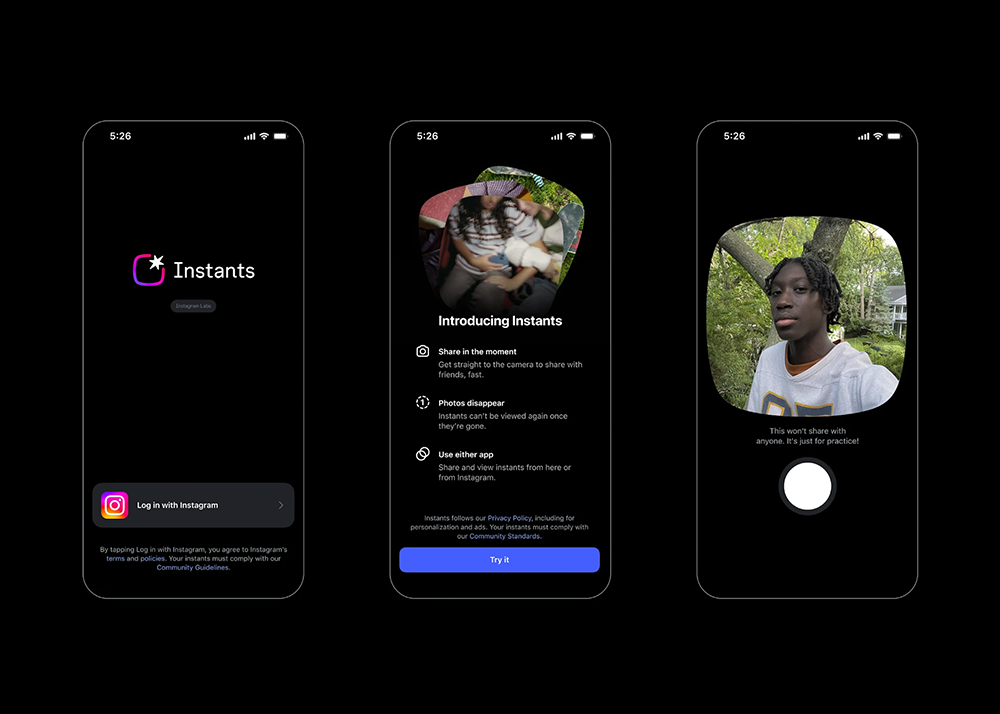
For years, social media rewarded the polished version of life. The grid became a shopfront. Stories became daily broadcast slots. Reels became the reach engine. Even casual posts began to feel like campaign assets. Instagram Instants pushes in the opposite direction: quick, unedited photos shared through direct messages or a camera-first entry point, designed to disappear after being viewed or expire if left unopened.
This is your last chance to book tickets to the first-ever Campaign Breakfast Briefing: Retail & Commerce Media on Friday, 22 May. Get yours now for actionable strategy on enhancing ROI for retail and commerce media in the region.
The mechanics are familiar. The signal is not. Instants suggests that the next phase of social sharing may not be more public, more permanent or more produced. It may be smaller, faster and deliberately imperfect.
That matters because the most important thing Instants removes is not friction – it removes performance. No heavy editing. No filters. No stickers. No camera-roll uploads. No perfect placement on the grid. If Stories are a stage, Instants are closer to a glance. If the feed is a showroom, Instants are a side conversation.
For the Middle East, that distinction is not academic. The region is already one of the world’s most socially saturated digital markets. According to DataReportal’s Digital 2025 Saudi Arabia report, Saudi Arabia had 34.1 million social media user identities in January 2025, equivalent to 99.6 per cent of the total population. In the UAE, DataReportal recorded 11.3 million active social media user identities and 99 per cent internet penetration at the start of 2025.

These are not markets where social is a side channel. Social is infrastructure. It’s where people discover, compare, validate, recommend, complain and buy. In such markets, the challenge is no longer simply reaching people. It is earning belief once everyone is already online.
That is where Instants becomes strategically interesting. A recent Campaign Middle East report on We Are Social’s UAE and Saudi behavioural research noted that UAE users move between an average of seven social platforms each month, while Saudi users move between 7.7. The same report highlighted that 48.1 per cent of UAE users and 60 per cent of Saudi users use social networks as a primary tool for researching brands and products.
This changes the role of content. A brand’s social presence is no longer just creative output. It is a live reputation layer. The feed is not only where campaigns are seen – it’s where claims are tested.
Instants also fit a regional behaviour that is already deeply established: the move from broadcast to chat. The same analysis by Campaign Middle East found that 98.5 per cent of UAE users and 96.5 per cent of Saudi users engage with messaging apps every month. The region’s most important digital spaces are therefore not only public feeds. They are private conversations.
The lesson is not that brands should rush into private spaces or treat disappearing photos as the next format to exploit. The lesson is more uncomfortable. People are seeking lower-pressure ways to communicate because the public internet has become too performative. Private-feeling formats reduce the burden of being seen. They make sharing feel more human, and they create a different kind of attention, one based less on scale and more on closeness.
The timing is also important because social content is entering its AI era. Generative tools can write captions, build assets, localise visuals and create production polish at speed. That efficiency is useful, but it also creates a trust problem. When everything can look impressive, people start searching for signals that something is real.
Low-production formats can become those signals. A rougher image, a live moment, a smaller audience and the absence of visible editing do not guarantee authenticity. But they change the texture of the interaction. They make content feel less like a finished asset and more like evidence.
That does not mean craft is dead. It means control is no longer the same thing as credibility. The strongest social strategies will know when to produce and when to simply show. They will understand that not every useful moment needs to be turned into a campaign.
Instants will not replace Stories, Reels or the grid. The curated feed still has value as an archive, portfolio and credibility signal. But the grid is no longer the whole story. Instagram is quietly reminding users that sharing was not originally about performance. It was about presence.
For brands in the Middle East, the question is not “how do we use Instants?” It is “where has our content become too polished to feel believable?” In a feed full of perfect content, the imperfect moment may become the one people trust.
By Joshua Mathias, Director, Publicity & Influence, C2 Comms.