A few years ago, if you wanted to know whether a song would work, you asked a radio programmer. Today, you watch what a 19-year-old editor does with a 15-second clip on TikTok — and whether three of his friends do the same thing within 48 hours.
This shift hasn’t just changed the music industry. It has rewritten the rules of how culture is built, distributed, and monetised. And for marketers — particularly in a region like the UAE, where audiences are young, digitally native, and unusually fluent in global internet culture — it’s a shift that matters more than most strategy decks acknowledge.
At 0to8, we’ve built a digital-first label around this reality. Our releases have been used from K-pop group TXT to brands like Porsche and Brabus, and by football institutions including the UEFA Champions League, the English Premier League, Manchester City, AC Milan, and FC Barcelona. None of it came from traditional media buys. All of it came from understanding one thing: micro-communities are the new media channels, and they don’t behave like audiences — they behave like distribution networks.
The audience isn’t the audience anymore
When we sign an artist, we don’t ask “who is the target listener?” We ask “which micro-community will recognise this first?”
It might be car culture editors making slow-motion luxury edits. It might be football highlight creators. It might be Brazilian short-form creators making absurdist comedy. These aren’t demographic segments – they’re tightly bonded global groups with their own visual codes, sound preferences, and editing grammar. They don’t share a country. They share a content language.
The mistake I see repeatedly in brand marketing is treating Gen Z as a single audience defined by age and geography. A 22-year-old car enthusiast in Dubai has more in common — content-wise, sound-wise, behaviour-wise — with a 22-year-old car enthusiast in São Paulo than with someone his own age in his own city who happens to be into something else. Geography is no longer the unit of segmentation. Community is.
Earlier this year we released “Vision” by our artist Udiennx. Atmospheric, cinematic, designed to sit underneath visuals rather than dominate them. We didn’t pitch it to brands. We released it.
A community of luxury car editors — independent creators who shoot and edit clips of Porsches, Ferraris, AMGs in cinematic style — picked up the track. The sound matched the visual grammar of what they were already making. Within weeks, “Vision” had become the default sound for high-end automotive edits.
Then Porsche themselves used the track in a TikTok post. That single video crossed half a million likes, which on TikTok translates into tens of millions of impressions, both for the brand and for the track. Then Brabus, who regularly use our music in their content, picked it up too. Then the next wave of independent editors. Then more brands.
This is community-to-brand-to-community transmission. Porsche didn’t license a track and force-distribute it. They walked into a trend that an editor community had already built, and amplified it. The brand got cultural credibility it couldn’t have manufactured. The track got a global audience it couldn’t have bought.
How micro-communities are rewriting brand growth in the UAE – the football case
Football has one of the densest, most active editor communities on TikTok — fan accounts producing goal compilations, tactical edits, transfer rumour reels, hype videos for upcoming matches. Millions of pieces of content every week, all hungry for sound that matches the energy of what they’re showing.
Several of our releases have done exactly that. Tracks like “Acido” by Udiennx and “Bad Parenting Funk” found their way into football editor culture and spread from there. Then the institutions noticed. The official accounts of the UEFA Champions League, the English Premier League, Manchester City, AC Milan, and FC Barcelona have all used our music in their TikTok content. We didn’t approach them. They walked into a trend that fan editors had already built.
For us, this is a reach you cannot buy. For a club or league, it’s something equally valuable — proof that they’re plugged into the actual rhythm of fan culture, not broadcasting at it from above.
“But does this work outside music?”
It’s the question I get most often. The honest answer: yes, the underlying mechanics are the same in any category where culture is being shaped on short-form video — fashion, automotive, beauty, sport, gaming, food. What’s specific to music is that we were forced to adapt earlier, because traditional distribution stopped working faster for us than for most categories. Brands have a few years of catch-up to do, but the playbook is portable.
What this means for how brands should actually operate
Three practical shifts are worth making in 2026:
First, invest in community intelligence, not just audience data. Knowing that 64 per cent of your target is on TikTok tells you nothing useful. Knowing which three creator clusters are currently shaping conversation in your category — and what their content grammar looks like — is the actual unit of insight.
Second, treat creators as collaborators, not amplifiers. The brief shouldn’t be “post this.” It should be “make this yours.” Brands that hand creators a finished asset get a paid post. Brands that hand creators a usable starting point get a movement. And occasionally, when a brand or institution itself joins a trend a community has already built — the way Porsche used one of our tracks, or the way major football accounts have picked up some of our releases — the result is bigger than any campaign budget could buy.
Third, measure adoption, not impressions. The metric that matters in this model isn’t how many people saw your content. It’s how many people remade it, how fast that spread, and how many adjacent communities picked it up. If your dashboards don’t track that, you’re optimising for the wrong thing.
The MENA region — and the UAE in particular — is one of the fastest places in the world for this shift to land. Creator volume is growing rapidly. Football culture here is already among the most engaged globally. Car culture is core to the region’s identity. Each of these is a community where micro-distribution dynamics are already at full speed, and where global trends and regional behaviour increasingly intersect on the same platforms.
For us, that overlap is the reason MENA is becoming a more important audience market every quarter. For brands operating here, it means the opportunity isn’t to import a global playbook — it’s to recognise that the region is already producing one.
The brands that will win the next five years aren’t going to be the ones with the loudest campaigns or the biggest media budgets. They’ll be the ones who understand that scale is no longer something you buy. It’s something a community decides to give you — if you show up speaking their language, at the right moment, with something they actually want to make their own.
The question isn’t how to reach audiences anymore. It’s how to earn the right to be reinterpreted by them.
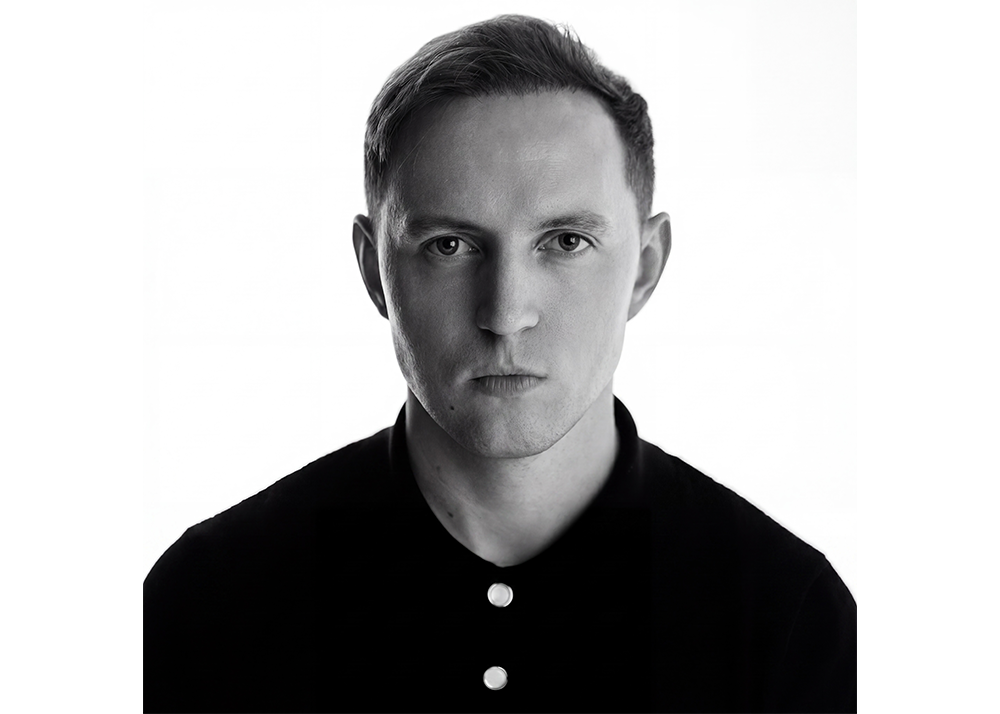
By Artem Shargin, co-founder and Chief Operating Officer of 0to8 (Zero to Infinity).