In the Middle East, gaming has moved beyond entertainment. It is now a cultural infrastructure where communities gather, identities are forged, and influence is negotiated in real time. This is not a gradual trend; it is a structural revolution.
The data confirms the shift: in the UAE, gaming penetration touches nearly 80 per cent of internet users, while Saudi Arabia has transformed the sector into a cornerstone of its national strategy. With over 377 million players across the MENA region, the scale is now impossible to ignore. Crucially, this audience is far more diverse than legacy perceptions suggest, with women now accounting for nearly 40 per cent of gamers across Saudi Arabia, the UAE, and Egypt. Yet, for brands, scale is not the prize, relevance is.
The modern MENA gamer is highly social, deeply cultural, and reflexively resistant to traditional advertising. Consequently, the question for the industry has shifted: it is no longer about whether to enter the arena, but how to participate meaningfully without breaking the game.
The end of translation
In the Middle East, localization is often misunderstood as mere translation. But a surface-level “re-skin” quickly fails here. Real localization isn’t about language; it’s about behavioural identity.
Meaning is created through context. Consider a Call of Duty character stepping into a Majlis during Eid to share Mandi. This isn’t just “decoration” it’s an act of hospitality that reflects a lived truth. In the same way, imagine Peely from Fortnite sitting in a Ramadan Majlis, having a samosa between rounds. It’s subtle, but instantly familiar. In this region, authenticity is rooted in ritual, not representation.
This shift is already visible in the recent Black Ops launches in Riyadh and Abu Dhabi, where global campaigns were rebuilt around local creators and community storytelling. We see this same synergy in events like Fortnite Champions Night, where tech giants like Logitech, social platforms like TikTok, and publishers like Epic Games converge to create a holistic ecosystem rather than a simple product pitch.
Crucially, this model is scalable. The blueprint for success; whether you are a AAA giant or a niche player, is to design for how players engage with each other first, and the brand second.
The new prime time for gaming
Gaming offers what traditional media increasingly lacks: sustained immersive attention. In MENA, this is not passive viewing but a core cultural touchpoint fueled by loyalty at scale. When local teams compete in the RLCS MENA, peak concurrent viewership can reach around 60,000. When creators headline events such as a Fortnite Invitational, live audiences can exceed 200,000, with tens of millions more across social platforms. These are levels of real time, participatory attention that traditional media rarely achieves and cannot replicate in the same way.
Whether backing a team or a creator, audiences align with their heroes as expressions of identity. For brands, presence is no longer placed beside the experience but embedded within it. In this landscape, the stream is the new prime time, where absence from these shared moments increasingly means absence from cultural relevance.
From games to cultural environments
Beyond streaming, games are evolving into interactive cultural spaces. What was once a medium for play is now a landscape for collective expression. Branded environments and custom in game worlds are shifting the industry focus from simple visibility to total immersion.
In a world where audiences pay to skip ads, gaming represents a massive shift in power dynamics. Here, players are actively choosing to spend time with a brand rather than being forced to view it.
Ramadan themed experiences like Lantern Fest inside Fortnite illustrate this evolution clearly. Rather than simply re skinning an environment, the activation was built around cultural rhythm and seasonal storytelling. It reflected how the region actually experiences celebration. In this space, a well designed Fortnite island can bring together tens of thousands of concurrent players in a single live moment, creating a level of shared presence that no other medium can replicate.
This is participation at scale. Players do not just view these worlds; they move through them and compete within them. This marks the definitive transition for brands in the Middle East. It is the move from advertising inside games to building within them.
The future of gaming in the Middle East
The future of gaming in the Middle East will not be defined by access to audiences because that scale already exists. It will be defined by how deeply it integrates into culture itself. The most effective strategies will not treat gaming as a channel, but as an environment to build within from the start, shaped by how players already behave, communicate, and form identity.
Gaming is no longer an emerging trend. It is a primary environment where the region’s future is being written in real time. For brands, the question is no longer how to enter the space, but whether they can build where culture is already happening.
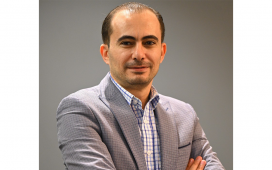
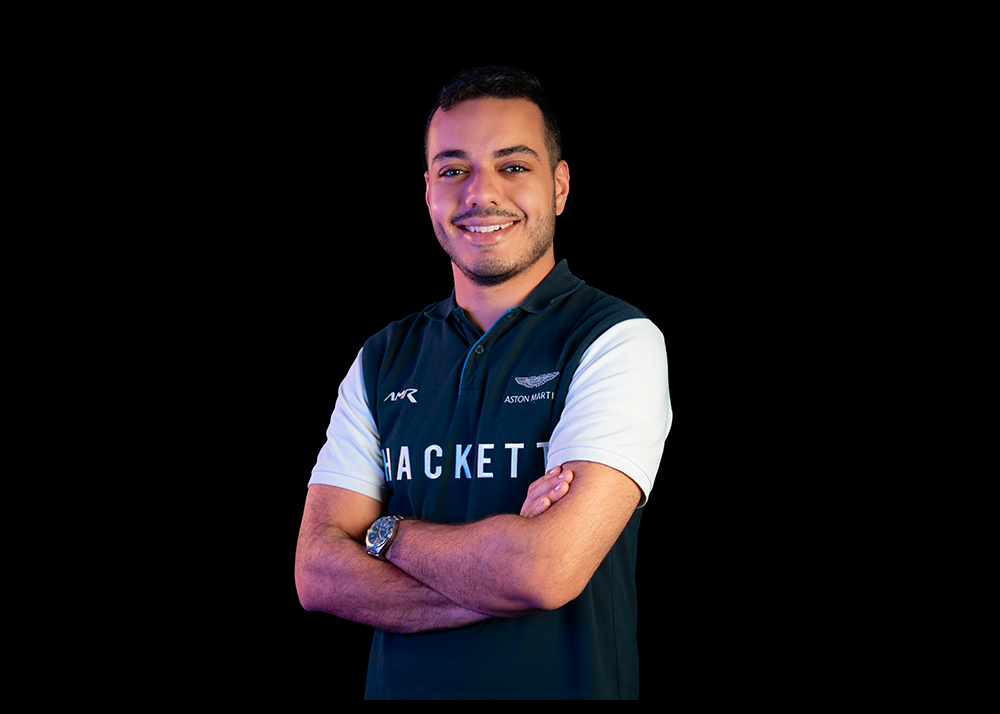
By Feras Mansour, Head of Strategic Programs, EGA.