

Every four years, the world doesn’t just watch football; it feels it. In the Middle East and North Africa (MENA) region, that feeling has evolved into something far more layered. The World Cup is no longer a distant global event; it is a cultural state of mind the region actively shapes.
Yet while the scale of attention continues to grow, the nature of that attention has fundamentally changed. Football is no longer anchored to a single screen or a fixed moment in time. It now exists across platforms, in conversations, reactions, memes and shared rituals that unfold continuously. In this environment, the scroll has become as important as the stadium.
For brands, this shift redefines the opportunity entirely. Success is no longer about visibility during the 90 minutes; it is about relevance across the 90 days around those 90 minutes. To win the next World Cup, brands must move beyond presence and toward cultural participation that lives inside the scroll.
At Anghami, we’re seeing this play out in how users engage during major cultural and sporting moments. During previous campaigns, we’ve observed spikes in playlist creation, social sharing and real-time engagement around key matches, showing how sound and social interaction extend the life of the game far beyond the final whistle.
The game beyond the game
The most important shift in football culture today is simple: the match is no longer the main event. It is the trigger.
What happens before kick-off and long after the final whistle is where fandom truly lives. Fans follow narratives, debate decisions, remix highlights, argue in comment sections and build identity through the content they consume and create. Every match becomes a shared storyline rewritten in real time.
This has transformed how attention works. Social platforms are now the natural stadium of football culture. In this environment, relevance must be earned through participation. Brands need to contribute to the ecosystem fans are already building, not interrupt it.
The sound of the World Cup
If football is emotion, sound is its memory system.
World Cup anthems capture the energy of a tournament and preserve it in a form that outlives the final match. Years later, a single track can instantly reconstruct the feeling of a season. In the MENA region, sound carries even greater weight. It bridges languages, borders and identities, creating a shared emotional frequency across audiences. Whether through chants or music, sound becomes the common language of fandom.
We’re seeing this come to life through content experiences, where fans move seamlessly between music, moments and match-day conversations in one place. On Anghami, this translates into richer engagement ecosystems where sound connects audiences, creators and live moments more fluidly.
From campaigns to living systems
This shift demands a move away from isolated campaigns toward interconnected ecosystems.
Real-time audio formats turn matches into shared experiences. Live commentary streams and responsive audio spaces allow fans to engage together regardless of location. These moments extend beyond full-time, becoming replayable content that keeps emotion circulating.
At the same time, social-first storytelling captures the culture around the game. Short-form content and creator-led narratives reflect how audiences behave online, where humour, predictions and emotional reactions become core currency.
Music then becomes the emotional amplifier that ties everything together.
Building a home for fandom in the scroll
In a fragmented attention economy, the most powerful role a brand can play is that of a host.
Creating a centralised space where fans can move between content, experiences and participation allows brands to sit at the centre of the journey.
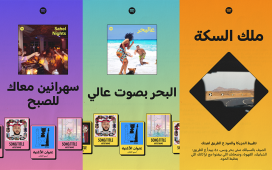
Anghami’s The Hub feature reflects this shift, giving brands a space where users can explore World Cup content, music and conversations in one unified experience.
Sound: where attention truly lives
Among all channels, audio remains the most underestimated.
In the MENA region, no platform has invested more deeply in this truth than Anghami. With over 70 million users across 22 Arab markets, it sits at the intersection of audio, identity and fandom.
Unlike visual content, audio integrates into daily life. It lives in commutes, workouts, late-night scrolls and background moments where attention is fluid. It creates intimacy without interruption.
When combined with context and personalisation, audio becomes a constant companion throughout the tournament.
Brands that will win
The next World Cup will not be defined by which brands show up the most, but by which of them resonates most deeply.
Winning brands will understand that fandom is no longer linear. It is rhythmic, fragmented and continuously reshaped in the scroll. They will build experiences around the game, collaborate with creators instead of broadcasting over them and use sound as a primary emotional connector.
Because in today’s landscape, attention is not captured. It is earned, shared and reshaped in real time.
For brands ready to move from presence to participation, the opportunity lies in building experiences that live beyond the match, in the moments, sounds and stories fans carry long after the final whistle.