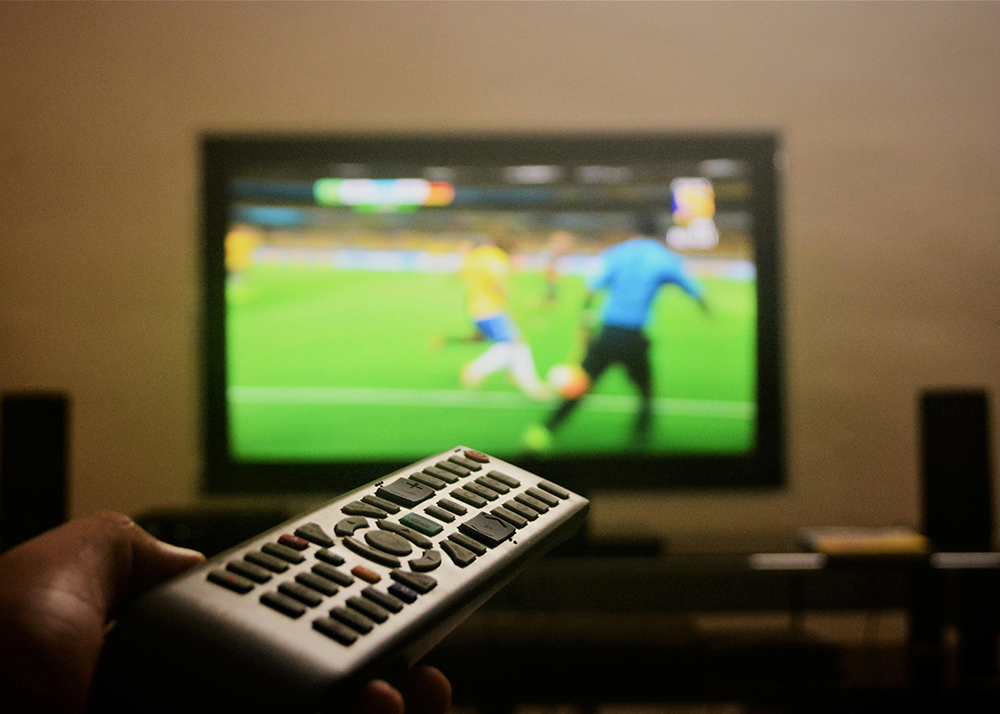
For many decades, the way in which sports consumption occurred was quite predictable. The audience would plan their day around the kick-off, switch on the TV or open their sports app, and watch the game. The experience was linear, and the platforms were very defined. Well, this script has now changed, particularly with regards to Gen Z.
The Gen Z audience does not “go and watch” sports in the way that previous generations have. Instead, sport now “finds” them.
In the Middle East, as well as many other countries around the world, the Gen Z experience with regards to content consumption is no longer platform-first, but feed-first. The lines between entertainment, community, and live sports have become increasingly blurred, and this has significant implications for the future.
The feed as the front door
One of the biggest misconceptions with regards to social-first sports consumption is that this somehow represents a step backwards in the overall sports experience. For Gen Z, this is not the case.
Every time the audience has to switch between platforms, this creates friction. And friction kills engagement.
If the audience has to leave the feed, open another app, log in, and then wait for the stream to load, this creates friction. Staying in the feed ensures that the experience remains live, social, and engaging.
That is important because Gen Z doesn’t just want to see a goal. They want to see how others respond to that goal. They want to see context, humor, debate, and instant feedback from their community. That is what social platforms are designed to deliver.
This is especially true in mobile-first countries in the Middle East, where Gen Z has skipped over broadcast altogether. For them, the feed is not a supplementary screen. It is the screen.
What FIFA’s TikTok move really signals
That is why FIFA’s move to broadcast World Cup moments on TikTok Live is so interesting. It is not social media as marketing. It is social media as infrastructure.
In putting live moments inside TikTok, FIFA is reinventing what we mean by primary viewing. Relevance is not something that happens outside of social media. It happens inside social media.
So as we look to the 2026 World Cup, what we should take away for ourselves and for brands, leagues, and media companies is that social media is not just a supplementary channel. It is where fandom is created, where momentum is built, and where attention is won.
For football-crazed nations in the Middle East, who are rich in digital engagement, there is a unique chance to win over Gen Z fans who will never even think to tune into broadcast in the first place.
Live sport doesn’t lose value — attention compounds it
There is a common concern that social media hurts live sport. The numbers prove us wrong.
Social engagement does not replace live viewing, but rather fuels it. Short-form content, commentary, and live reactions are accelerants that create anticipation, emotional investment, and cultural relevance. In fact, in many instances, they drive people toward more live viewing, rather than away from it.
For Gen Z, the entire match is the reward, not the entry point. The feed is the warm-up. The live experience is the payoff.
What this means for brands, leagues, and media owner
What does this mean for brands? The implication is clear but uncomfortable for brands: for Gen Z, the sponsor is more important than the sponsorship spot.
For younger audiences, static sponsorships and logo-heavy integrations simply do not matter. But what does resonate is relevance in the moment. The brands that understand how to show up in the feed, without disrupting the feed, are the brands that matter.
What does this mean for media owners? The implication is that the entire audience experience is now more important than the final destination. Reducing friction, driving engagement, and keeping the fans within the experience is now table stakes.
What does this mean for leagues and rights holders? The challenge for leagues is balance. The next phase of sports media will be defined by the ability of leagues to balance the value of premium broadcast rights with the role of social platforms as a necessary infrastructure, rather than a competitor.
As the 2026 World Cup looms into view, the question isn’t whether Gen Z engages with sport. They already do. The real shift is how they engage, and it’s fundamentally changing what sports fandom looks like.
By Mike Ford, CEO, Skydeo.