The digital advertising playbook is being rewritten. Consumers in the Middle East now move fluidly across connected TV (CTV), streaming platforms, digital out-of-home (DOOH), email and mobile.
Legacy marketing stacks can’t keep up, while budgets are under pressure to deliver both measurable performance and long-term brand equity.
From fragmentation to orchestration
Disconnected adtech and martech tools lie at the heart of today’s inefficiencies. When systems don’t speak the same language, spend is duplicated, audiences overlap and reporting lags behind decision-making.
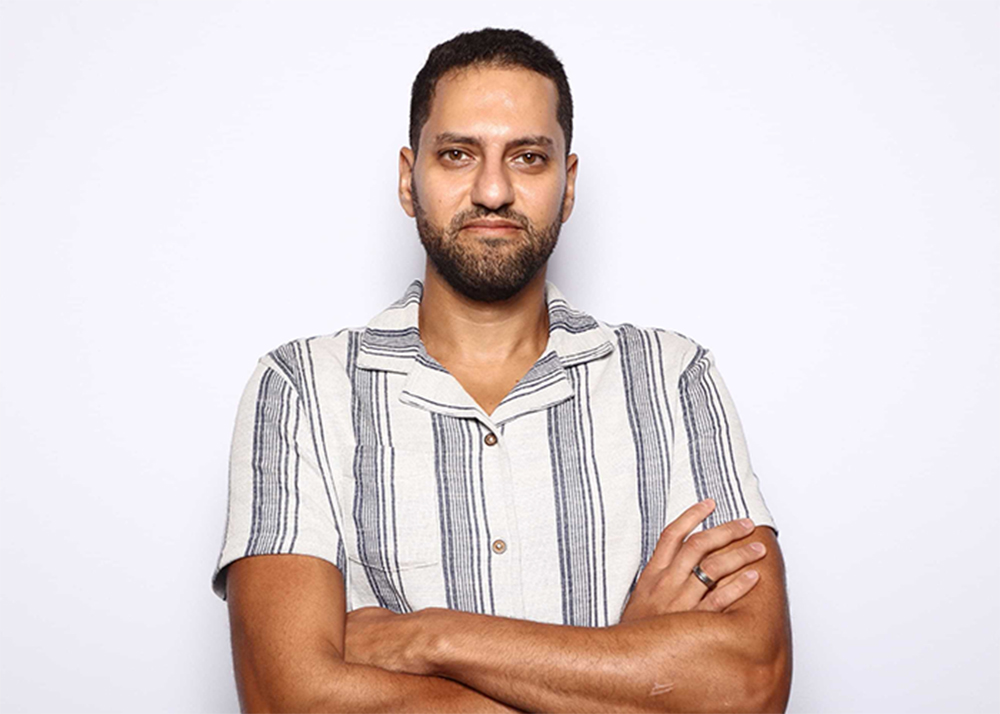
Vitaly Pecherskiy, CEO and co-founder of StackAdapt, explains, “Programmatic and owned channels like email have always existed in silos. The opportunity is to consolidate them under one roof, unlocking synergies and universal reporting across the entire customer journey.”
Three structural shifts are driving this rethink.
Changing media dynamics – CTV is fast becoming the new screen of choice across MENA. The region’s CTV advertising market is projected to grow from $18.5bn in 2025 to $65.2bn by 2031, a compound annual growth rate of roughly 23 per cent (Mobility Foresights, 2024).
DOOH continues to evolve as cities across the GCC digitise their infrastructure, while owned channels such as email and SMS remain powerful performance levers. Globally, brands report an average $36 return for every $1 invested in email marketing (Litmus, State of Email 2023).
Walled-garden concentration – WARC and IAB MENA both highlight that as programmatic growth consolidates within closed ecosystems, marketers without an open-internet strategy risk losing transparency, agility and data ownership.
Economic pressure – Budgets are being held tighter, yet leadership still demands proof that every dirham drives value. Measurement silos between DSPs, CRMs and analytics systems make that proof difficult to produce.
The non-linear funnel
Only around 5 per cent of buyers are in-market at any given time; the other 95 per cent represent future demand, according to the “95-5 Rule” research by The B2B Institute and the Ehrenberg-Bass Institute.
Growth depends on balancing always-on brand presence with precision activation when intent emerges.
The old “last-click” mindset no longer works. Modern marketers use a layered approach to measurement:
- Media mix modelling (MMM) for top-down budget allocation across channels and markets.
- Multi-touch attribution (MTA) for bottom-up analysis of the customer journey.
- Incrementality testing to prove lift from specific tactics, such as adding CTV or layering email into a campaign.
Attention metrics, signals that measure whether impressions genuinely engage, add another dimension, helping teams link exposure to business impact.
What a unified adtech and martech stack enables
A unified stack transforms marketing from fragmented execution into orchestrated growth. Instead of running separate systems for media buying and lifecycle marketing, teams operate within a single environment.
- Paid and owned activation in one platform
Programmatic channels, CTV, video, native, display, audio, DOOH, run alongside email and SMS, allowing brands to design seamless journeys from impression to inbox and beyond. - First-party data at the centre
By connecting CRM and customer-data platforms such as HubSpot, Salesforce and Klaviyo, marketers can securely activate first-party data in real time. StackAdapt’s integration with Snowflake enables audience creation directly within data warehouses without exporting sensitive information. - Built-in AI intelligence
With AI tools like StackAdapt’s marketing assistant Ivy™, marketers can query performance, receive recommendations and adjust campaigns instantly.
CTO Yang Han says, “AI is forcing companies to rethink how marketing and advertising teams are structured. A unified platform powered by AI eliminates friction and helps teams work toward common outcomes.”
Cross-channel personalisation
Personalisation should extend beyond CRM and email.
When adtech and martech share the same data foundation, messaging becomes consistent across all channels, from a personalised email to a contextual CTV ad, creating one continuous brand experience.
The bottom line for adtech and martech
Marketing silos are over. Boards now expect the same level of accountability from marketing as they do from finance: clear evidence of incremental revenue, efficiency gains and brand impact.
With a unified adtech and martech stack, marketers can finally deliver that clarity, turning fragmented consumer journeys into orchestrated growth engines, powered by data, AI and seamless activation from first impression to lasting impact.