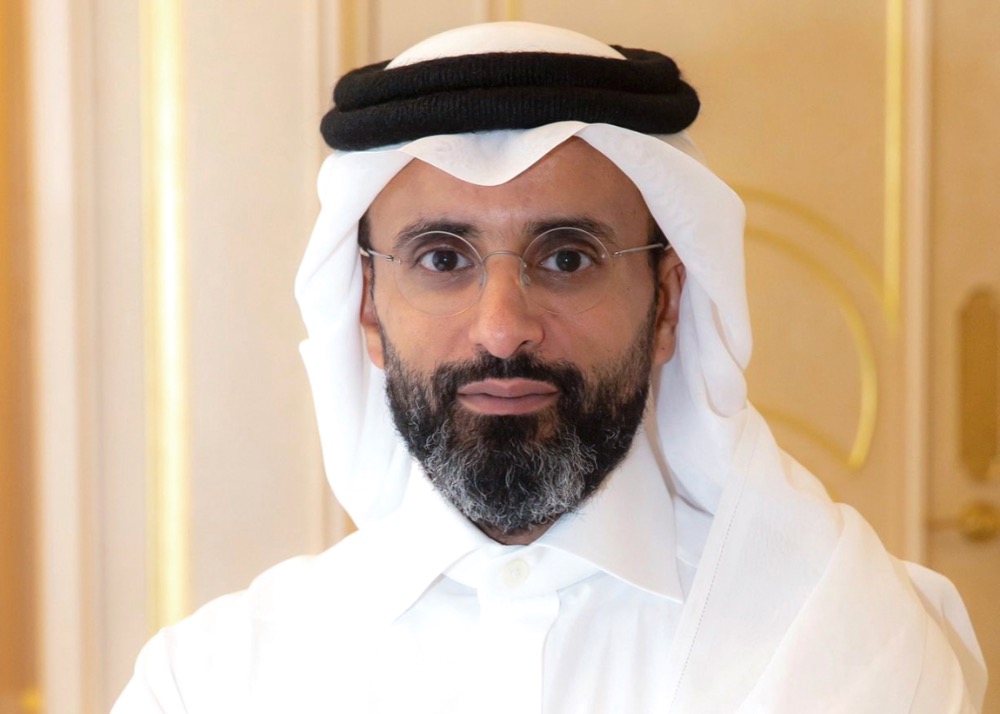
 Mohammed R. Abaalkheil, Vice President of Corporate Relations, stc group
Walking through the fan zones at Esports World Cup (EWC) 2025 in Riyadh, the gap between how brands measure esports sponsorship and what is actually happening in the room becomes difficult to ignore.
The numbers that end up in a post-campaign report – impressions, reach and media value – tell you how many people were there.
They say little about what those people did, felt or chose to share. That question has never felt more relevant than this year, with EWC now in Paris for the first time outside Saudi Arabia.
The metrics we inherited were built for a different audience
Esports fans are not passive viewers. They are participants in live chats, social commentary and content creation, often even while watching.
The metrics we borrowed from broadcast sponsorship were designed for audiences that sit back. Applying them to gaming is like measuring the success of a dinner party by counting how many people walked past the front door.
The result is a blind spot. A brand can generate millions of impressions at a major tournament and, at the same moment, accumulate negative sentiment within the communities that matter most to it.
Standard impression reports will not surface that tension. Media value equivalency will not flag it. By the time it shows up in brand tracking, the damage is done.
Visibility is what you buy. Participation is what you earn.
The most useful question a sponsor can ask is not how many people saw the brand, but how many chose to engage with it, and what that engagement looked like.
EWC 2024-2025 in Riyadh drew more than 5.6 million visitors, with 2,000 professional players from over 100 countries competing across 25 tournaments and 24 game titles in the 2025 edition.
For the first time at EWC, stc activated its Qitaf loyalty programme on-site, with attendees redeeming 100,000 points through brand partners, while stc tv streamed the tournament live in 30 languages to an audience that was actively following.
Overall media sentiment across the seven-week period was neutral-to-positive, driven by earned conversations across communities that had chosen to engage.
The brands that perform best in esports ask what fans did, not just how many showed up.
What three years of partnership builds
At EWC 2024, stc showed up as a founding partner of an event still proving its scale. At EWC 2025 in Riyadh,
stc went further, delivering what made the tournament possible: 34 Gbps of network capacity and a team of 92 engineers and 34 on-site technicians maintaining connectivity throughout. The infrastructure was not branding. It was the reason the tournament ran without interruption.
EWC 2026 in Paris tells a different story. For the first time, the tournament leaves Saudi Arabia, and stc travels with it. That kind of continuity means something in a space where brands come and go with tournament cycles.
A brand that shows up three years running and across two countries earns a different status altogether. In Paris, that is reflected in the naming rights to the stc Arena, stc Player’s Lounge and stc Contenders at the centre of competition.
The community decides whether you belong
The Middle East is not catching up to global esports. In many respects, it is setting the pace. Saudi Arabia’s gaming and esports market is projected to contribute $13.3bn to the Kingdom’s GDP by 2030, a scale that explains why the region’s sponsors are being watched as closely as its players.
Genuine investment looks different from advertising spend. Through its Job Attachment Programme (JAP), stc works with the Saudi Esports Federation to connect aspiring esports professionals with mentorship and pathways into the industry, engaging more than 25 leading organisations since launch.
The community notices that. It is the kind of commitment that earns a brand the right to be there, in a way that logo placement simply cannot.
The question worth asking
Reach and impressions are not going away – and they should not. They are useful inputs. But they are not outcomes, and in esports, mistaking them for outcomes guarantees a shallow read of whether a sponsorship worked.
The measurement framework I would challenge every brand and agency to adopt is simple: at the end of a campaign, ask three questions. Did the community engage or just observe? Did we create something for fans or just appear in front of them? And if we walked away tomorrow, would anyone notice?
That last question is the most honest measure of brand equity in esports. It is also, after three years at EWC, the one I am most confident we can answer.
By Mohammed R. Abaalkheil, Vice President of Corporate Relations, stc group