If you want to make people uncomfortable, tell the truth. Here’s one: a lie sits at the heart of our industry. We have more data, more channels and more complexity than ever before. But we have less clarity. The MENA region is a global leader in digital transformation, with enterprises allocating nearly 10 per cent of their revenues to it, and two-thirds of all ad spend flowing into digital channels. Yet, when you ask what the real return on that investment is, the answer is a four-to-five-year shrug. That’s not a strategy. It’s a gamble.
This is the performance illusion. It’s a hall of mirrors built from vanity metrics, impressive dashboards and the relentless pursuit of the next new channel. We’re drowning in data but starving for insight. We can track a 40-touchpoint customer journey, but we can’t say with any certainty what mattered. We’re measuring activity, not impact. And in boardrooms across the region, the patience for activity without proven impact is wearing thin.
The conversation we’re having behind closed doors needs to make it to the front of the room. The uncomfortable truth is that the current system benefits from this confusion. It’s a system built for channel-shifters – agencies that profit from moving budgets between platforms, taking a slice at every turn. More channels, more complexity and more fragmentation mean more opportunities to buy media, not necessarily to build value.
When your business model is built on media commissions and platform partnerships, there is a fundamental conflict of interest. There is little incentive to ask the hard questions, to challenge the spend or to admit that half of it might be wasted. You’re paid to shift the money, not to prove it worked. This isn’t about capability or intent – many talented people work inside these structures. It’s about incentives – and incentives shape outcomes.
This is where independents frame a different reality. They don’t have global media buying arms or legacy holding company deals. They aren’t paid for shifting budgets; they are paid for strategic thinking, for creative impact and for delivering outcomes. Their model is their mandate: if they don’t deliver measurable value, they don’t survive. This forces a different kind of discipline. It demands that they build what the networks can’t: a clear, unconflicted line of sight from marketing investment to business results.
We are living in a patchwork market. Winning here depends on deep local relationships, on cultural nuance and on the ability to pivot services quickly around client needs and national agendas such as Saudi’s Vision 2030 and the Dubai Economic Agenda D33. These ambitious visions aren’t just about spending money; they are about smart spending that delivers tangible economic and social returns. They demand accountability. They demand proof. The agencies best positioned to deliver that proof are the ones with no vested interest in the spend itself; the ones whose only currency is the result.
This is why the most forward-thinking independents are becoming quant shops. They are building the capability to provide what clients are desperate for: certainty. This means investing in data science, in incrementality testing and in localised marketing mix models that understand the nuances of Arabic-language search and regional consumer behaviour. It means moving beyond reporting on clicks and impressions to measuring contribution to revenue, to profit, to customer lifetime value. It means having the courage to tell a client not to spend money on a channel if the data shows it won’t work.
That is the real value of an independent partner. It’s not just about being faster or having more senior-level access, though those things are true. It’s about structural alignment.
Our success is tied directly to our client’s success, not to the volume of media we can push through the system. This is how we escape the pressure on margins that plagues our corner of the industry, particularly in earned media and strategic communications where value is chronically underpriced. We stop being a line item to be squeezed and start being a strategic partner in value creation.
The shift is already happening. Consumers now trust brands more than media or NGOs, but that trust comes with an expectation: prove the value you create. Consumers want economic hope and personal stability, not just purpose statements. They want to see results. So do boards. So do CEOs. The agencies that can deliver proof – not just promises – will be the ones that survive the next wave of consolidation and commoditisation.
For years, the industry has run at a pace that isn’t sustainable, chasing scale over substance. But the ground is shifting. The work doesn’t need rescuing when the value is proven. The future won’t be won by the biggest agencies, but by the ones that bring the most clarity. The rest is still being written.
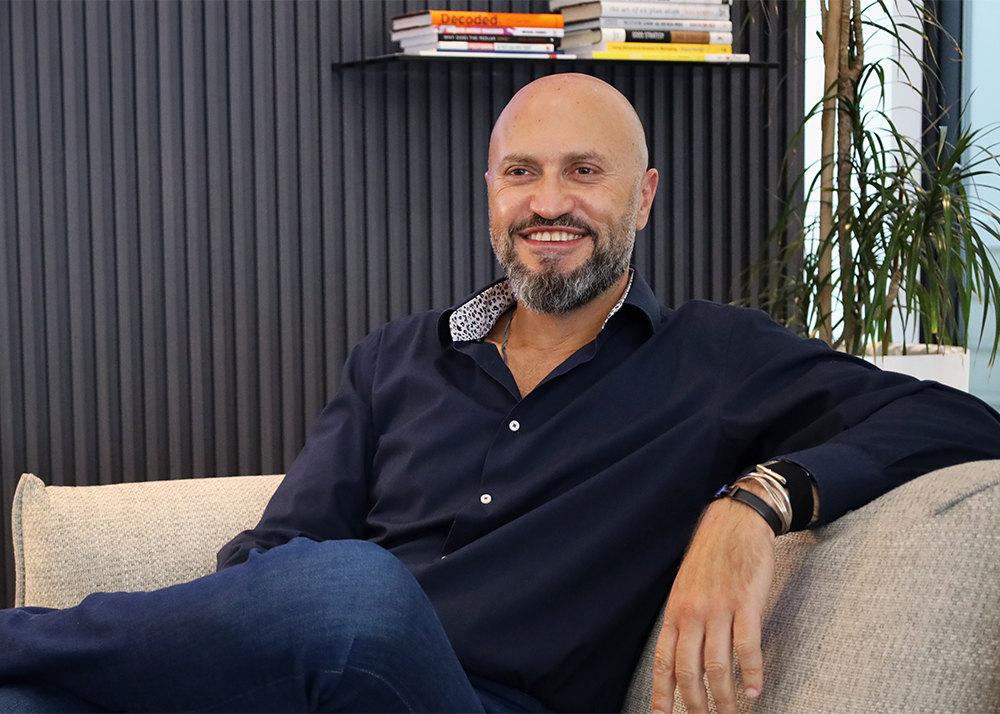
By Roy Aftimos, CEO, C2 Comms.