Manan Gupta, GM – Beauty and Wellbeing, Unilever – Middle East, Turkey, Pakistan and Bangladesh
Picture this: you’re in a retail store, standing in front of a shelf stacked with products. To your left, a beauty product promises natural, organic and/or sustainably sourced ingredients, recyclable packaging, and contributing to a better future. Just a few steps down the aisle, a conventional alternative tempts you with a discounted product. In that moment, the decision isn’t just about environmental ideals – it’s a balancing act between good intentions and the practicalities of everyday life.
For many consumers, especially in a region where the majority of everyday essentials are still bought in-store, this moment is critical. This raises an important question: are we overlooking one of the most powerful levers for driving real change?
The aisle as an untapped platform for persuasion
While 50 per cent of global consumers say sustainability is a top purchase criterion, Bain & Company research shows that many struggle to identify sustainable options. When asked to compare the carbon footprints of two products, 75 per cent either answered incorrectly or didn’t know. If sustainability isn’t clear at the shelf, good intentions won’t translate into action.
The challenge goes beyond awareness – it lies in the friction at the point of decision. Consumers encounter mixed messaging and ambiguous claims, while everyday purchase factors often steer them toward familiar options, even when they aspire to greener choices.
Closing the gap where it matters the most
Sustainability needs to be positioned not as an extra effort, but as the easy, intuitive, and even preferable choice. Brands and retailers have the power to shift behaviours where they matter most: at the point of purchase. Small changes can drive big results:
Drive behaviour change through rewards: Such as price incentives or temporary discounts on sustainable products to make them more attractive while building a habit.
Social proof: Signage indicating that a significant percentage of shoppers have chosen an eco-friendly product can influence others to follow suit.
Communication, education, and interactive experiences: Clear, concise messaging at the shelf, coupled with QR codes or digital displays providing real-time information on a product’s environmental impact, can engage and inform consumers.
Simple adjustments such as strategic product placement, clear environmental, social and governance (ESG) messaging, and interactive educational displays can serve as behavioural nudges, guiding consumers toward more sustainable choices.
Real-world insights: making sustainable choices easier
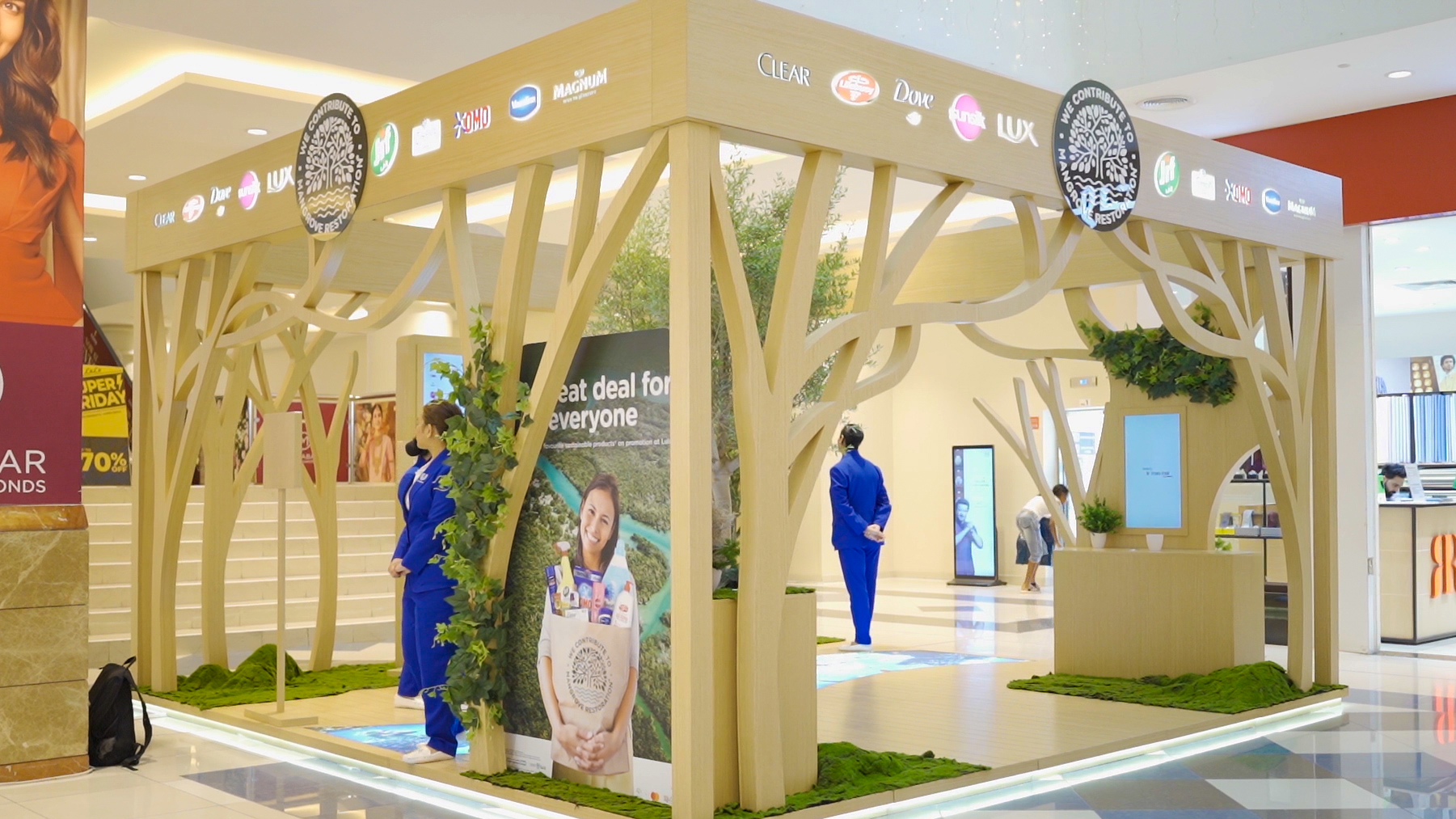
Retail environments hold untapped potential. Consider this: a McKinsey study found that products with clearly communicated ESG claims have grown faster than those without. In the UAE, where in-store grocery shopping remains dominant, these insights are being put into practice. In late 2024, Unilever launched a nationwide initiative called ‘A Great Deal for Everyone’ in partnership with LuLu Group, Emirates Nature – WWF and Mastercard.
The campaign ran for four weeks across major cities Dubai, Abu Dhabi and Al Ain and linked everyday purchases to tangible environmental impact through the restoration of 6,000 mangroves. It combined price offers on products with sustainability credentials, with shop-and-win promotions, radio competitions and digital engagement.
A dedicated educational activation at LuLu Hypermarket in Al Barsha, Dubai brought the initiative to life, turning a routine shopping experience into an opportunity to learn about mangrove ecosystems and their role in climate resilience.
The objective was simple: to reduce the friction consumers face in making sustainable choices by combining affordability, visibility and meaning. The results speak volumes. Nearly 67 per cent of shoppers reported that in-store interventions helped them choose more sustainable products, and 65 per cent felt empowered knowing their purchases contributed to environmental efforts.
This translated into a 12 per cent year-on-year uplift in sales across sustainable products, with a 13 per cent increase compared with previous months proving that sustainability resonates when it is made accessible and actionable.
From passive shelf space to active change
The aisle isn’t just where purchases happen; it’s where product discovery and consumer education take place. For sustainability to become the default, it must be effortlessly discoverable, clearly communicated, and compelling on the shelf. The opportunity is right in front of us. The question is, are we ready to take it?
By Manan Gupta, GM – Beauty and Wellbeing, Unilever – Middle East, Turkey, Pakistan and Bangladesh