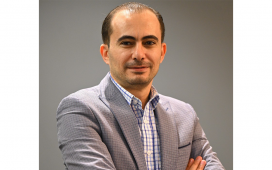
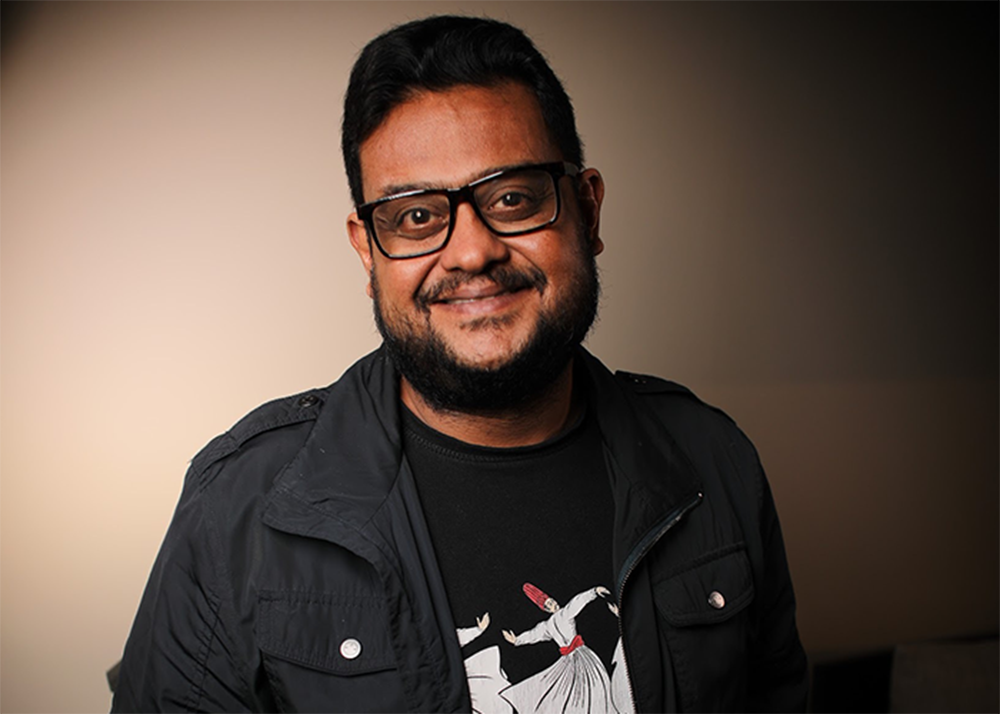
 Shantesh S. Row, Executive Creative Director, Liwa Content.Driven
Creativity has never asked if the moment was appropriate. It has simply continued – sometimes quietly, sometimes defiantly – because not creating was never really an option.
History, if you look at it sideways, is not just a record of conflict. It is a record of what refused to stop.
In 1665, when the plague closed the theatres of London, a young William Shakespeare went home. There were no audiences, no stage, no certainty of when any of it would return. In that enforced stillness, he wrote. Not the lighter comedies that had filled playhouses, but works that turned inward – like King Lear and Macbeth. Plays that seem to understand something elemental about fear, power, fragility. They were not written despite the times, but through them.
Centuries later, in the shadow of the World War II, a young girl named Anne Frank wrote in a small, hidden space in Amsterdam. She was not writing for publication, or recognition, or even survival in the conventional sense. She was writing to make sense of a world that had become incomprehensible. What remains is not just a diary, but a voice that continues to insist on humanity in the face of its absence.
In 1937, as a Basque town was attacked during the Spanish Civil War, Pablo Picasso responded not with reportage, but with distortion. His Guernica does not explain the event; it absorbs it. This was not art stepping away from strife, but art finding a language for it when ordinary language failed.
Even music, often thought of as ephemeral, has carried the weight of difficult times. In 1964, at the height of the American civil rights movement, Sam Cooke released ‘A change is gonna come.’ It did not shout. It did not argue. It carried, instead, a quiet certainty. A belief shaped not by evidence, but by endurance.
These are not isolated moments. They form a pattern. When systems strain and certainties falter, creativity does not retreat into decoration. It becomes something else – sharper, more attentive, sometimes more restrained, often more honest.
For those working in creative fields across the Middle East today, this pattern matters.
This is not a region unfamiliar with complexity. Its creative output has long moved between multiple realities at once – heritage and acceleration, intimacy and scale, memory and reinvention. What changes in times of uncertainty is not the presence of creativity, but its texture.
Consider filmmakers across the region who have told deeply local stories with limited resources, while the ground beneath them – politically, economically – shifted unpredictably. The work did not wait for ideal conditions. It adapted to the conditions that existed.
There is a tendency, especially in commercial creative industries, to separate ‘real life’ from ‘the work.’ To believe that campaigns, content, and communication exist in a parallel lane, insulated from the emotional climate of the world outside. But audiences do not make that separation. They carry context with them. They read between lines, even when nothing is explicitly said.
This does not mean that every campaign must address conflict, or that every piece of work must carry visible weight. Some of the most necessary work in difficult times does the opposite. It offers clarity. Or lightness. Or simply a moment that feels intact.
During the Great Depression, cinema in the United States did not become uniformly sombre. Musicals flourished. Lavish, improbable, filled with movement and colour. They did not deny reality; they counterbalanced it. They gave audiences a temporary architecture of joy.
There is instruction in that, too.
Creativity in times of strife does not follow a single rule. It does not demand that everything become serious, or that everything become escapist. It asks for something more precise … namely awareness.
To know what the moment holds, and to respond to it – not mechanically, but intuitively.
For a creative professional, this might mean choosing restraint over excess. It might mean noticing the small human detail that feels true, instead of reaching for the grand statement that feels hollow. It might mean creating something that does not announce its relevance, but carries it quietly.
And above all, it means continuing.
Because the instinct to pause – to wait for clarity, for stability, for a return to normal – is understandable, but historically unreliable. The work that endures is rarely made in perfect conditions. It is made in the middle of things. With partial understanding. With doubt. With the awareness that the ground may still be shifting.
And yet, it is made.
Not because the times demand brilliance. But because they demand presence.
And creativity, at its core, has always been a way of being present.
By Shantesh S. Row, Executive Creative Director, Liwa Content.Driven