Artificial intelligence is no longer a futuristic concept. It’s already here, shaping everything from journalism and entertainment to education and healthcare. But one of the most fascinating and sensitive frontiers it is entering is the world of communications and advertising, especially in the Arab world. This intersection is not just technical. It’s emotional, linguistic, cultural, and even political. As AI technologies continue to evolve, professionals in arabic communications – from advertisers and copywriters to PR specialists and media planners – are being presented with a powerful question:
Can machines enhance how we speak to Arab audiences, or will they erode the soul of our message?
The opportunity: scale, speed, and smart insights
There’s no denying the practical benefits that AI brings to the communications field. Automated content creation, real-time analytics, audience segmentation, and personalised ad targeting are no longer luxuries. They have become necessities.
AI enables brands to deliver localised messages to millions of people across the Arab world. This includes over 20 countries and numerous dialects. Copy can be written, optimised, and A/B tested in minutes. Voiceovers can be generated in different Arabic accents. PR pitches can be tailored to suit a journalist’s specific interest using natural language tools. It’s no longer about creating more content. It’s about creating the right content, faster.
For small agencies and independent creators, this is a revolution. It levels the playing field. A freelancer in Amman or Algiers now has access to tools that were once only available to multinational firms. For corporate brands, it opens the door to smarter, more consistent messaging across channels, from billboards to Instagram stories.
The challenge: language nuance and cultural sensitivity
Yet with this power comes a major caveat. Arabic is not just a language. It is a universe of expression. And AI, no matter how advanced, still struggles with its depth.
Arabic is one of the richest and most complex languages in the world. Between Classical Arabic and regional dialects – Levantine, Gulf, Egyptian, and Maghrebi – there exists a spectrum of linguistic flavours. Each carries its own cultural codes, humour, taboos, and idiomatic expressions. What works in Riyadh may fall flat in Casablanca. What feels poetic in Beirut may sound pretentious in Khartoum.
Most AI models today have been trained primarily on English datasets. Even those that support Arabic tend to perform better in formal contexts, often missing the informal, playful, emotional, or context-specific tone needed in modern advertising and PR. And that’s a problem.
When AI writes a press release in Arabic, does it understand the rhythm of the language, or does it just translate concepts from English? When AI generates a brand slogan, does it consider how Arab audiences interpret honour, family, hospitality, or pride? These are not minor issues. They are at the heart of what makes communication effective in this region.
The risk: homogenisation and cultural dilution
If agencies and brands rely too heavily on AI-generated content, especially content rooted in English thinking, they risk producing messages that feel generic, inauthentic, or even offensive. Worse, they may contribute to the slow erosion of cultural richness in advertising.
We’re already seeing campaigns that feel like weak translations of Western ideas, with Arabic added as an afterthought. The risk is not just creative. It’s cultural. When brands forget how Arabs laugh, argue, dream, or celebrate, they stop being relevant.
In a region already grappling with the effects of globalisation and identity tensions, communication must do more than sell. It must connect, resonate, and uplift.
The way forward: human-AI collaboration
The solution is not to reject AI but to redefine how we use it.
AI should be treated as a creative assistant, not as a creative director. It can suggest headlines, offer translation drafts, analyse consumer sentiment, or test audience responses. But the final message – especially in Arabic – should be reviewed, refined, and often rewritten by humans who understand the region’s heartbeat.
Arab communication professionals must lead the way in training AI tools that truly speak the language. This means building better Arabic datasets, including regional dialects, poetry, slang, proverbs, and emotional expressions. It also means advocating for tools that recognise cultural contexts and market dynamics across the Middle East and North Africa.
There is also a major opportunity for innovation. Imagine AI tools designed by Arabs for Arabic communications. Tools that know the difference between Najdi and Hijazi dialects. Tools that can adapt a single message for audiences in Cairo, Dubai, and Riyadh with precision. This is the next frontier. Whoever builds it will not only lead the industry but also help preserve and celebrate Arab linguistic diversity in the age of AI.
Final thought: It’s not just about tech, it’s about trust
At its core, communication is about trust. Brands earn it by speaking the language of their audience, not just linguistically, but emotionally and culturally. AI can help us do that more effectively. But only if we guide it wisely.
The future of Arabic communications will not be written by AI alone. Nor will it survive without it. It will belong to those who strike the right balance between cultural intuition and computational power.
And perhaps that is the real challenge for Arab communicators today. Not choosing between tradition and innovation, but finding the courage to bring them together in a voice that feels unmistakably ours.
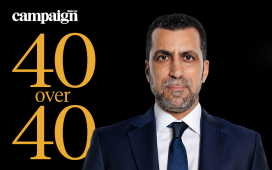
By Mnawar J. Mohammed, Founder & Chief Copywriter, CopyArabia.