During the 2026 World Cup, non-sponsor brands were often hidden, blurred or covered from broadcast imagery.
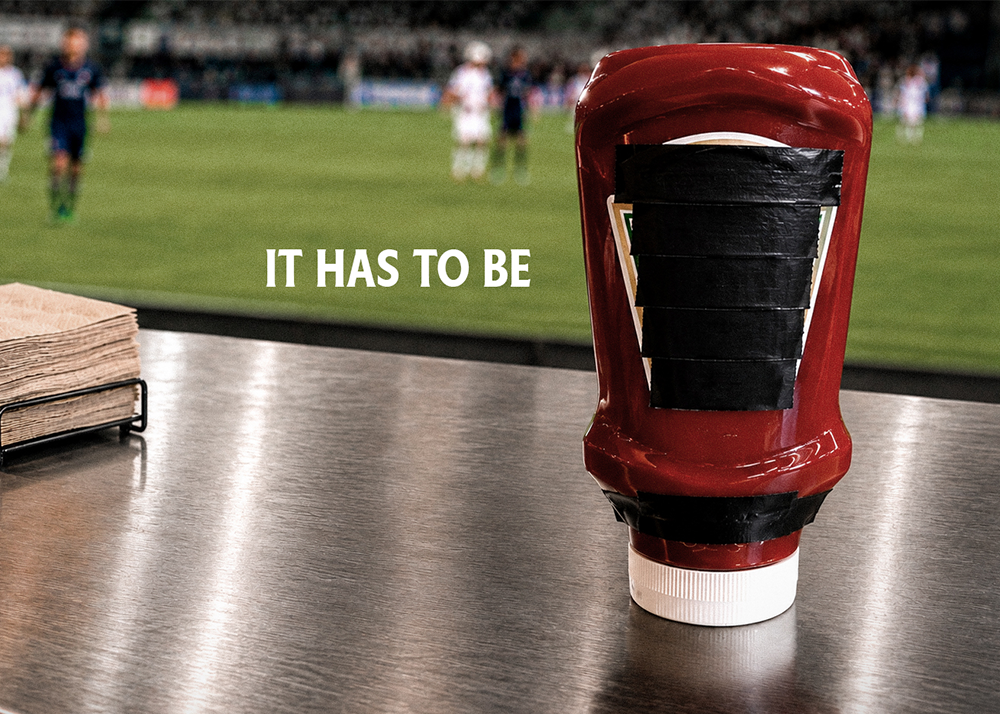
The tournament went as far to covering condiment bottles at stadiums, to adhere to its sponsorship agreements. When Heinz encountered this, fans were quick to notice the futile attempt at hiding what many instantly recognised as the household staple ketchup brand.
The brand claimed its moment in the conversation, turning its cover-up into a global takeover across its product distribution. It’s ketchup bottle packaging around the world mimicked the stadium’s block out, bringing fans the stadium experience home.
View this post on Instagram
In the Middle East, where football and food are inseparable, Heinz dominated conversations. Across everyday touchpoints, it gave World Cup and Heinz fans alike a way to stand strong with global fandom, proving that even when Heinz is unofficial, it remains the go-to condiment whenever football and food meet.
Created by Saatchi & Saatchi MEA, the work responded to the tournament reactively, tapping into regional football culture and the way fans gather around both the game and the food that comes with it. Instead of treating censorship as a setback, Heinz uses it as the punchline.
The brand stands by its platform: even if you cover its name, tape over the bottle or blur the logo, everyone knows ‘It Has to Be Heinz’.
Credits:
Brand: Heinz MEA
Chief Marketing Officer: Passant El-Ghannam
Agency – Saatchi & Saatchi MEA
Groupe CEO: Bassel Kakish
Agency CEO: Ramzi Sleiman
Chief Creative Officer: Sebastien Boutebel
Chief Strategy Officer: Tahaab Rais
Sr. Creative Director: Rita Harbie
Associate Creative Director: Juan Manuel Prieto, Vinicius Claudino
Copywriter: José Ferreira, Stephanie Rodríguez
Art Director: Marcelo Gasparini, Gabriel Damasio