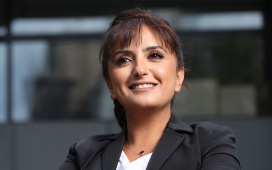
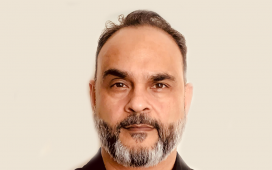
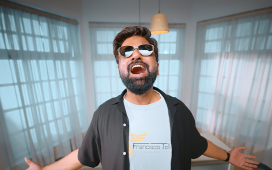
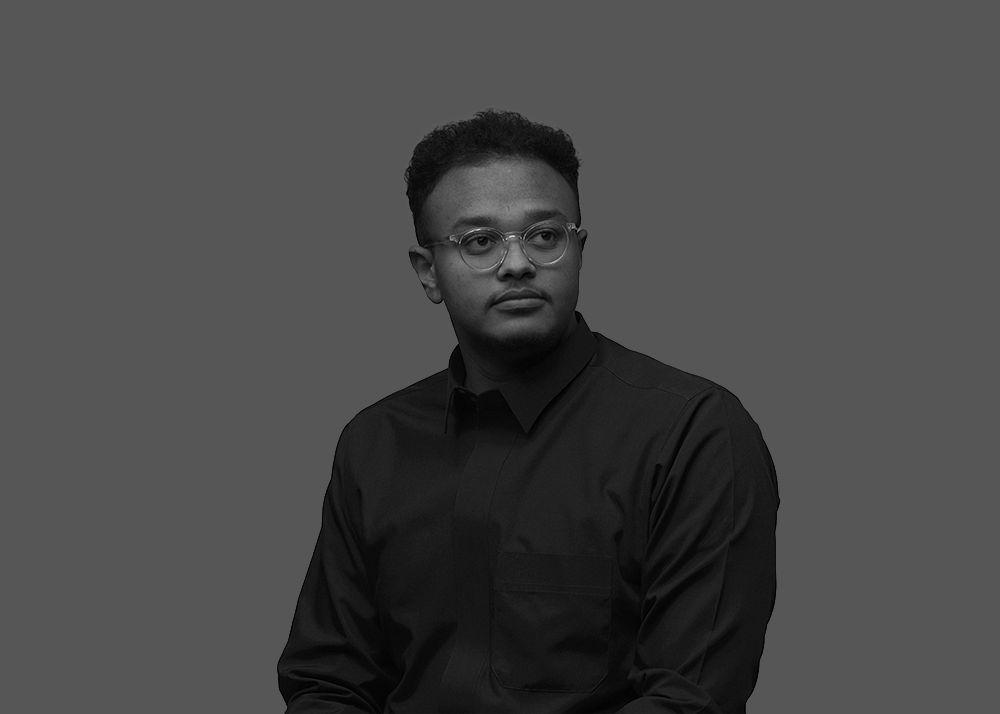
 Anwar Ramadan, Creative Director at Takkah.
 There’s a quiet kind of fear going around about creative work in our industry these days. You may not always hear it directly, but you can at least sense it. In meetings, casual conversations, and in the way people talk about ‘what’s next’. It usually comes down to one question, even if no one says it out loud: Are we still needed?
It’s not the first time creatives have asked that. Every generation thinks it’s standing at the edge of being replaced. Painters thought photography would end them. Filmmakers thought television would shrink their world. Then digital came along, and suddenly everything was faster, cheaper, more accessible. And yet, somehow, creativity survived every single time.
What’s happening now feels different only because it’s happening faster than we’re used to. The tools have become incredibly quick. Ideas that once took days to visualise can now appear in minutes. And speed has a way of making people uneasy. It gives the illusion that something deeper is being taken away.
But creativity was never about how long something takes to make. It was never about the tools. It was always about knowing what is worth making.
That’s the part no one talks about enough. The instinct to recognise a good idea, to feel when something is honest, to understand what people will connect with and why. That doesn’t come from a machine, and it never has. It comes from experience, from taste, from paying attention to the world in a way that not everyone does.
You don’t learn that overnight and you certainly don’t generate it on command.
So if you’re a creative director, the fear is misplaced. The job isn’t disappearing. If anything, it’s becoming more exposed. There’s nowhere to hide anymore. When ideas can be visualised instantly, you can’t rely on execution to carry you. A weak idea will look weak immediately. A strong idea will stand out even more.
In a strange way, that’s a good thing. It brings us back to the core of what this industry was supposed to be about in the first place.
Now, the real shift is happening somewhere else. It’s happening in the parts of the industry that were built on how things get made rather than why they exist. Production, execution, the long processes that once felt untouchable.
For years, production had a kind of natural protection. It required resources, time, equipment, and access. Not everyone could do it, and that limitation gave it value. Now that barrier is thinner than it used to be. You don’t always need a full shoot to bring an idea to life. You don’t always need the same scale, the same timeline, the same setup. Things that once felt impossible to create are suddenly within reach.
That doesn’t mean production disappears. But it does mean it has to rethink its place.
Because if the value was only in the process, then yes, there’s a real risk. But if the value is in storytelling, in craft, in elevating an idea beyond what anyone else can imagine, then there’s still a future, and possibly a strong one.
The uncomfortable part is that not everything we’ve been making deserves to survive this shift. A lot of work has been safe and familiar. Repeating patterns that we know will get approved, will pass, will deliver.
That kind of work has always been replaceable. We just didn’t feel it before. Now we do.
And maybe that’s the point. Maybe this moment is less about replacement and more about clarity. It forces us to ask better questions. Why are we making this? Who is it for? Does it actually say anything, or is it just filling space?
Because the truth is, the work that stays with people has never been about the tool. It has always been about the idea, the emotion behind it, the perspective it carries.
Those things are still human and they always will be. So instead of asking whether we’re going to be replaced, maybe we should be asking something else entirely: Are we still pushing ourselves to create work that matters, or have we been getting comfortable making work that simply exists?
The future of this industry won’t belong to the fastest or the cheapest. It will belong to the people who know what they want to say and have the courage to say it clearly. Everything else is just a tool.
By Anwar Ramadan, Creative Director at Takkah.