

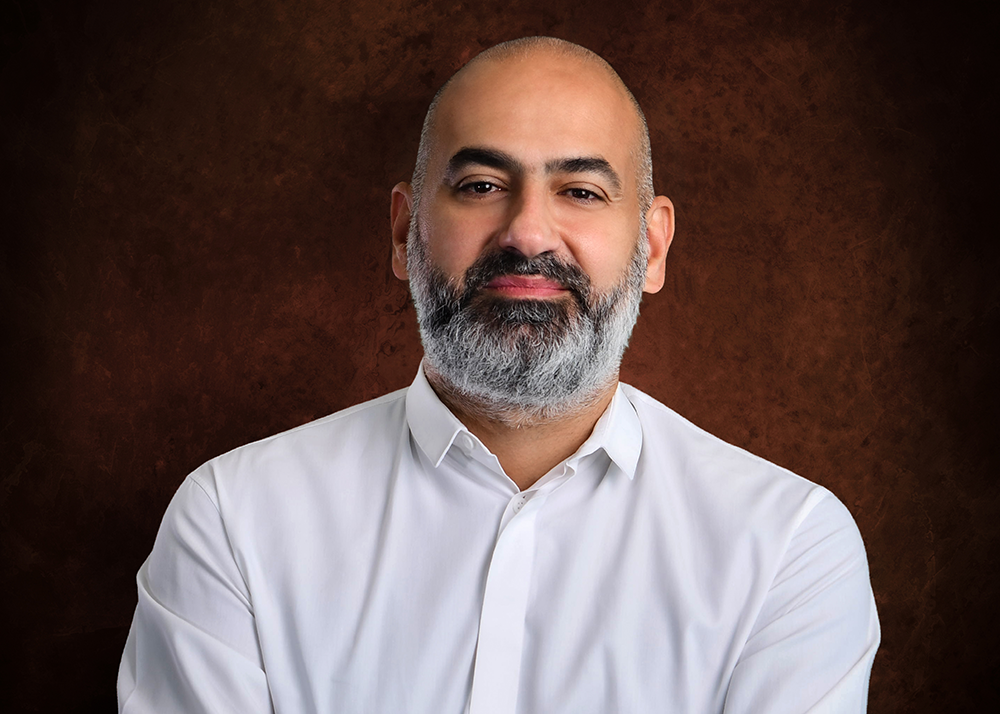
 Ihab Nassar, Creative Director, Means Design
The creative industry in the GCC has never moved faster or felt more intense. In the UAE and Saudi Arabia, brands are transforming at an unprecedented pace, platforms are multiplying, and audiences are increasingly sophisticated, digitally native, and highly discerning. National transformation agendas, rapid adoption of new technologies, and a young, connected population have combined to make these markets some of the most dynamic in the world.
By any measure, these are markets defined by ambition, acceleration, and scale. Content demands are constant, platforms expand daily, and expectations continue to rise. In this environment, a question comes up repeatedly in agency boardrooms and brand meetings: Is the big idea still viable in a fast-moving, highly integrated world?
The answer is yes, but it is being tested.
Across the region, brands are no longer asking for isolated campaigns. They want ideas that travel seamlessly across platforms, languages and markets. They want creative thinking that can live equally well on a highway billboard in the UAE, a mobile screen in Saudi Arabia and a social feed anywhere in between. Integration is no longer an added value; it is the baseline. And while this has raised the bar for effectiveness, it has also placed new pressure on how ideas are developed, executed and sustained.
‘‘In markets saturated with content, the work that stands out is rarely the loudest; it is the most considered.”
This is where the misunderstanding often begins. Integration is sometimes positioned as the enemy of the big idea, when in reality it reveals whether an idea is truly strong. A powerful idea should not collapse under scale; it should become clearer. In markets as diverse and culturally layered as the GCC, weak ideas are exposed quickly. Strong ones, however, gain momentum precisely because they are flexible enough to adapt without losing their core meaning.
Yet the challenge is real. Speed has become a defining characteristic of both the UAE and KSA. From real-time content to rapid market responses, pace is often seen as a competitive advantage. But the risk is not speed itself; it is what speed can quietly erode if left unchecked.
Craft is often the first casualty.
As timelines compress and output expands, there is a growing temptation to prioritise volume over value. Creative teams are expected to deliver more, faster and across more channels than ever before. Without clear standards and strong leadership, the result can be work that is efficient but forgettable, content that fills feeds rather than builds brands.
Protecting creative quality in this environment requires intention. It starts with reframing speed not as the opposite of craft, but as something that must be designed with craft in mind. Investing more time upfront in the thinking pays dividends later. A well-defined idea, one that is culturally grounded, strategically clear and creatively distinctive, moves faster downstream because decisions become simpler. Execution becomes sharper. Adaptation becomes disciplined rather than reactive.
In the GCC, this upfront clarity is especially critical. Our markets are fast-moving, but they are also nuanced. Cultural fluency cannot be rushed. Ideas that scale across the region must respect local context while maintaining consistency. This balance is not achieved through templates or shortcuts; it is achieved through judgement, experience and collaboration.
There is also a human dimension the industry can no longer afford to overlook. Sustained pace places real pressure on creative teams. Burnout is not an abstract concern; it is a reality felt across agencies in the region. If better work is the goal, healthier systems are part of the solution. Smarter workflows, clearer prioritisation and more honest conversations with clients about urgency all play a role in sustaining both quality and talent.
Encouragingly, many brands in the region are already recognising this shift. They understand that creative quality is not a luxury; it is a competitive advantage. In markets saturated with content, the work that stands out is rarely the loudest; it is the most considered. Speed may win attention, but craft builds trust.
The future of creativity in the GCC will not be defined by choosing between big ideas and integration, or between speed and quality. It will be shaped by our ability to hold these tensions productively, building ideas robust enough to scale, systems that move quickly without becoming careless, and cultures that value people as much as output.
In a region defined by momentum and possibility, the responsibility is to continue evolving creativity as a strategic discipline, one that scales with purpose, protects its people and delivers long-term impact for the brands and communities it serves.
By Ihab Nassar, Creative Director, Means Design