fbpx
AdvertisingCreativeFeaturedMarketingOpinion

Borrowed cool: Why brands need to stop speed-dating culture

MCH Global’s Saheba Sodhi on why brands need to stop treating culture as a camouflage for campaigns without conviction and start investing into meaning, community and creativity.

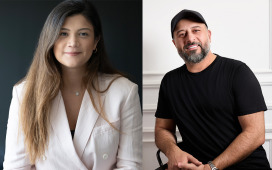
Saheba Sodhi, Global Head of Strategy and Experiential, MCH GlobalBy Saheba Sodhi, Global Head of Strategy and Experiential, MCH Global

Are brands showing up for culture or simply showing off? It’s the question we need to be asking more urgently than ever.

In a time when every brand wants to be part of the conversation, culture has become the hottest marketing commodity. Whether it’s a pop-up at the Dubai Design District (D3), a DJ set in an art gallery or a capsule collection inspired by spoken word, brands are hustling hard to look relevant, radical and in touch with today’s ‘creative class’.

But beyond the branded backdrops and curated chaos, the real question lingers: Are these acts of cultural participation meaningful or are they just a well-disguised box-tick on a brief? Some would even call it marketing cosplay.

Performative culture: Now in limited edition

Let’s call it what it is: a new kind of cultural capitalism. You’ve seen it. The brand collaborating with digital graffiti artists. The fashion house staging a ‘community dinner’ with five influencers and a public relations (PR) lens filter. The tech brand that drops into a niche cultural scene for exactly one campaign cycle, then ghosts just as fast.

Culture today is treated like a limited-edition sneaker drop, cool, collectable and ultimately disposable. This performative involvement is dressed in the language of purpose: ‘Platforming voices’, ‘championing community’ and ‘bridging disciplines’. But peel off the glossy veneer and what’s often left is a lack of true intention or impact. In many cases, the culture being ‘celebrated’ is being co-opted, reduced to aesthetics and stripped of meaning.

It’s borrowed cool, with borrowed depth. The central tension is this: As brands construct increasingly complete ecosystems, the risk of cultural homogenisation grows. Yet, when executed with integrity and diverse perspectives, brand curation can serve as a catalyst rather than a constraint. It offers frameworks for discovery, launching points for personal exploration rather than prescriptive lifestyle templates.

The power – and price – of showing up properly

That’s not to say brand involvement in culture is always hollow. Far from it. When done well, brand partnerships have elevated art, empowered subcultures, driven economic impact and supported creative ecosystems, that might otherwise have remained invisible.

Think of Nike’s long-standing support for grassroots basketball communities, or the boundary-breaking collabs between UBS bank and the creative industries that live within its experiential platform, House of Craft.

This is less about sponsoring a moment, more about backing a movement. What makes a brand’s involvement meaningful is how long it’s willing to stay. Not just at the forefront, but behind the scenes, funding the infrastructure, amplifying local voices and giving credit where it’s due.

We can see this shift taking a slightly more evolved pace across luxury. Today, luxury brands don’t merely shape what we shop. They curate what we read and collect, and how we live. They build entire ecosystems, creating worlds we can inhabit through purchasing their products or attending their events.  Where once curators provided the narrative while designers created objects, fashion houses now do both: they curate their universes and design the pieces that bring them to life.

Culture is not a KPI

We’ve reached a point where brands are treating culture like a seasonal trend report. Art is the new algorithm. Subculture is the new segmentation. Community is the new click-through. But here’s the reality: Culture doesn’t want to be ‘tapped into’. It wants to be understood. Respected. Protected.

Too often, culture becomes the creative camouflage for campaigns that lack originality or conviction. The metrics may spike, the visuals may pop, but the impact is fleeting – and for the communities being ‘celebrated’, this superficial attention often feels extractive. Because once the campaign ends, the conversation doesn’t continue. The community doesn’t grow. The investment doesn’t follow through.

The consumer knows

What brands often underestimate is how attuned today’s audiences are to authenticity or the lack of it. Cultural consumers can sniff out opportunism faster than you can say “immersive”.

The audience are not just watching the performance; they’re reading the fine print. They’re asking: Who benefits from this collaboration? Whose stories are being told, and by whom? Who’s actually in the room?

It’s not enough to show up anymore. You have to stand for something. You have to be in it for the long haul. And, crucially, you have to be okay not being the star of the story.

Culture is not a campaign. It is a long-term commitment to meaning, community and creativity. Brands that treat it as a moment will quickly be forgotten. But those who invest with purpose, consistency, and humility will build something deeper.

Cultural capital that lasts far beyond the feed. That’s the kind of presence that doesn’t just show up in culture; it shapes it.

By Saheba Sodhi, Global Head of Strategy and Experiential, MCH Global