

If you work in marketing in the Middle East, chances are you’ve heard the word ‘experiential’ so often lately that it’s starting to lose its punch. These days it gets put on everything, from activations and pop-ups, to oversized screens.
In this region, especially, the term has become misunderstood. Too often it’s mistaken for ‘tech’. Event companies rush to equate experiences with big screens, holograms and projection shows. The problem is, size and gadgets alone doesn’t make it experiential.
With a new season of cultural events underway, and Riyadh Season returning with a calendar of art, culture and entertainment, it feels like the right time to ask: what does experiential really mean today?
What great experiential really means
For me, experiential is simple: it’s when people leave having felt and learnt something. It’s about connection and memory, not just spectacle. Technology plays a role, but it should support the experience, not become the experience.
An LED wall or a hologram might grab attention in the moment, but unless it connects on an emotional level, it’s quickly forgotten. The real power of experiential lies in what’s often called the ‘experience economy’. People don’t go to an activation simply to see a product, they go because of how it makes them feel and what it means to them.
Great experiential is rooted in psychology. Spaces shape emotions, music shifts energy, lighting changes mood, and participation creates ownership. These subtle, invisible levers are what turn moments into lasting memories. And they’re how success should be measured.
Too often in this region, ROI is still reduced to footfall. But counting bodies doesn’t tell you if anyone cared. The real metric is interaction. Did people taste, touch, play or stay longer than expected? That’s the real return, which is why static screens and holograms, no matter how big, so often fall flat.
From wow to why: the real lesson for brands
The shift I’m seeing now is moving away from “wow” for its own sake and towards “why.” A wow moment might stop people for a photo, but it rarely builds loyalty. The why is what keeps them coming back.
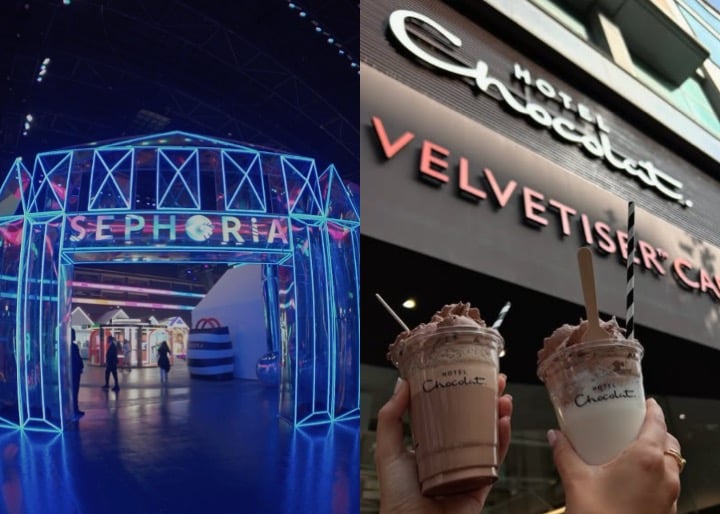
One of the best examples of this is Hotel Chocolat’s concept store in Manchester. On the surface, it’s a shop, but step inside and you’re immersed in the brand’s world. You can taste molten chocolate, smell roasted cacao, hear sounds from their Saint Lucian farm, and see the story woven into the design. It’s retail as theatre, but it works because every sensory detail reinforces the brand’s story and values, giving customers something meaningful to take away.
View this post on Instagram
Closer to home, Sephora’s first-ever Dubai event showed how powerful this approach can be. People weren’t just shopping but taking part in workshops, talks and masterclasses with industry icons. They were learning, experimenting and feeling part of a community. That sense of discovery and belonging is why they’ll return.
View this post on Instagram
This is what many brands miss: the goal of experiential isn’t always to drive an immediate sale. In fact, the best examples are created purely for the experience itself. Hotel Chocolat didn’t design its concept store just to sell more bars of chocolate, it built an environment that makes people curious to learn more about the brand and emotionally invest in its story.
That depth of connection is what keeps the brand top of mind, and the sales follow naturally.
What experiential means now
Experiences that last aren’t defined by scale or spectacle, they’re defined by how they make people feel. The most powerful ones spark curiosity, create connections and stay with you long after you have left the space.
If I had to leave brands with one rule, it would be this: make spaces for people. Spaces that respond to whoever walks in, that connect on an emotional level, that let visitors feel the story of the brand without needing to buy anything at all. Do that, and awareness, loyalty and sales will follow naturally.
At its core, experiential isn’t about putting on a show. It’s about human connection.

Where experiential is heading
I grew up in the 90s, when experiences were simpler. A trip to the cinema, an arcade, even just getting your hands on a new gadget felt magical because it was different from the everyday. That sense of novelty was enough. For millennials, discovery and trying something new has always been the pull.
Gen Z is different. They’ve grown up immersed in screens, so big displays don’t impress them in the way they once did for us. What they want is honesty, relevance and values they can connect with. That includes a growing demand for nature and sustainability in experiences – greener spaces, restorative environments and a sense of connection not just to people, but to the planet. For them, it’s less about being impressed and more about being included in a future they believe in.
What resonates now are experiences that feel human, grounding and restorative. If brands can create spaces that people leave feeling better than when they arrived, that is what will define the future of experiential.
By Abdul Aleem Thahir Ali, Chief Engineer, The Hanging House.