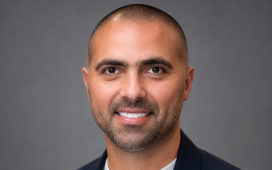
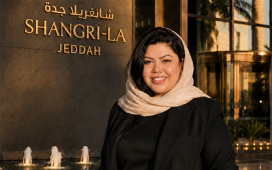
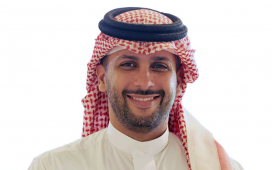
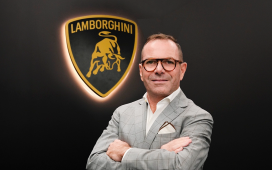
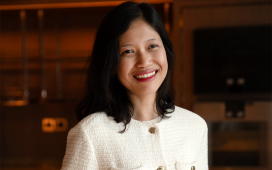
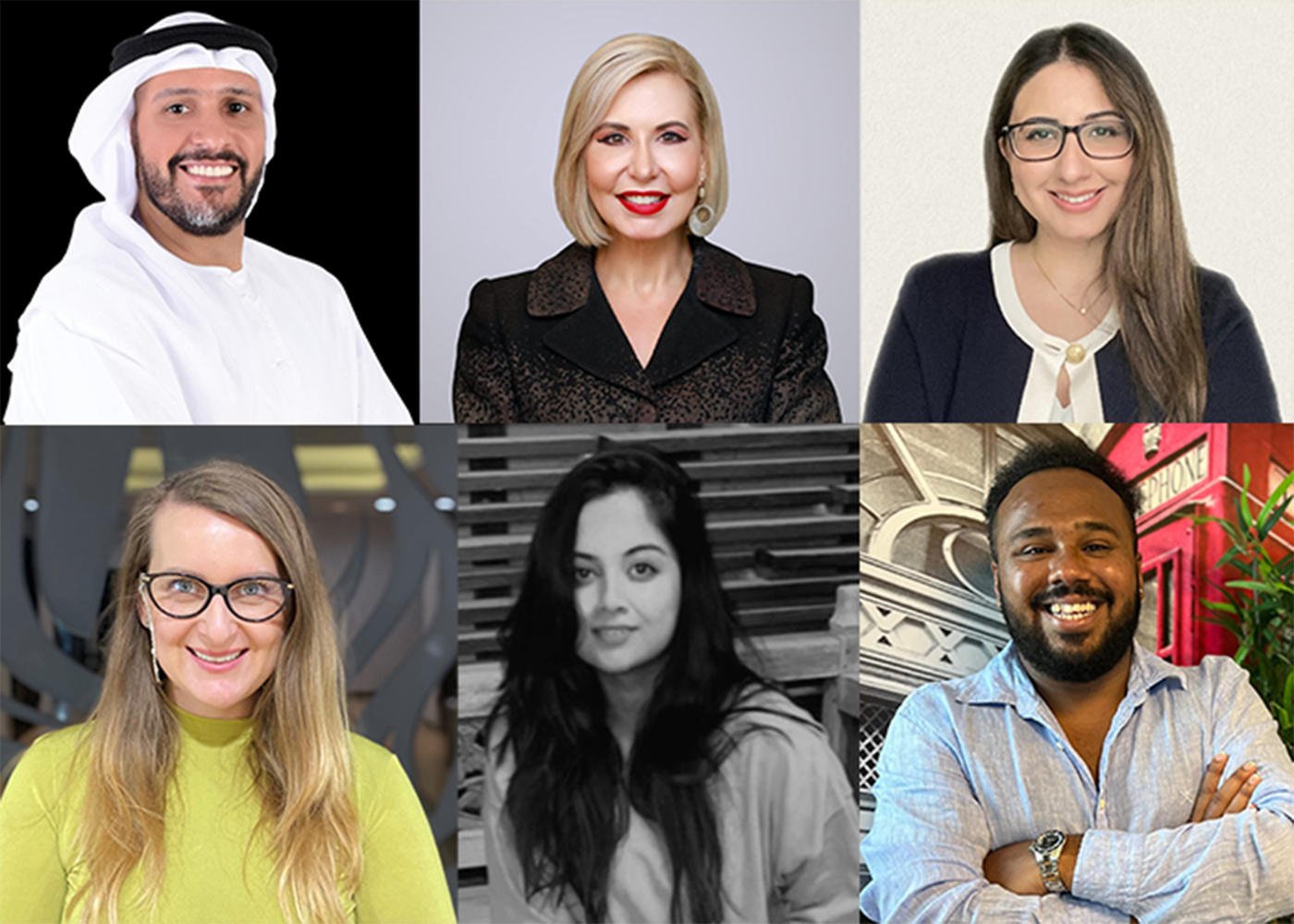
 From top left, clockwise, Mohamed Ali Almadfai, CEO, Emirati Coffee; Lizelle Fitoussi, Director – Marketing, Merex Investment; Aneela Halani, Regional Marketing Manager, Haleon; Shannon Soans, Co-Founder, No Filter; Riya Vatnani, Director of Communications, Cicero and Bernay; and Alina Sukhar, Associate Business Director, Digitas Dubai.
Marketers have spoken: Coffee raves are more than just a passing fad. In an outcome-oriented market where advertisers are attempting to connect commerce to culturally attuned consumers demanding memorable experiences, coffee raves are becoming the marketing strategy of choice.
Everyone who has attended one of these brand-led coffee raves attests to its effectiveness – the aroma of ground beans, the DJ bassline in the background, the murmur along the growing queues, and interactive and immersive brand activations catered to crowds buzzing on caffeine.
It’s marketing you can feel rather than simply see, a brand moment that turns a weekday into a Saturday night. If the old tools of the trade were billboards and spots, this new one is part-party, part-pop-up and part-social currency.
Campaign Middle East speaks to several client-side marketers, agency leaders and event hosts all of whom echo similar sentiments: attention today is not rented; it’s earned – by connecting with a community and creating “a vibe that lingers longer than a visual”.
View this post on Instagram
Coffee raves: Live billboards where ‘the proof is in the afterglow’
In these conversations, a clear refrain emerges: coffee raves are not a gimmick; they’re a living, breathing form of marketing where creative expression, culture, commerce and ‘cool brands’ connect.
“A billboard used to be where brands commanded attention. Now, coffee raves are where brands connect. The proof is in the afterglow. You go home remembering how you danced, who you met and the vibe you felt. That emotional connection is way more powerful than passing by a poster on Sheikh Zayed Road,” says Shannon Soans, Co-Founder, No Filter.
Making a neat comparison, Aneela Halani, Regional Marketing Manager at Haleon, says, “Raves – music driven, lifestyle focused or coffee themed – can be seen as the modern equivalent of a billboard with the added advantage that they’re experienced by the audience, multi-sensory and inherently shareable.”

Mohamed Ali Almadfai, CEO, Emirati Coffee posits the idea of coffee raves as signages that move people.
“They’re no longer just parties,” says Almadfai. “They’re live billboards where culture, sound and brand identity merge into a single, memorable impression.”
Halani adds, “These events create a memorable immersive experience and an emotional connection that lasts longer than a fleeting visual impression.”
Leaders build on this sentiment, sharing how experiential marketing is accelerating the drive from one-off moments to lasting memories.
“When you’re at a coffee rave, you’re completely immersed in it,” says Riya Vatnani, Director of Communications at Cicero and Bernay. “And the beauty is, it doesn’t stay in the room … suddenly your ‘billboard’ is spreading across feeds in a way no static message ever could. It’s visibility with emotion attached.”

Referencing such experiential activations hosted by brands at City Walk in Dubai, Lizelle Fitoussi, Director – Marketing, Merex Investment, adds, “We saw how hosting coffee raves in unexpected venues turned everyday spaces into cultural touchpoints. The conversations sparked by those moments spread far beyond the event itself, and that is what makes them so effective as a new form of brand storytelling.”
The consensus is clear: Consumers don’t want to merely see a brand — they want to feel it. They want to experience it. They want to share that experience with people who matter to them.
Alina Sukhar, Associate Business Director, Digitas Dubai, adds, “Our job is to turn every placement into a moment people will remember, and a coffee rave is another powerful platform, where people can truly connect and engage with the brand on a deeper level.”
What Gen Z consumers demand from brands
If there’s a generation turning up the tempo, it’s the one that grew up swiping, and actively interacting. This is a generation that wants brands with them, to show up in their lives – in their cafés and on their playlists.
In Gen Z language, leaders say that a brand needs to show that “it’s giving”. But that requires a shift – from being advertisers to co-creating, collaborating and celebrating life with consumers.

Digitas Dubai’s Sukhar says, “Gen Z is keeping media planners on their toes. They are constantly shifting the cultural conversation. To connect with them, brands need to be alert, agile and willing to meet them where they are.”
Emirati Coffee’s Almadfai adds, “Gen Z demand authenticity and presence in the spaces they occupy — digital, social and physical — so, brands must integrate into culture rather than interrupt it.”
It’s about bringing the buzzword of ‘seamless integration’ to life in a way that brands ‘belong’ naturally and organically within people’s everyday spaces, and in a way that consumers feel a sense of ‘belonging’ when a brand comes top of mind.
“Gen Z respond to experiences that feel authentic and where they’re involved — where the brand adds value rather than interrupts. This generation expects brands to be a part of the environments that they already enjoy. For marketers, it’s no longer about ‘broadcasting’ to an audience, but about ‘belonging’ in their world,” says Haleon’s Halani.

Vatnani says she has witnessed the same pattern: “Gen Z does not want brands to rent attention; they want them to earn relevance. They’re inviting brands into spaces where they already live. This generation demands participation and a feeling of community.’
Coffee raves create this environment where it feels natural to belong. They merge music, an everyday coffee ritual, novel experiences and Instagrammable activations in a way that feels organic.
Merex Investment’s Fitoussi agrees adding, “Gen Z are less responsive to traditional advertising and far more interested in experiences that feel authentic and community-led. The point is not just to be visible, but to be part of an environment that feels natural, while also offering an unexpected twist. Coffee raves are a good example of this.”
A brand experience that ‘doesn’t feel like advertising’
Given the fact that coffee raves are now accepted as a part of the media and marketing mix, with budgets set aside for such experiential activations, Campaign Middle East asks leaders: are experiences such as coffee raves becoming the new “media buy”?
No Filter’s Soans responds, “I’d say yes, but not in the transactional sense. You can’t just ‘buy’ the culture you’ve got to contribute to it. Coffee raves are intimate, they’re community-led. When a brand steps in the right way – for instance, by giving people free coffee samples, sponsoring a DJ, or helping create a cool vibe – it doesn’t feel like advertising. It feels like they’re part of the story. That’s what makes it work. It’s softer, but it sticks harder.”
Leaders agree that immersive events are now being treated like strategic placements, delivering both reach and emotional impact that outperform traditional ad spend.

Halani says, “Brands used to allocate large portions of budgets to static or broadcast media, but there’s now growing investment in live experiences and on-ground events that act as both an activation and a media channel. The value comes from the way these moments integrate with the brand and connect with the audience – designed to be shared, posted and talked about.”
To Almadfai, these moments are now strategic inventory. He says, “Immersive events are being treated like strategic placements, delivering both reach and emotional impact that outperform traditional ad spend.”
Meanwhile, Vatnani frames it as a switch from slots to stories.
“What used to be a ‘buy’ is now a ‘moment’,” says Vatnani. “Brands are investing in memories. As someone who’s physically experienced it and felt its impact most recently at the coffee rave hosted by Arabian Automobiles Renault, I’ve seen how these moments resonate. It’s beyond the event itself; it’s about the energy and the conversations it sparks afterward.”
She adds, “People leave with stories they want to share, and that organic amplification is something money can’t truly replicate. It flips the whole idea of media from a transaction into a conversation.”
Fitoussi prefers ‘complement’ to ‘replacement’, but the effect is undeniable.
Sharing an alternate viewpoint, Fitoussi says, “I would not call coffee raves the new media buy, but they have become a powerful complement to traditional channels. When people feel like they are part of something memorable, they are far more likely to share it. That kind of earned visibility cannot be guaranteed with a paid placement, which is why it is so valuable.”
However, Sukhar takes this a step further saying, “Every touchpoint of the journey — from social media competition and influencers to Sensodyne-branded CapCut templates — becomes a media channel. This turns attendees into amplifiers, extending reach far beyond the event itself. It’s media that people choose to engage with and amplify — and that’s a far more powerful currency than impressions alone.”
Dubai as a testbed for new forms of marketing
There’s a reason why coffee raves have picked up pace in the UAE, particularly Dubai.
Halani explains, “Dubai’s café culture is one of the most dynamic in the region — it blends a deep-rooted tradition of socialising over coffee with a constant appetite for innovation. Here, coffee isn’t just a drink; it’s a style statement, a lifestyle ritual and a cultural bridge. This makes it an ideal environment for experimenting with creative brand activations.”
Sukhar echoes this notion, saying, “In Dubai, coffee is more than a drink — it’s the common language that unites a city of many nationalities over a single cup. This makes it the perfect stage to craft an experience that fuses great music, high-energy vibes and branded coffee moments.”
As a result, it’s not surprising to see advertisers lean into coffee raves in Dubai: brand experiences where every sip became a spark of connection, building a positive neurological link between those joyful coffee experiences and the brand.
Recently, the Sensodyne Coffee Rave tapped into that energy, bringing together a diverse audience united by a love for coffee and music, allowing the brand to share a simple but powerful message: you can enjoy your coffee, hot or cold, without thinking twice about sensitivity or stains.
View this post on Instagram
Due to its café culture, Dubai already has the community, the rituals and the spaces. It looks like it is just waiting for brands to add music, movement and meaning to it.
No Filter Co-Founder Beeking Gurung says, “You can go from a specialty Ethiopian brew in Jumeirah to a matcha spot in DIFC or my personal favourite Karak at the OG spots on 2nd December street in the same afternoon. People here don’t just ‘grab a coffee’; they curate their coffee moments. That makes the city perfect for coffee raves as a marketing strategy.”
Halani sums it up well saying, “In a world where attention is the most valuable currency, it’s not enough to be seen, brands have to be experienced. Brands that create moments people want to live, share, and remember are the ones that stay part of the conversation long after the event ends.”
Conclusion: Coffee raves are campfires of the future
All in all, If billboards were the megaphones of the previous era, coffee raves are the campfires of the future — places where people gather, participate and carry the story with them.
Across perspectives, the baseline is clear: As Soans says, these moments ‘earn attention’; as Almadfai argues, they ‘merge… culture, sound and brand identity’; as Vatnani puts it, they create ‘visibility with emotion’.
For Fitoussi, coffee raves work within marketing because people become advocates; for Sukhar, because every touchpoint amplifies; and for Halani, because they ‘create moments that people want to live, share and remember’ stay in the conversation.
Gurung’s caution is the guardrail: you can’t buy culture — you have to contribute to it. In Dubai, where coffee is already a common language, that contribution has a ready stage and an eager audience.
Note to marketers who haven’t tried it yet: wake up and smell the coffee.