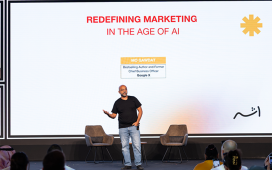
James Bury, Head of Marketing and Communications, Education & Culture, Expo City DubaiImagine we implemented worldwide legislation that organic carrots were just called carrots, and the pesticide‑laden had to be labelled chemical carrots. What if Fairtrade coffee was just coffee, and the non‑Fairtrade option was called exploited coffee?
These are just thought experiments, but they expose a real problem. The destructive enjoys the privilege of being the norm, while the planet friendly is forced to wear the label.
Behavioural economists Richard Thaler and Cass Sunstein call this choice architecture. The way options are presented, whether in a supermarket or on an energy plan, shapes what people choose, often more powerfully than rational arguments or raw data.
Language isn’t neutral. It frames how we think, and it shapes what we choose. Research by Stanford psychologists Paul Thibodeau and Lera Boroditsky found that when crime was described as a “beast” attacking a city, people supported harsher policing, but when described as a “virus,” they preferred social reform. The facts were identical; only the metaphor changed.
In sustainability, the words we use may be one of our greatest obstacles. Take the word itself. Sustainability is a clunky six syllables that groans under its own weight and signals duty more than desire.
To sustain is to limp along, not leap forward. It implies maintaining, not thriving. And often it’s defined by reduction: don’t fly, don’t eat meat, don’t buy plastic.
It’s the language of guilt and restriction, not progress and inspiration.
In marketing, copywriting is the art of using words to persuade desired actions. Copywriters sweat over every syllable because they know words don’t just describe reality, they change it.
A fundamental principal copywriters apply is that people don’t care about the product; they care about what the product does for them.
They harness the power of concrete visual language to engage the senses and entice the reader to imagine abstract concepts and the positive impact it can have on their lives.
Think back to 2001 when Steve Jobs was launching an expensive product with inferior sound quality. He didn’t sell “5GB of storage”. He sold the iPod as 1,000 songs in your pocket.
Nobody buys “organic produce”; they buy health, flavour, peace of mind. Nobody buys “emissions reduction”; they buy cleaner air, safer futures, kids who can still play on the beach without choking on smog.
In their book ‘Made to Stick’, Chip and Dan Heath explain that “Concrete language helps people, especially novices, understand new concepts. Abstraction is the luxury of experts.”
And yet, look at how we frame the fight. It’s “renewable energy” but just “oil.” “Sustainable fashion” but simply “fashion” for the fast‑fashion kind. Every extra word we bolt onto the better choice reinforces the idea that it’s niche, optional, fringe, abstract. Meanwhile, destruction strolls around nameless, normalised, unchallenged.
Time to flip the script. Carrots are carrots. The pesticide‑drenched ones get the warning label. Energy is energy. Fossil fuels get called dirty energy. Fashion is fashion. Exploitative fashion is named for what it is.
By naming things differently, we make the destructive path feel abnormal and the sustainable one simply feel like life as it should be. We rebuild the architecture of choice itself, nudging the better option into the position of normality.
A simple reframing of language can lead to a reframing of opinions, feelings, and ultimately behaviours. It can help close the belief–behaviour gap, where people say they care about the planet but struggle to act.
The stakes couldn’t be higher. If sustainability were a brand, it would be over‑invested in awareness and woefully under‑performing at conversion. The science is clear, the awareness is widespread, but the action is lagging. What’s missing is the persuasive power of words that move people to act, stay loyal, and advocate for change.
The science and research give us the facts. Language gives us the will to act.
And the brief is simple: not another jargon‑filled awareness campaign, but the most effective ad campaign in history.
Because we’re not selling sustainability, net zero, or carbon credits. We’re selling tomorrow; a future where humanity and nature thrive in harmony.
By James Bury, Head of Marketing and Communications, Education and Culture, Expo City Dubai