Rory McEntee, Chief Marketing Officer, GymNation
Let’s face it, we’ve crossed a threshold. The creative world once revered, populated by brilliant minds with expensive taste and corresponding agency invoices, is shifting. I’ll admit it: I’m reaching out less and less to my human creative peers and instead leaning into artificial intelligence (AI). Do I feel guilty? Not particularly. And that’s a confession I’m happy to unpack.
Mad Men, mild ideas, massive fees
For years, there’s been a romanticism about human creativity. The kind that paints the copywriter as a tortured genius, the designer as an eccentric magician, and the creative director as a visionary leader.
And while that may still hold true in some corners, on the brand side, we’ve endured a reality that doesn’t quite match the myth.
Over the years, I’ve paid eye-watering fees to agencies, often for output that passed through too many hands, got watered down by junior talent, and rarely delivered the kind of innovation we were promised in the pitch.
Am I the only one who has seen an agency start bold and daring but having to validate the man hours on the project, dumb down and overcomplicate the brief only to deliver beige, safe, and forgettable work?
Is AI cheating the system. Or just beating it?
Enter AI. Swift, tireless, and increasingly sophisticated.
Suddenly, I can generate a press release in 5 minutes, draft video scripts tailored to audience segments, create dozens of ad variants in one afternoon, and develop strategic social content plans that with a touch of polish and my own creatively baked in are indistinguishable from those handed to me by an agency team after three weeks of work.
Yes, it feels a bit like cheating. But cheating implies a moral failing, and in today’s marketing environment, efficiency isn’t a vice, it’s a necessity.
Budgets are tighter. Expectations are higher. Speed is non-negotiable. When the board is demanding cost reduction alongside increased output, turning to AI isn’t betrayal, it’s just smart. It’s survival.
The fake ad that was too real, too soon
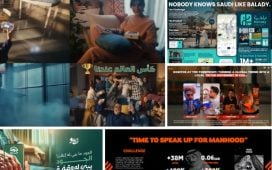
Here’s where it gets deliciously ironic. 2 years ago, I created a “fake” Gymbox bus ad. You may have seen it, it stirred up a small storm.
Critics called it deceptive, provocative, and lacking taste. It made the rounds for all the wrong reasons. But here’s the kicker: it wasn’t AI-generated.
That so-called ‘fake ad’ was conceived, written, and designed by a very real (and very talented) copywriter and designer. Humans. All the way. Similarly to the fake ad I did with Surreal. Humans all the way.
Was I simply ahead of my time?
Back then, the backlash was swift. Fake ads were frowned upon seen as distasteful, misleading, amateur even. But fast forward to today, and the creative conversation has turned. Now, fake ads made by humans are a thing.
Like that recent spec piece where The Economist takes on AI with some beautiful copy crafted by a designer as a passion project.
Two years ago, it would’ve been crucified as misleading (just ask Anthony Smith for his viral Guinness Ad). Now it’s applauded. Especially in the LinkedIn echo chamber, where the line between creative exploration and commercial intent has become increasingly blurred.
Why the change in tone? Because it’s a human-made antidote to the AI onslaught. It’s no longer the fakeness that’s the issue, it’s the soullessness we’re pushing back against.
Irony of ironies: what once felt inauthentic now feels refreshingly real, because it wasn’t made by a machine. And it’s laughable watching all the creative minds coming together to try an spin the anti-AI narrative.
A new creative model
This isn’t an obituary for human creativity. Far from it. It’s a recalibration.
The best work now comes from a hybrid model. AI provides a starting point, fast, broad, and often surprisingly clever. Human creatives refine, elevate, and inject emotional resonance. The value has shifted: it’s no longer about who can generate the most ideas, but who can curate, elevate, and humanise them with strategic precision.
And in my case? I’m still making fake ads – only now, I don’t need to call a designer. I can do it myself. In ten minutes. In multiple versions. With A/B options. It’s faster. Cheaper. Riskier. And yes, kind of fun.
Sure the creative purists will argue we are all producing the same work from AI and true creatively can only come from the human touch. Well they would say that. They fear for their livelihoods. Their future.
But unfortunately for them. It’s not true. A new wave of creative ads have arrived. Different yes. But creative in its own way.
The real confession
So, here’s the real confession: I don’t feel guilty. I feel empowered. In fact, I’m happy to admit I’ve asked AI to give this a quick proof read and tweak a few bits to make me sound clever. Smart eh?
I still value creative minds deeply, even if I won’t pay for them like I used to. But I no longer see them as the only path to great work. I see them as a supporting sidekick to AI, not gatekeepers of creativity. This shift isn’t about replacement; it’s about redefinition.
Ok that won’t pay for their mortgage, kids school fees or even their annual trip to Cannes.
But is that my problem?
I’m not running a charity. I’m running a brand.
By Rory McEntee, Chief Marketing Officer, GymNation