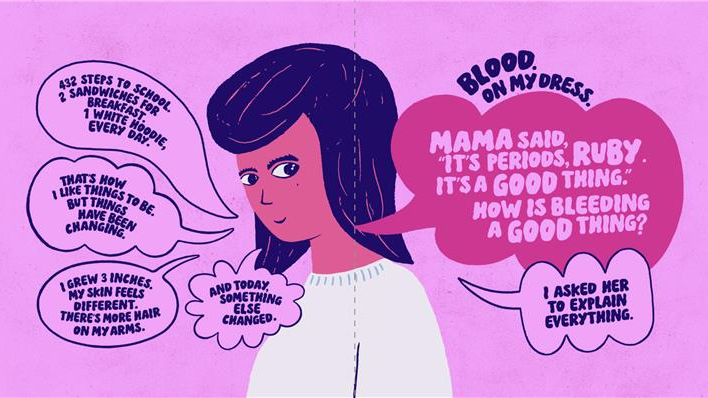
Global hygiene and health company Nana, a brand of Essity, and Saatchi & Saatchi Middle East have launched Ruby Blooms, a sensory guidebook created to help young girls on the autism spectrum understand menstruation in a way that meets their sensory needs.
Period education often falls short when it comes to neurodivergent audiences. For young girls with autism, conventional approaches — typically reliant on verbal or clinical explanations — can trigger anxiety and sensory overload.
Ruby Blooms aims to offer an entirely new model: a tactile, calming, sensory-led experience that prepares girls for menstruation through gradual, intuitive engagement.
Commenting on the campaign, Sebastien Boutebel, Chief Creative Officer (CCO) of Saatchi & Saatchi Middle East at Publicis Groupe Middle East, said, “True inclusivity in brand communication doesn’t come from talking to everyone the same way — it comes from listening, adapting and designing differently. ‘Ruby Blooms’ is a great example of what happens when empathy is built into the creative process right from the start.”
The collaboration between Nana and Saatchi & Saatchi Middle East focused on designing each page to mimic the real-life sensory elements girls encounter when they get their period — the texture of pads, the rustling sound of the wrapper, the distinct smell of blood.
Every detail, from the colour palettes to material choices, was tested and refined to help reduce the shock of the unknown and replace it with familiarity and confidence.
Michelle Karaa, Regional Marketing Manager MEA at Essity, explained, “Periods are never just periods, especially in a region where such topics are still considered taboo. Our mission has always been about breaking taboos and making periods easier for all women, without exception. This initiative ensures that young girls on the spectrum receive the education and support they deserve, tailored specifically to their needs.”
The project marks a bold move for a hygiene brand in the Middle East, tackling both menstrual stigma and accessibility in one thoughtful piece of communication.
Dr. Rama Kanj, an autism specialist who supported the initiative, concluded, “Periods are already a significant emotional and physical milestone. For girls on the spectrum, the sensory impact can be profound. ‘Ruby Blooms’ is carefully designed to empower these young girls and provide their families with essential, tailored support.”
CREDITS:
Client: Nana
Regional Marketing Manager MEA at Essity: Michele Karaa
Senior Brand Manager ME at Essity: Romy Abou Tayeh
Associate Brand Manager ME at Essity: Yasmina Kawass
Agency: Saatchi & Saatchi MEA
Chief Executive Officer, Publicis Groupe Middle East & Turkey: Bassel Kakish
Chief Creative Officer (CCO), Saatchi & Saatchi ME: Sebastien Boutebel
Chief Strategy Officer, Publicis Groupe Middle East & Turkey: Tahaab Rais
Chief Executive Officer, Publicis Communications UAE: Nathalie Gevresse
Head of Saatchi & Saatchi ME: Ramzi Sleiman
Senior Creative Director: Bruno Barbosa
Creative Director: Anika Marya
Associate Creative Director: Siddarth Joglekar
Senior Art Director: Ludmila Abramov
Senior Art Director: Vinicius Claudino
Senior Art Director: Bruno Cavalcante
Associate Design Director: Joao Xavier
Associate Creative Director: Maya El Kai
Animator: Daniel Masilang
Business Director, Communications Consultancy: Shauna Byrne
Business Director, Strategy & Insights: Adrian Mutescu
Associate Business Director, Communications Consultancy: Line Mansour
Manager, Strategy & Insights: Fatima Talaat
Manager, Communications Consultancy: Aya Abi-Saleh
Production House: Prodigious MEA
Chief Executive Officer, Prodigious ME: Sami Saleh
Senior Producer: Upasana Kumar
Producer: Carmel Missilmany
Videographer: Issam Saadane
PR:
Director, Corporate Communications: Angela Bak
Manager, Corporate Communications: Chhaon Bahl
Content Team:
Head of Content: Vikrant Shetty
Manager, Influencer Marketing: Lea Nahed
Senior Executive, Influencer Marketing: Tarek Khalil
Educational Psychologist: Dr. Rama Kanj
Occupational Therapist: Fabiana Fernandes
Book Mockup: Mockup10
Illustrator: Niveo
Co-Founder, Enso Studios: Faisal Shah
Co-Founder, Enso Studios: MannButte
Producer, Enso Studios: Reem Hageali
Director of Photography: Duane Mendes
Photographer: Sophia Sem