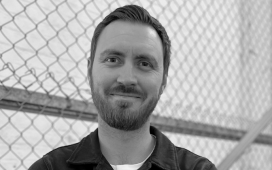
Karim Sherif, Executive Creative Director, Magnitude Creative.
 Every ten years or so, we’re told the industry has ‘changed forever’.
I want to be optimistic and say no, but bear with me. In the last 30 years, we’ve seen three different generations grace the halls of the poster plastered walls of of multi-national agencies and how creative briefs were decoded.
In 2006, youngling millennials were observing awe-inspiring Gen X creatives out their best work on one of Jony Ive’s new, colourful, spaceship-looking iMacs. Stock photography was a breakthrough; you can just buy a photo with just a click, revolutionary – however good luck finding any photos of Arabs back then … even now.
In 2016, the millennials made the most of the teams, and they witnessed every brief creep up with this new media magic mandate called ‘social media activation’. This new thing cast a spell on clients across the land, like “Impressiono, Performify, and Data Cadabra” – stuff they don’t teach you at Hogwarts.
So the Cadbury Gorilla hung up the drum sticks, and the generation was torn between analogue-ers, bloggers, and data hoggers.
In 2026, who is it gonna be? Man or machine? Who will reign supreme, and crack the brief?
2006: The age of unlearning – or, how we quietly stopped being Windows people.
In 2006, advertising was still loud, linear, and largely certain of itself. Every brief mostly had a wide target audience of adults 18–49. Which really meant: whoever still watched TV and hadn’t figured out how to skip ads yet.
Pop culture moved at human speed. Music was discovered on MTV (R.I.P.). Brands talked to people. And people, mostly, listened.
But something subtle was happening beneath the surface.
Creatives were unlearning Windows. Not literally at first. but culturally. Designers began migrating to those white iMacs like refugees crossing an aesthetic border. Suddenly, typography mattered. Kerning became a personality trait. Presentations stopped looking like Excel had a stroke. Steve Jobs’s dream finally bloomed when Apple gained permission to care about taste.
This was the era of craft worship. Directors mattered. Photographers were kings and queens. Budgets were beefy. Hierarchies were clear. You earned your stripes by surviving long enough and be known as the guy or girl who came up with Bud Light’s ‘Real Men of Genius’.
Technology hasn’t democratised creativity yet. It merely polished it and helped the crafter, craft better.
Advertising still believed brilliance was rare, expensive, and centrally controlled. If you were one of those crazy Lüzer Archive magazine collectors, then take good care of them, they’re gold!
2016: The attention panic era – a time when everyone wanted to be vertical
Even though social networks started in late 2007, by 2016, the industry wasn’t calm anymore. It was scrolling at light speed.
Social media hit its cultural peak and its moral confusion simultaneously. The target audience splintered into micro-segments everywhere. Everyone was ‘content’ and everything was ‘real-time’.
In 2016, brands suddenly wanted to talk like humans, but hired committees to do it. “Pick me, follow me, love me!” Pop culture stopped waiting for permission. Memes became faster than strategy decks. Influencers replaced celebrities; now we even have ‘influebrities’.
This is the era when advertising became insecure. Many an agency lost their way and became ‘Yes Men’ instead of Mad Men.
We chased relevance like a fun uncle chasing youth. We A/B tested bravery out of ideas. We confused engagement with impact. Technology didn’t just change distribution. It changed power.
Creativity became faster, cheaper, louder, and often emptier. The industry responded the only way it knew how: content calendars. But a few didn’t let conformity annihilate what was originally there.
We’ve seen some of the best work come out during this period, bagging the region’s first Titatinum Cannes Lion won by Memac Ogilvy for their work on UN Women ‘Autocomplete Truth’, all thanks to – yep – the reach attained by the power of social media.
So in short, 2016 taught us how to publish and how to be seen, however, it still did not liberate us from our own insecurities.
2026-infinity: The intelligence shift – the execution executioner arrives
So here we are, generating a generation that will generate content for years to come.
In 2026, thinking really matters because this is the year creativity will stop being scarce. Let’s just say this. Our friend AI didn’t arrive as a tool. It arrived as a Super Mario Power Star (you know the one, if you’re still reading this and lived through the previous two decades).
Suddenly, what took days takes minutes. The value equation has flipped. Execution is no longer impressive.
Only taste, judgment, and direction survive. AI can write copy, but it cannot decide what deserves to exist. AI can generate visuals. But it cannot feel cultural tension before it breaks. AI can filter job vacancies and scan the right keywords for a potential hire, but it can’t sit face-to-face with you’d like some sugar in your a cup of coffee.
The target audience today is a mindset in motion. People don’t want brands to talk more. They want them to mean something valuable, faster. Pop culture now moves at machine speed, but meaning still moves at human speed. The work that survives won’t be the safest or the fastest, but the most deliberate. This is the moment where thinking outranks making, and judgment outranks volume.
Brands that understand this will build worlds, and creatives who lean into humanity, risk, and clarity will find that AI didn’t dilute their value, it sharpened it.
That’s where we’ll meet the industry’s next Jedi knights, the ones who will be rewarded for taste and intent, who may well make it through these clone wars to 2036. As for everything else, it’s just a prompt, man.
By Karim Sherif, Executive Creative Director, Magnitude Creative.