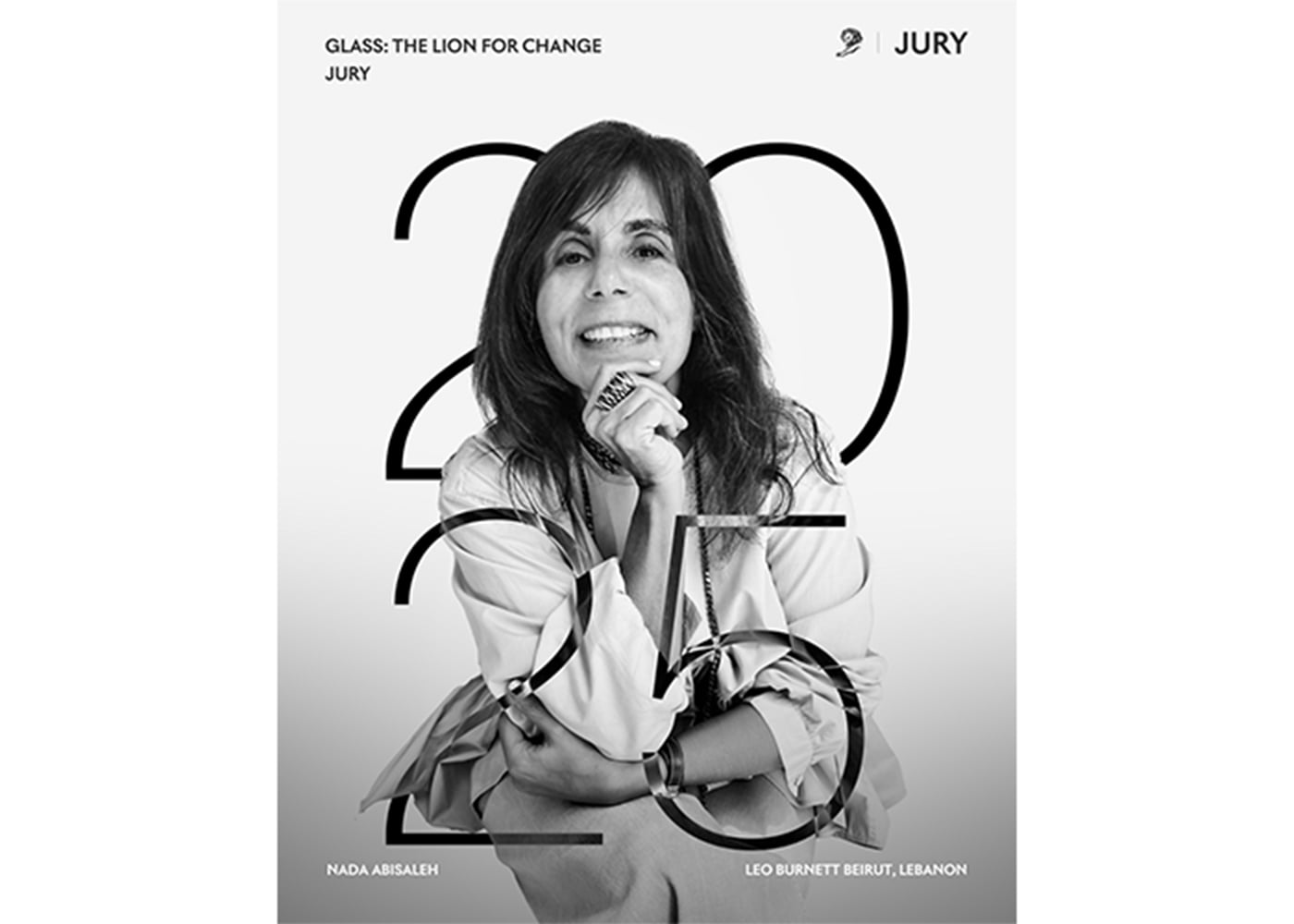
 Nada Abisaleh, Head of Leo Burnett Beirut.
If I had a dollar for every time I heard “DEI is a trend” I could retire. But I won’t. Because for me, and for countless women in Lebanon and across the Middle East, it was never a trend. It was survival. A conviction. It was about a drive that held us up in management meetings, edit suites and creative reviews, where we were the ‘only’ in the room – outside our homes and the kitchen.
After more than 35 years in this business, I am still puzzled by people’s superficial understanding and incorrect practice of diversity, equity and inclusion (DEI). Often, it is still mainly about performative creative campaigns and fluffy HR panels as opposed to what it was always meant to be: reshaping systems, policies, beliefs and habits so deeply, that women and all marginalised communities don’t need to shout any longer to be heard.
But let’s talk about her. The woman in advertising in the Middle East. The one with the fire in her belly, the deck in her hand and a hundred-year-old system in her way. What should she focus on now? In 2025? In a post-woke, AI-charged, fractured world where DEI stands for nothing and everything at the same time?
Let me take you on a journey, not just through the lens of Leo Burnett Beirut, but through the eyes of a woman who has navigated this region’s complicated love affair with gender balance and creativity, infused with my life changing experience at Cannes Lions 2025, serving as a jury member in Glass, the Lion for Change.
Let’s be clear. DEI should be sustainable, structural and societal.
Diversity, equity and inclusion are not interchangeable buzzwords. When done right, it isn’t just an initiative, it’s an infrastructure. It’s policies that ensure women don’t have to choose between motherhood and leadership. It’s briefs that start with inclusive insights, not just ‘female-targeted’ adaptations. It’s clients who don’t just want a ‘female director’ but demand female perspective in strategy, creation and decision-making, while walking the talk in their own corridors.
A sustainable DEI model in our industry and region requires a full-spectrum lens. One that spans employment, representation, mentorship, reward and creative awards.
Twenty years ago, DEI was one slide within a 50-slide PowerPoint deck, referred to as ‘women empowerment’. Occasionally, a brave person in the room would bring up ‘female leadership’ before being politely ignored. I remember panel discussions where I was asked how “I manage work-life balance” while my male counterparts discussed business transformation – and by the way, I still get this question in 2025.
Ten years ago, DEI became more of a tick-box exercise. Until it died again or was simply erased from a company’s organisational structure and profit and loss statement (P&L).
Fast-forward to today. We went from a whisper to a battle-cry. We’ve shifted from “let’s hire one woman” to “let’s have more women in the C-suite”. That’s it? That’s what DEI means today? Nope. Not only. Thankfully.
Today, we’re talking structural, not just symbols. We’re asking the harder questions: Who’s in the room when decisions are made? Are we fostering equity or just representation? Are we driving change bottom up or just claiming it? Most importantly, DEI is no longer a social post on Women’s Day or a hijab-clad girl skateboarding in a video. DEI when done right, is deeply unsexy. It’s complex. Tiring. Demanding. It’s legal policy. It’s structural overhaul. It’s budget (re)allocations. It’s about reprogramming a system that was never built for women, or people of colour or people with disability, in the first place.
And by all means, it should never be about winning at Cannes Lions. Or not just. That’s why, in our part of the world, DEI can’t be decorative. Let alone opportunistic. It has to be structural.
This year, something shifted in Cannes. This year, all the Lions roared for change. The standout campaigns in Cannes weren’t just DEI-themed. They were DEI-anchored. There’s a difference. One claims inclusion; the other lives it. And DEI was no longer confined to the Glass category.
On and off the Croisette at Cannes, it was about creativity, impact, purpose, commitment, authenticity and deeply rooted, long-term change. It was about culture-shifting campaigns – away from wokewashing, tokenisation and splashy one-offs.
It swiped Titanium, Film, PR and spanned across all Grands Prix winners, and invited itself into almost every jury room. What’s clear, this year at Cannes, was that it was no longer about the ‘wow’. Judges across all categories were looking for the ‘why’ and the ‘how’, fuelled by creative bravery and innovation. This year, Cannes rewarded tension, truth and transformation. That’s the sweet spot where DEI stops being ‘polite’ and ‘great’ and starts being powerful, acting as a real agent of change.
So, what now? What next?
To every woman in MENA advertising reading this: Play real. Play big. Play authentic. Play for systemic change. Play for you, her and them.
And let’s remind the world – and ourselves – that the most powerful campaigns start with a truth and a need. Ours just happens to be: “We belong here”.
And if that makes some people uncomfortable – even better.
By Nada Abisaleh, Head of Leo Burnett Beirut