The upcoming FIFA World Cup is like none that has come before it. It’s the largest in terms of geography and number of qualified teams, and it mainly takes place in a country that’s in the news now for numerous non-footballing reasons. It’s safe to say that World Cup 2026 will be the noisiest tournament ever, which brings both challenges and opportunities for brands that want to be part of it.
At Footballco, we’re constantly speaking with brands and agencies about how they can find their place in football, and we’re observing how fans consume content through our football and culture flagship brands like GOAL and Kooora, as well as social-first brands like Yalla GOAL. But for the World Cup, we also leveraged these platforms and other tools to survey more than 11,000 fans worldwide to better understand how brands and media can cut through the World Cup noise.
Look beyond the nation
It’s understandable that many brands will think the World Cup starts and ends with fans’ national teams. Which, due to the increased size of the World Cup, means there will be seven national teams from the MENA region playing across Mexico, the U.S and Canada, eight if Iraq qualify through the inter-confederation play-offs.
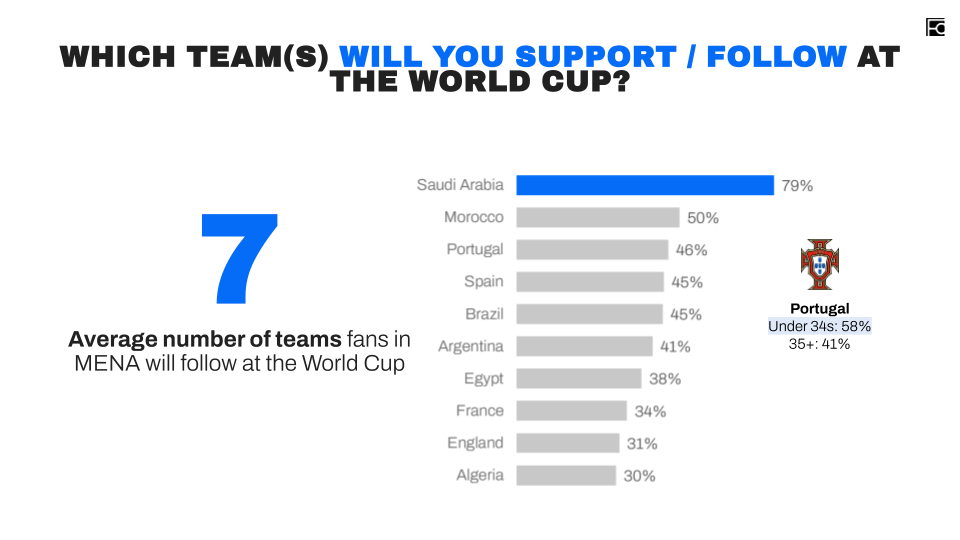
But while home national loyalty is strong, for fans in the Middle East, interest extends far beyond, with 83 per cent of fans in the region planning to watch as many games as possible, or those featuring the biggest teams/players, while only 17 per cent plan to follow their team alone.
This is backed by data showing that the average fan will follow seven teams during the tournament, higher than the global average of five. Outside domestic teams, nations featuring the biggest players rank high on fans’ watchlists, with Portugal, Spain, Brazil, Argentina, France, and England being the most popular outside MENA.
For brands, this means that while we have the biggest group stage ever, there’s more to the World Cup than home-nation success, and interest will carry on long after a team’s elimination.
Challenging timezones
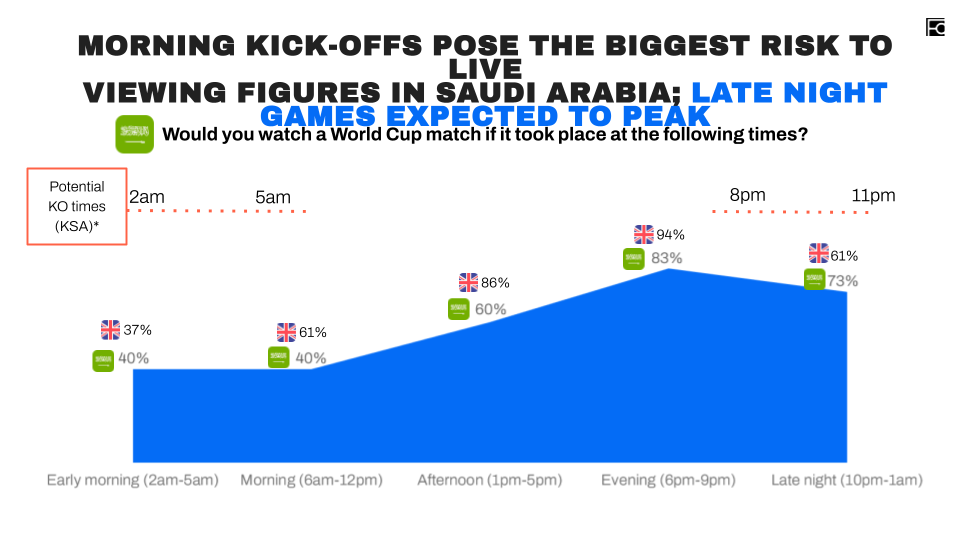
With this scale comes time zone challenges, with kick-offs spread between late evening, the middle of the night, and early mornings (domestic time). While it offers opportunities for late-night watch parties or breakfast kick-offs, it also means brands need to adapt depending on whether the match will be watched live or enjoyed the following morning through shoulder content outside the match window.
That said, 35 per cent of fans say not being able to watch the matches won’t affect their enjoyment of the tournament, with many planning to follow the tournament outside the 90 via creators, social media, and online platforms.
A creator world cup
It used to be that being an official FIFA Partner was considered the best way to align a brand with the tournament.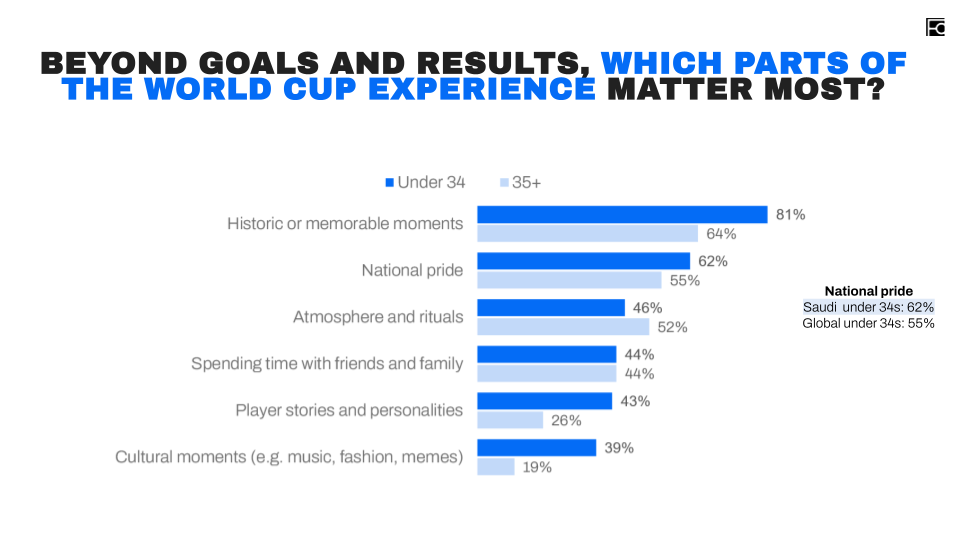 While there’s still value there, it was quite telling that 61 per cent fans under 17 told us they would feel positive towards a brand if they were associated with their favourite creator, compared to only 48 per cent who said they’d feel the same way if the brand was a World Cup partner. Creators also win out for 18-27s (albeit with a smaller difference) and while for 28 and overs a FIFA partnership is seen as more valuable, the difference is only three per cent in favour of the official partnership.
When we look across similar data for player/team partnerships, it’s clear tha,t especially for younger audiences, creators and creator-led content will be especially valuable this Summer. It’s one of the reasons why we’ve invested in our own creator-led formats, such as Yalla Fans and Yalla GOAL.
The battle of the screens
The popularity of creators leads to why 93 per cent of fans and 97 per cent of under-17s will second screen during the World Cup.
Really, two screens is understating it – we expect many young fans to be running multiple screens – following watch-alongs, messaging memes to friends, watching the match and even gaming during the actual live game, something 39 per cent of young fans said they’d be doing – higher than fans from any other region.
Be authentic, entertain and be creative
When we look at what drives the connection between brands and fans, it’s no wonder creator-fronted content is so popular. Across all ages as a whole, authenticity, entertainment and creativity come out on top – the same three reasons we often see as why fans, especially young fans, engage with creator personalities.
Authenticity will always be more challenging than entertainment and creativity – brands need to be aware of the cultural and football nuances, and for those not endemic to the sport, it’s easy to come across as inauthentic.
Own the moments
While FIFA partnerships aren’t an option for all brands, especially at this point, they often bring with them access to archive footage. This is significant because outside of match highlights, 69 per cent of fans wanted to see content that tapped into historic or memorable moments. Of course, you don’t need footage to tap into these moments, which opens up a wealth of story telling options for brands.
 This will be easier for brands attached to some teams, such as Morocco who became the first African nation to make a semi-final in 2022 and Saudi Arabia who famously made it to the round of 16 at USA ‘94 thanks to the stunning solo goal from Saeed Al-Owairan.
But, as mentioned, with fans following teams and most importantly players outside of their home nation, the wealth of story telling opportunities are extensive.
There’s no avoiding the fact that for brands and fans in the Middle East, the 2026 World Cup poses some challenges, but with the right strategy and creativity, the opportunities are bigger than ever.
By Andy Jackson, SVP for Middle East, Footballco.