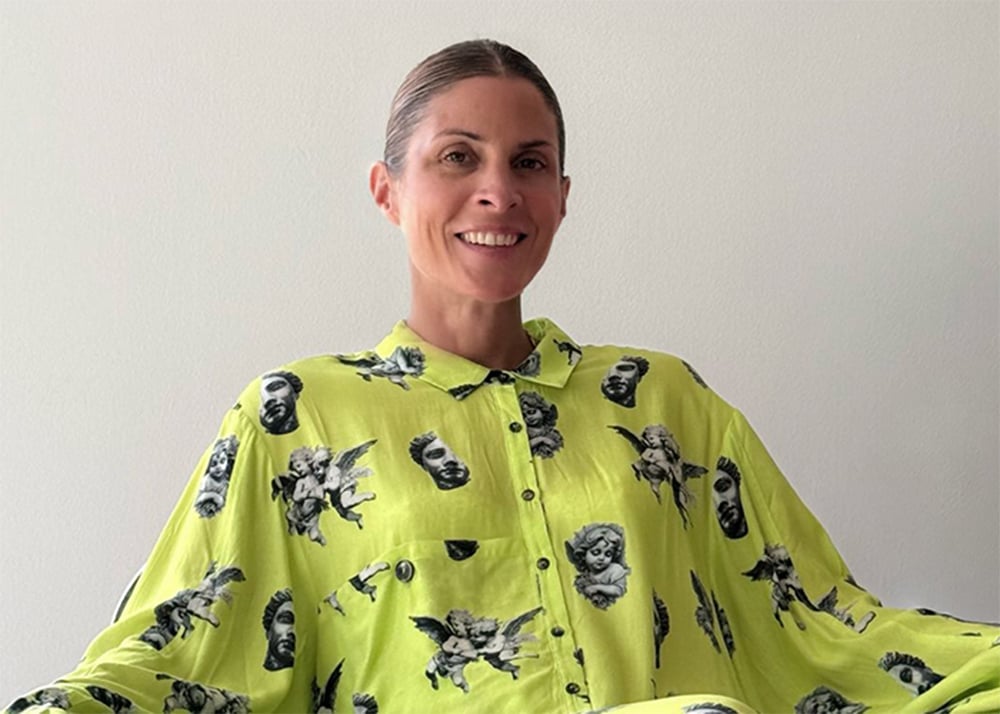
 Alix Petit-Kece, Partner and Design Director, The Refreshment Club
After 20 years living and breathing luxury fashion as the founder and former CEO of Heimstone Paris, I’ve seen the industry at its highest, and I’ve watched consumer desire shift while the industry struggled to adapt.
Beyond the explanations we keep recycling – China slowing down, global inflation, the end of a cycle – I believe luxury is under pressure for a simpler reason: it hasn’t kept pace with where desire lives today.
I remember when a logo, a finely tailored jacket, or the right bag could open doors. A monogram, a specific cut, a recognisable silhouette signaled you belonged. It was a passport: brands were the checkpoint, and ownership granted entry to a story of status and taste. That mattered to clients, to friends, and yes, sometimes to me.
But the rules have shifted.
When luxury stares at itself, it stops seeing culture
Today, what excites people isn’t just the product, it’s the story, the cultural relevance, and the experience that comes with it. Experiences is the new status.
At The Refreshment Club, our creative and strategic communication agency, we believe that people don’t simply buy products anymore, they buy into worlds.
Social media fractured culture into thousands of micro-communities. Individuality stopped being a private aspiration and became a daily practice, built in public. People create their own taste codes, and communities form around passions that used to be niche and are now mainstream.
Luxury goods used to be the primary tool for self-expression. Today they’re one piece of a much wider puzzle. People are chasing experiences: a week in Seoul, a desert art retreat, a chef’s table in Copenhagen, a marathon finish line, a rare vinyl, a moment they’ll remember.
And this is where many luxury brands miss the point: people remember moments, not objects. The brands that win are the ones that learn how to own moments that become memorable.
Value has become emotional, and brands haven’t caught up
Spending follows the heart. Consumers are investing in moments, not monuments.
And yet many luxury houses still behave as if nothing has changed: they expect admiration, maintain distance, polish campaigns to a shine, talk mostly about themselves, keep stores pristine, sometimes to the point of intimidation. The brand speaks, the audience listens.
That’s the trap of insularity.
Invitation over instruction
The brands that are winning have understood something essential: the consumer is not a disciple, they’re a collaborator. The relationship has inverted. People curate their identity; they choose what to amplify, what to remix, and what to ignore. They don’t wait for permission from a maison to define themselves, especially when it doesn’t resonate.
To succeed now, luxury must be lived and not just displayed. It must create environments where its codes can be experienced in a real way.
Louis Vuitton Men’s under Virgil Abloh, and now Pharrell Williams, signals this new era: cultural fluency and experiential thinking matter as much as atelier pedigree. The shows have become city moments, music, community, celebrity, spectacle, and that’s precisely the point.
The pieces are beautiful, but what lingers is the memory. Pharrell doesn’t just present clothes; he builds a world, with product embedded inside a broader cultural moment.
It’s not celebrity for celebrity’s sake. It’s a recognition that luxury now competes with culture itself. If brands don’t create meaningful moments, people will find them elsewhere.
The risk of standing still
Too many houses still cling to the old posture: marble pedestal, controlled distance, scarcity as the main message. That used to create desire. Today, in a world craving dialogue, that remoteness reads as indifference.
Meanwhile, younger consumers are redefining value with brutal clarity. They mix high with low, invest in travel, food, wellness, creativity, and only then consider a four-figure accessory—and only if it resonates with their real life.
Luxury isn’t doomed. Its gravitational centre has moved
The brands that will lead the next decade will shift from broadcasting status to creating relevance: listening first, then designing products, services, and experiences that genuinely serve the customer.
They must define, again, their audience and stop trying to talk to the entiere planet, but talk to the people on the ground that builds ecosystems, in order to turn retail into active brand spaces that host culture and community rather than purely transactions.
Partnerships will move from logo-stacking to credible co-creation with cultural and industry leaders, executed with consistency and long-term intent.
Most importantly, these brands will give consumers room to participate and personalise, so the customer can co-author the story instead of simply consuming the script.
Luxury’s new heartbeat: protected desire
Luxury once sold a dream by projecting the perfect image. Then many brands got obsessed with optimization, volumes, margins, KPIs, and forgot the essential ingredient: desire. When you see the same “it” bag on every street corner, desire dies. After too much visibility, the product becomes invisible.
Very few brands manage growth without killing desire. Hermès has mastered this for decades: product discipline, protected distribution, controlled rarity, and storytelling that stays aspirational because it stays coherent.
Today, aspiration is personal, built in real time by individuals who can share their lives with or without a brand’s blessing. Brands can either join this creative conversation, or stay isolated behind their marble walls.
To me, the future of luxury belongs to the brands that understand the most precious product, the moment: a memory, a feeling, a connection to something bigger.
In an experience-driven era, the brands that help people create unforgettable memories will outlast the ones that only offer beautiful goods.
By Alix Petit-Kece, Partner and Design Director, The Refreshment Club