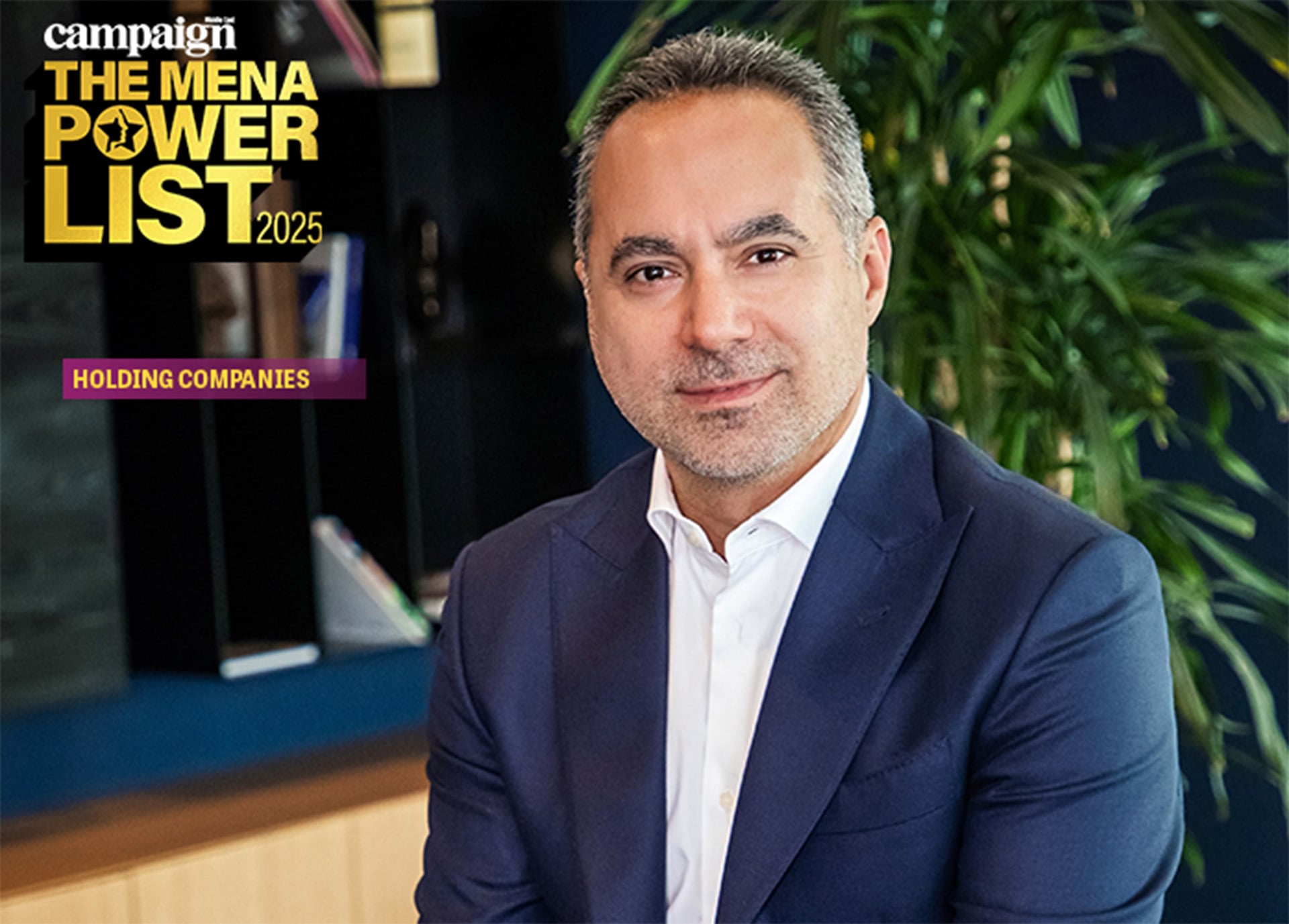
Title: Chief Operating Officer, Omnicom Media Group MENA
Years in the role: 4 years
Years in the industry: 24 years
Years in the middle east region: Born and raised
Other roles / board memberships: Board Member, ABG UAE
Power Essay: Soft power, hard economics – media as a national growth engine
Advertising has moved far beyond boardrooms and brand managers. Marketing has become an instrument of government. Officials are realising what global brands always knew: narratives shape behaviour; perceptions drive decisions; and media investment yields returns.
Nations now operate with the discipline of corporate brands. They define their promise, highlight their uniqueness, and compete for global attention as companies battle for market share. The dividends are tangible: rising tourist arrivals, foreign direct investment, expanded trade flows, job creation and growth in non-oil exports, all of which feed directly into GDP.
This transformation is most evident in MENA. Saudi Arabia’s Vision 2030 has made promotion a central pillar of diversification, turning NEOM, AlUla and Riyadh Season into cultural and lifestyle destinations as well as infrastructure projects. Qatar has done more than host the World Cup; it has reshaped its global image through sports diplomacy and culture, weaving art, architecture, heritage and creative expression into its soft power narrative. The UAE has mastered the art of persistence, using media not only to present itself as a hub for business, trade and modernity but also as a centre of tourism, culture and innovation.
“The stakes have never been higher. Media is no longer about awareness; it is about building nations.”
These initiatives are not mere advertising campaigns; they are national strategies, delivered with the persuasion of marketing and the weight of policy. For agencies, the stakes have never been higher. Media is no longer about awareness; it is about building nations. Our responsibility has expanded beyond storytelling to statecraft: attracting investment, drawing talent and enabling diversification. That requires fluency in both the language of creativity and the language of economics, GDP impact, competitiveness rankings and long-term reputation.
The industry itself is undergoing a sea change. Agencies are evolving from campaign assemblers into agents of change. This means investing in data that demonstrates economic impact, cultivating relationships with tourism boards, sovereign funds, ministries, and developing talent able to bridge culture, commerce and diplomacy. Even media buying has shifted. It is no longer transactional but a matter of strategic attention allocation, much like a central bank deploying capital.
The implications for businesses are significant. Collaborating with government branding initiatives is no longer about corporate social responsibility or reputation management; it is a growth strategy. Companies that understand the mechanics of national advertising align with host-country ambitions and become participants in economic transformation, not spectators. Governments, in turn, reap dividends beyond visibility: tourism revenues, business inflows and capital investment.
MENA stands at the centre of this new reality. With its young demographics, urgent diversification needs and ambitious development plans, the region cannot afford gradualism. Here, advertising is not auxiliary; it is fundamental to nation-building. Campaigns in Riyadh, Doha and Dubai are no longer just creative exercises; they are wagers on competitiveness and influence. The challenge for our business is clear: to move beyond impressions and ratings and embrace our role as partners in shaping economic futures.
Highlight of the last year
As COO of Omnicom MENA, operations were integrated regionally, the AI agenda advanced, and governance strengthened to drive efficiency, transparency and accountability. The network pushed into CTV and programmatic OOH while scaling the Beirut offshoring hub into a centre of excellence, positioning for innovation, resilience and sustained growth.
Rapid fire
What the industry needs to talk more about:
The courage to say “no”.
What the industry needs to talk less about:
The death of TV myth. TV continues to evolve and deliver scale.
If you could change one thing in the blink of an eye, you would …
The costly cycle of procurement engagements that drain billions of talent hours and replace it with transparent negotiations anchored in trust and shared growth.
What’s one thing about you that would surprise your team?
I value the lessons in failure over the comfort of success.
What mobile application can you not live without?
My friends’ group chat on WhatsApp, the one place I never filter myself.
What word / phrase do people remember you for using the most?
“Straight to the point.”
What’s one local / regional tradition that you love the most?
The habit of “Ahlan Wa Sahlan”.
If you could choose any two people, currently alive, in the world to share a meal with you, who would it be?
Michael Jordan and Banksy (if he chose to be known). One mastered presence, the other absence.
What’s your top word of advice for Gen Z and Gen Alpha?
The best ROI you’ll ever get is on yourself.
What’s your go-to comfort food?
Comfort is whatever mum cooks.
What’s your favourite ad from the past 12 months?
Beirut Beer’s ‘So What, but an Engineer’.