In almost every episode of Taste of Saudi, a local chef looks at Hisham Baeshen and says: “I don’t cook it this way”.
It happens in Tabuk, where fresh fish from the local market become Sayadiyah prepared differently than any recipe Hisham had encountered. It happens in Ha’il, where he and Chef Abdallah roll vine leaves together, each following a slightly different tradition. It happens in Riyadh’s Souk Al Zal, where Al Maqshoush, a dish of gatherings, arrives at the table wearing a different flavour than it does anywhere else in the Kingdom.
And it is in these small, unscripted moments of disagreement that Taste of Saudi reveals what it actually is: not a cooking and travel series in the conventional sense but a living document of Saudi Arabia as it is actually lived. Raw, warm, funny and deeply proud of its diversity. Thirteen regions, each with its own dialect, its own landmarks, and its own kitchen, yet the same sense of humour, the same pride in what it means to be Saudi today, and the same hospitality, long before Saudi Arabia became among the world’s seven tourist destinations.
Among the series’ most memorable moments is Episode 12, deep in Arar, a city in Saudi Arabia’s far north that most cameras rarely reach. We see Chef Hisham Baeshen telling Umm Seoud, a local chef known across her region for the generosity of her sufra, her dining table. “This time,” he tells her, “I will be doing the cooking, and you will rest and be served.” She replies, teasing, “I am afraid I might get used to this.” It is a moment that says more about Saudi women and their big personalities than most curated content has managed in years; not through a forced narrative, but through the natural ease of two people sharing a kitchen.
A national moment, lost to noise
Saudi National Day had become one of the most cluttered advertising periods in the region’s calendar. In 2025 alone, it generated more than 677,000 social mentions, dominated by repetitive brand messaging and familiar landmarks.
For Almarai, Saudi Arabia’s leading FMCG brand and a trusted presence on family tables for generations, this was a moment that demanded more than a campaign. Saudi Arabia was changing fast, and amid that change, someone needed to celebrate what had always been there: the richness, diversity, and quiet pride of Saudi culture.
The insight
Saudi Arabia is the world’s 13th largest country, home to over 32 million people across 13 distinct regions, each with its own dialects, traditions, landscapes and cuisine. But research revealed a generation increasingly disconnected from its own regional culinary heritage. The Ministry of Culture had identified 13 regional and two national iconic dishes to represent the Kingdom’s culinary identity, yet awareness remained remarkably low. A poll on Atyab Tabkha, a culinary community of 2.8 million followers, found that 83 per cent had never heard of several of them.
The challenge was reframed entirely: this was not a National Day campaign. It was a cultural storytelling opportunity.
The idea
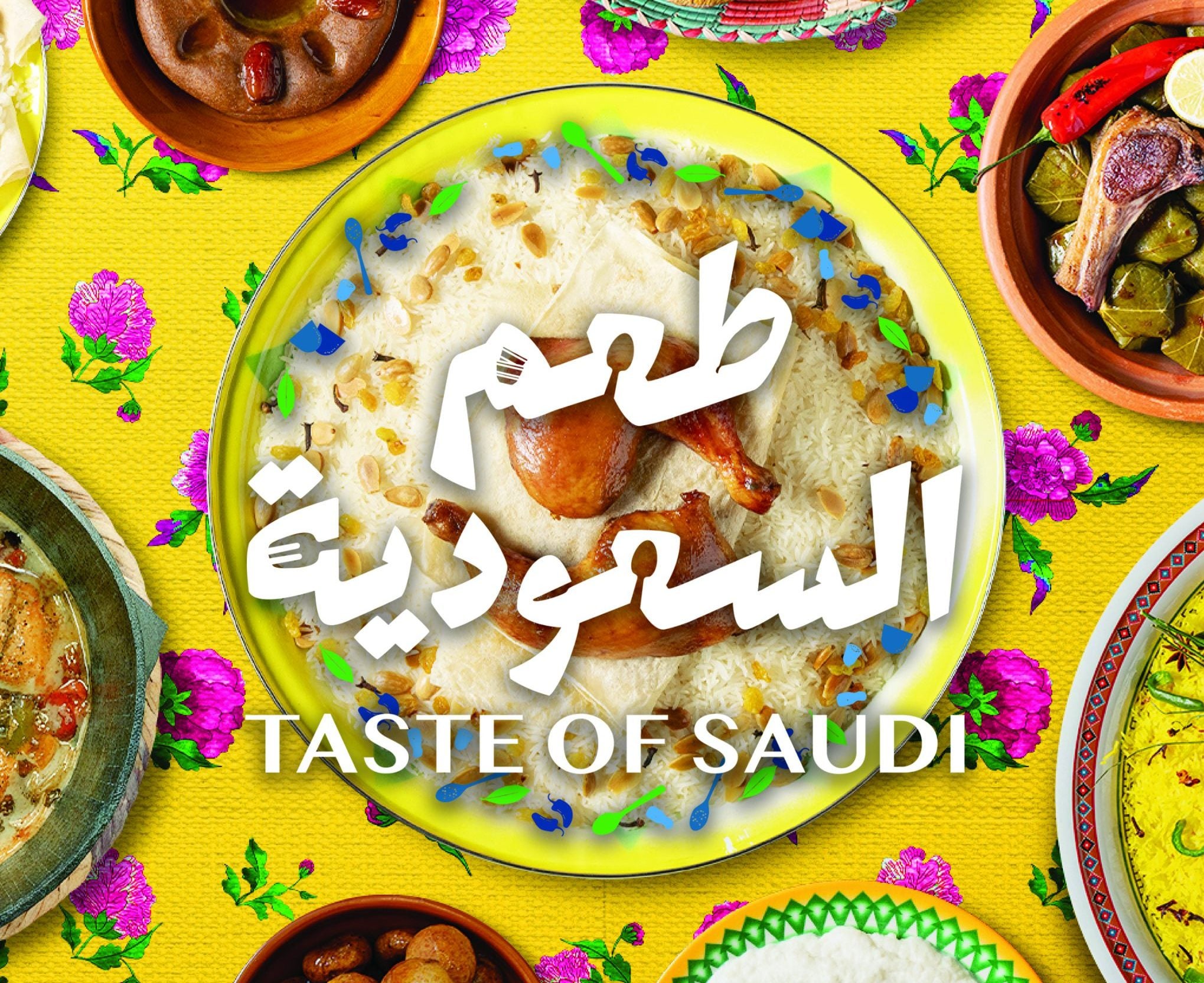
Taste of Saudi was conceived as a long-form travel and cooking series offering genuine entertainment. It was created by Almarai in partnership with The Fullstop, MBC Media Solutions, Starcom KSA, Made in Saudi Films and MBC Shahid.
Chef Hisham Baeshen, one of Saudi’s most influential chefs with more than 10 million followers on social media, was cast as a curious learner, travelling over 7,500 kilometres across the Kingdom, shopping from local markets, and cooking in communal spaces with cooks who had rarely appeared on screen.
Almarai’s presence throughout is equally unforced. It is simply part of a Saudi fridge and table, appearing naturally alongside the fresh produce Hisham picks up from local markets in Tabuk and the fields of Hail, because that is where it has always been.
Across 15 episodes, the series intentionally elevated under-represented voices – women, elders, village cooks and culture-bearers – extending beyond food into local rituals, traditions and daily life. Stereotypes are not challenged through declaration but through the simple, powerful act of showing people as they are.
The results
Taste of Saudi premiered on ShahidTaste of Saudi premiered on Shahid, the number one Arabic streaming platform in MENA, on Saudi National Day 2025. It became the number one lifestyle and cooking show on the platform within six months, generating 2.3 million views. Notably, 89 per cent of viewing occurred on TV – shared, family viewing – and 95 per cent of viewership came from Saudi Arabia, confirming deep national resonance.
Social amplification reached 75 per cent of target audiences, delivering 97 million views and exceeding planned KPIs by seven times. Earned media came in at 69 per cent above total campaign spend.
The lesson
Some brand value is built through meaning. Taste of Saudi is proof that the most powerful thing a brand can do is step back and give culture the unfiltered space it deserves.
What began as a National Day campaign became something the brief never anticipated: a long-form cultural document that gave visibility to regional voices rarely seen in premium entertainment and reinforced Almarai’s place not just on Saudi tables but in Saudi life.