Saudi Arabia’s marketing industry has grown up.
The budgets are bigger. The platforms are sharper. The talent is better. The ambition is undeniable. We are no longer an emerging market finding its voice. We are a serious market with serious influence, real scale and global attention.
Which is precisely why one uncomfortable truth needs to be said out loud: Saudi marketing is becoming too polite for how far it has come.
We, marketers in Saudi Arabia, are playing it safe at a moment that demands courage. We are choosing niceness over honesty. And in doing so, we are slowly sanding down the very human edges that make brands memorable, those same brands that Saudis grew up with or have come to advocate for.
Khalas! The mask is off. This is no longer about religion, culture or values. Saudi society is beautifully complex, confident and far more nuanced than the way it is often portrayed in advertising.
This is about marketers playing it safe. I’ve sat in enough approval rooms to know how often the safest idea wins not because it’s right, but because it’s easier to live with.
More specifically, it is about a growing habit among marketers in Saudi Arabia to hide behind ‘respect’, ‘sensitivity’ and ‘alignment’ as a convenient excuse for creative fear. Campaigns are increasingly designed to survive internal approvals rather than engage real people. The safest idea in the room wins. Not because it is the best idea, but because it pokes no one.
If your campaign can be approved by everyone in the meeting, chances are it moved no one outside it.
We are marketing to humans and humans are unpredictable, impulsive, emotional beings. Yet the ads we keep creating don’t reflect this.
Humans get bored. Humans want more. Humans speed. Humans bend rules. Humans contradict themselves.
People in Saudi Arabia, like humans everywhere else, are inconsistent by nature. They care deeply about values yet they aspire, compare, indulge, restrain, rebel and conform; often within the same day. They love tradition yet chase progress. They speak about responsibility yet occasionally act on impulse.
This does not make them immoral. It makes them human. Marketing that pretends otherwise is not ethical. It is dishonest.
And dishonesty in marketing is rarely loud. It is quiet. It looks like smiling families at sunset. It sounds like generic voiceovers talking about family, often with one son and one daughter, perfectly balanced, perfectly behaved. It talks only about happy times, cultural pride and ‘moments that matter’. It is as unreal as the man in the perfectly pressed thobe who never sweats, never rushes and never has a bad day. It feels safe. And it is instantly forgettable.
Some of this instinct to sanitise is understandable. Look around the region and you’ll see markets that have mastered polish. There are markets nearby that have perfected comfort. Places where efficiency is flawless, infrastructure gleams and even ambition is well-organised.
Unsurprisingly, their marketing follows suit. It is immaculate, inoffensive and engineered to disturb absolutely no one. Everything is beautiful. Everything is agreeable. Everything is carefully rounded until it reflects nothing sharp back at the audience. Polished to perfection. And emotionally sterile.
Saudi Arabia still has something rare by comparison: Friction. Tension. Contradictions. Energy. Youth. Ambition. Confidence mixed with impatience. Respect blended with defiance. That friction is not a problem to be managed. It is creative fuel. And we would be foolish to iron it out too early in pursuit of universal approval.
The uncomfortable part marketers in Saudi Arabia need to sit with, I believe, is that Saudi marketing has matured enough to handle honesty now. And at this scale, honesty is no longer a risk, it is authentic; it is a competitive advantage in a market where sameness is already showing diminishing returns.
The excuse phase is over. We can no longer hide behind the idea that the market is ‘not ready’. Readiness is not something audiences lack. It is something marketers postpone when they are afraid of accountability.
Mature markets are not defined by how carefully they speak. They are defined by how clearly they think.
Honest marketing is not about shock value, it is about efficiency. Saying the one thing people will remember instead of 10 things they will forget. It does not require provocation for the sake of provocation. It requires specificity, a point of view. The courage to accept that not everyone has to like what you say for it to work.
Brave brands are not louder. They are clearer. They allow tension to exist instead of resolving it too quickly. They use humour without apology. They communicate confidence without explanation. They stop trying to sound like public service announcements and start sounding like humans with intent.
This is not a call for recklessness. It is a call for precision. For editing with purpose. For trusting that audiences are more intelligent and more emotionally complex, than we often give them credit for.
Saudi Arabia is changing fast. Its people are changing faster. And its market is changing the fastest. Marketing can either reflect that complexity or flatten it into safe, smiling wallpaper designed to pass approvals and disappear from memory.
One of those builds brands. The other builds comfort. Only one survives.
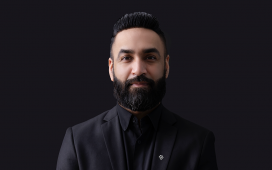
By Bilal Hallab, Executive Director – Marketing and Communications, Mohamed Yousuf Naghi Motors.