
The business landscape in the Gulf region is entering a new phase. For years, companies focused on attracting top talent — offering competitive salaries, new offices, and bold employer branding. But a new regional study suggests a shift is well underway: Organisations are now turning their attention inward, investing in how they are communicating and connecting with their people.
SAGE has released its Internal Communications and Culture (IC&C) Gulf Landscape 2025 report, which covers 132 companies across six countries and provides a structured overview of how internal communications and corporate culture functions are organised and managed across companies in the Gulf region.
The research reveals that the number-one goal of internal communications — “communicating updates” — is also the number-one challenge. Teams want to keep employees informed but struggle to gather information from other departments quickly enough.
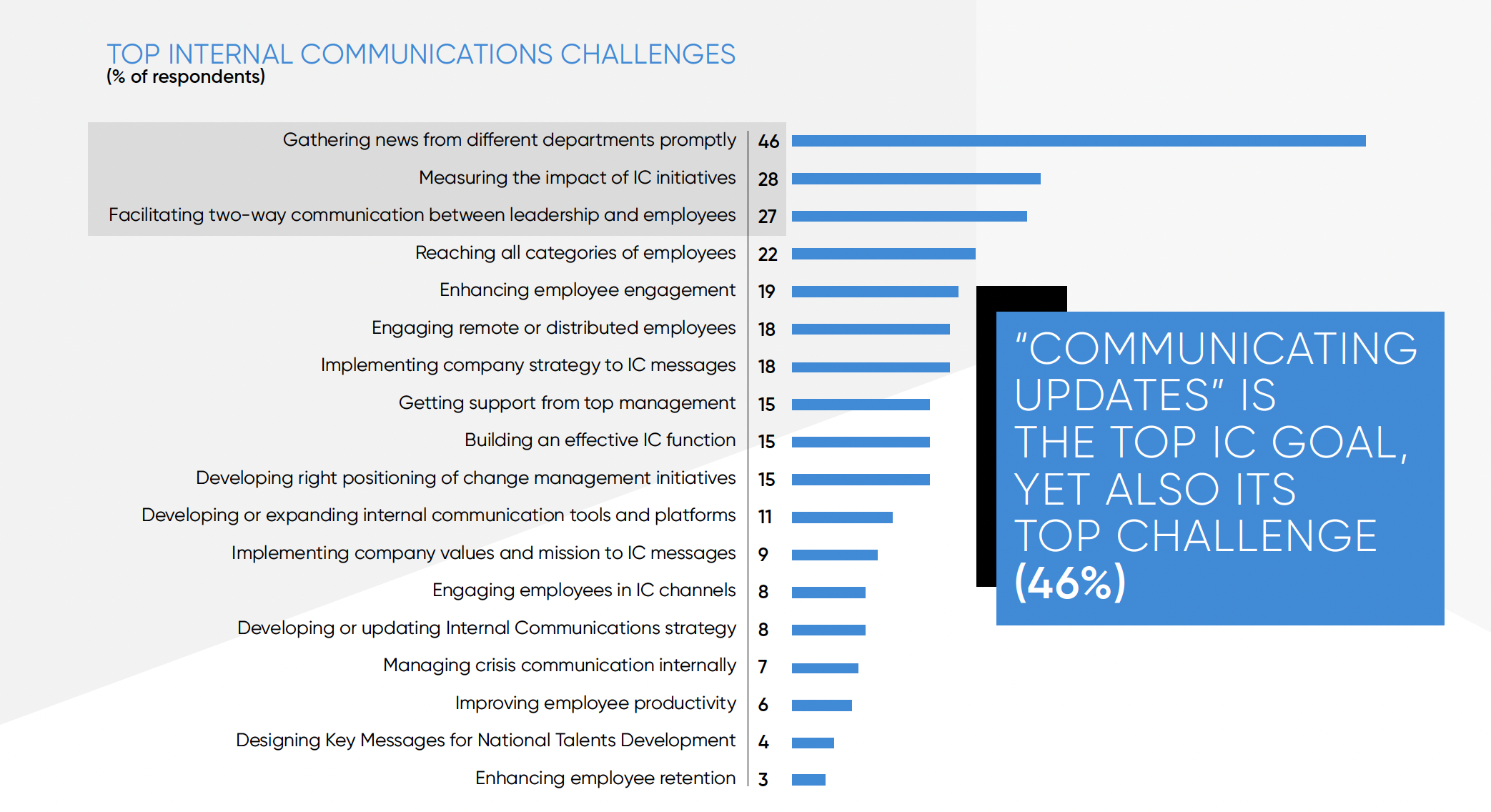
This disconnect underscores why internal communications in the Gulf are at a pivotal stage: the structure exists, but the systems and strategy still need maturity.
Of the organisations surveyed, 98 per cent of organisations have an internal communications function, and 80 per cent have a corporate culture function — a clear sign that Gulf employers recognise retention and engagement as critical business drivers, not ‘soft’ HR topics.
Yet, despite this widespread presence, fewer than 30 per cent rate their internal communications as highly effective, and only 19 per cent say the same about corporate culture.
The study calls this the region’s “effectiveness gap”: strong intentions, but uneven execution.
The paradox runs deeper. While 74 per cent of companies reach most employees through communication channels, only 13 per cent achieve the same level of engagement.
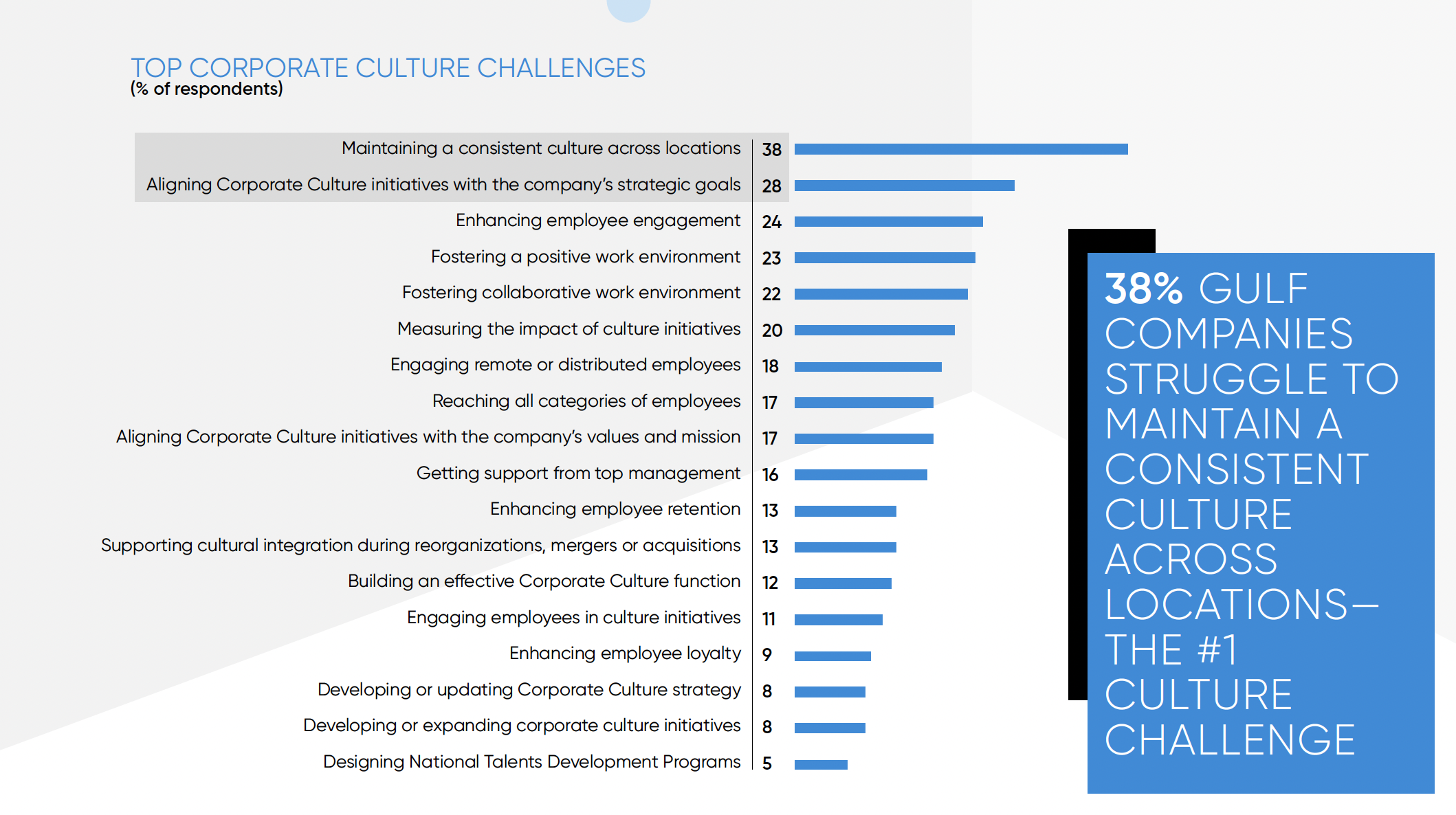
Email newsletters, town halls and intranets still dominate — reflecting a “tell and inform” mindset, rather than one built on dialogue or behaviour change.
The research also finds that 74 per cent of companies are already using artificial intelligence (AI) in their communication functions — mainly for content creation (54 per cent) and data analysis (40 per cent).
However, only 30 per cent have clear internal guidelines, showing that governance has yet to catch up with adoption.
Overall, the study paints a picture of a region in transition — one that has built the foundations of communication and culture but is still learning to use them as strategic levers for performance, engagement and retention.
For Gulf businesses, the message is clear: the future of competitiveness lies not just in hiring great people, but in how you communicate with them once they’re inside.